

Maddy summaryThe Voter Choice Act (HR 8462) creates a federal grant program to help states and local governments transition to ranked choice voting systems for elections. It authorizes $40 million in fiscal year 2025 to fund technical assistance, voting equipment, ballot design, and voter education for jurisdictions adopting this voting method. The program requires grants to cover no more than 50% of transition costs and prioritizes diverse geographic and demographic representation among recipients. This bill directly affects state and local election officials considering ranked choice voting, providing financial support without mandating its adoption. The law amends the Help America Vote Act to establish this new grant program under Title V.
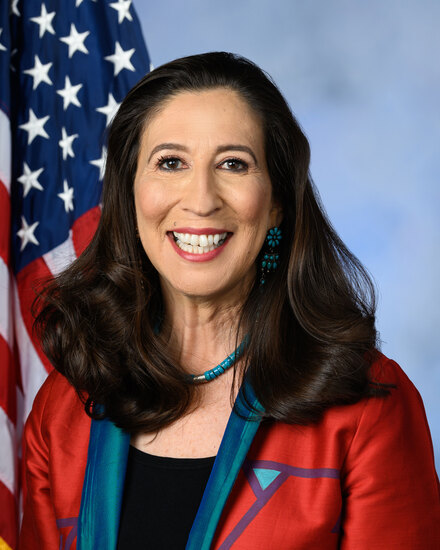
Rep. Teresa Leger Fernandez
Sponsored bills
Maddy summaryHR 8383, the Rural Obstetrics Readiness Act, creates a federal program to improve emergency obstetric care in rural areas lacking dedicated obstetric units. It authorizes $5 million (2025-2027) for training programs that teach non-obstetric rural healthcare providers to handle emergencies like severe bleeding, high blood pressure, or mental health crises during pregnancy or postpartum. The bill also allocates $15 million (2025-2028) for grants to rural hospitals and consortia to purchase equipment, hire staff, integrate training, and develop transfer protocols for obstetric emergencies. Additionally, it funds a $5 million teleconsultation pilot (2025-2028) to connect rural facilities with maternal health specialists via telehealth for urgent consultations. The program directly supports rural health facilities in designated maternity care shortage areas, aiming to expand access to emergency obstetric care.
Maddy summary# Summary of Legislative Text This is a comprehensive legislative proposal focused on addressing substance use disorder through public health approaches, with significant funding and program requirements. Key elements include: 1. **Major Funding Programs:** - **Subtitle A (Local Grants):** $3.0 billion annually (2024-2033) for local entities to provide prevention, treatment, and recovery services - **Subtitle B (State/Regional Grants):** $4.6 billion annually (2024-2033) for state-level programs - **Subtitle C (Other Grants):** $1.0 billion annually (2024-2033) for specific entities and underserved populations - **Subtitle D (Innovation/Training):** $1.5 billion annually (2024-2033) for training, research, and capacity building 2. **Key Program Requirements:** - Mandates for evidence-based treatment services across multiple levels of care - Requirements for cultural competency, particularly for Native American communities - Specific focus on harm reduction, prevention, and recovery support - Provisions for naloxone distribution and overdose reversal programs 3. **Regulatory Changes:** - New certification requirements for covered manufacturers, distributors, and dispensers of Schedule II controlled substances - Penalties for failure to submit certifications or submitting false certifications - Creation of a "Comprehensive Addiction Resources Fund" for penalty revenues 4. **Focus Areas:** - Prevention services (including trauma-informed approaches) - Early intervention services - Recovery support services - Harm reduction programs - Workforce development for treatment providers - Special attention to underserved populations (rural communities, racial minorities, formerly incarcerated individuals) 5. **Funding Priorities:** - 10% of funds for Native American communities - Specific requirements for cultural competency and language access - Mandated data collection and reporting systems This legislation represents a significant shift toward public health approaches to substance use disorder, emphasizing prevention, treatment, and recovery support rather than punitive measures, with substantial funding commitments over a decade.
Maddy summaryThis bill establishes a process for federal agencies to coordinate with New Mexico's community land grant councils regarding noncommercial traditional uses of federal land. It requires a written agreement (memorandum of understanding) between federal agencies and the New Mexico Land Grant Council to outline permit procedures, fee reductions for socioeconomic reasons, and rules for maintenance of infrastructure like trails and water systems. The agreement specifically covers activities such as grazing, water access, gathering small quantities of plants or materials, and maintaining historic sites, all conducted for community benefit without commercial intent. The bill clarifies it does not create new land rights, affects existing tribal rights or state water/fishing regulations, and relies on current federal permit systems.
Maddy summaryThis bill establishes a 5-year research program at the Department of Energy to study abandoned oil and gas wells. It funds research on better methods to locate these wells, plug them safely, repurpose them for uses like geothermal energy, and understand their environmental impacts - including methane emissions and groundwater risks. The program will receive $30 million in fiscal year 2024, increasing to $35 million by 2028, with coordination required from universities, labs, and private companies. It directly affects the Department of Energy and state agencies tasked with implementing the research, but does not fund direct well cleanup.
Maddy summaryHRES 1184 is a resolution recognizing the 50th anniversary of the Ms. Foundation for Women, a national organization founded in 1973 that focuses on advancing gender and racial justice through support for women of color-led movements. The resolution commends the foundation's president, Teresa Younger, and acknowledges the organization's work in promoting equality and justice for all people. As a commemorative resolution, it does not create new laws or policies but formally honors the foundation's history and mission.
Maddy summaryHRES 1186 is a non-binding House resolution recognizing the critical role of Guatemala's Indigenous communities - including Maya, Garifuna, and Xinka peoples - in defending democratic elections after the 2023 vote, despite systemic discrimination and marginalization. It highlights historical inequities (e.g., 75% Indigenous poverty vs. 36% non-Indigenous) and urges the Guatemalan government to honor commitments to represent all citizens equitably. The resolution specifically directs U.S. officials to encourage transparency in Guatemala, monitor corruption ties, and support Indigenous-led democracy efforts. It does not create new laws but formally expresses U.S. support for Indigenous rights and democratic processes in Guatemala. (HRES 1186, April 30, 2024)
Maddy summaryHRES 1177 designates May 5, 2024, as the "National Day of Awareness for Missing and Murdered Indigenous Women and Girls." The resolution expresses congressional support for this designation, calls on the public to commemorate affected individuals and show solidarity with families, and recommends the Department of Justice commission a new study on the crisis to update statistics since the 2016 report. It directly affects awareness efforts for Indigenous communities and families impacted by violence, while acknowledging ongoing gaps in addressing the crisis despite prior legislation like Savanna’s Act. The resolution does not create new laws or funding but focuses on recognition and data collection.
Maddy summaryThis bill amends USDA conservation programs to prioritize habitat connectivity for native wildlife, particularly big game species like deer, elk, and moose. It allows ranchers with grasslands enrolled in the Conservation Reserve Program to receive cost-share payments for practices that restore wildlife migration corridors and habitat connectivity, while preserving emergency grazing access. The bill increases payment limits for conservation programs and requires incorporating nonstructural methods like virtual fencing into conservation standards. It also directs research funding to study virtual fencing technology's effects on sensitive habitats and big game corridors. These changes directly affect agricultural landowners participating in USDA conservation programs.
Maddy summaryHR 8098, the Judicial Ethics Enforcement Act of 2024, creates an independent Office of Inspector General (IG) for the federal judicial branch (excluding the Supreme Court) to investigate misconduct complaints against judges and court staff. The IG would conduct audits, prevent fraud, and report findings to the Chief Justice and Congress, but cannot investigate court decisions or discipline judges. Key provisions include the IG’s authority to subpoena records and require testimony, while explicitly prohibiting oversight of case merits or judicial punishment. The bill establishes strict limits on the IG’s scope to ensure judicial independence, with the Chief Justice appointing the IG after congressional consultation.