

Maddy summaryThis bill establishes a water rights settlement for the Navajo Nation regarding the Rio San José Stream System in New Mexico. It ratifies an agreement between the Navajo Nation, the State of New Mexico, and other parties to resolve longstanding water rights claims, creating a $200 million trust fund to support water infrastructure and management. The bill confirms that Navajo water rights will be held in trust by the U.S. government, ensures these rights cannot be lost through non-use, and includes waivers of certain water claims in exchange for the settlement. The settlement becomes effective only after specific conditions are met, including court approval and deposit of funds into the trust fund. The bill also protects the water rights of individual land allottees within the system, ensuring their rights remain separate from the Navajo Nation's water rights.
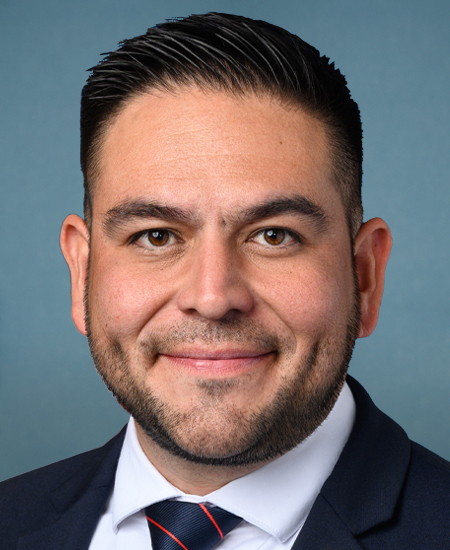
Rep. Gabe Vasquez
Sponsored bills
Maddy summaryThis bill establishes a final settlement for the Zuni Indian Tribe's water rights in the Zuni River Stream System, directly affecting the Tribe, the State of New Mexico, and federal agencies. It ratifies a 2023 agreement, creates a $655.5 million Trust Fund for water infrastructure development and management, and withdraws federal land to protect Zuni Salt Lake and Sanctuary. The bill confirms tribal water rights held in trust by the United States, includes waivers of past claims by the Tribe and the U.S. as trustee, and specifies how water rights will be managed for the Tribe and allottees. It also establishes environmental compliance requirements and land management provisions for the protected areas.
Maddy summaryHR 1304, the Rio San José and Rio Jemez Water Settlements Act of 2023, settles water rights claims for the Pueblo of Acoma, Pueblo of Laguna, Pueblo of Jemez, and Pueblo of Zia in New Mexico. The bill establishes settlement trust funds totaling $1.1 billion (with $296 million for Acoma, $464 million for Laguna, $290 million for Jemez, and $200 million for Zia) to fund water infrastructure, management, and related projects. It requires the tribes to waive historical water rights claims against the United States and other parties, while preserving their ability to enforce current water rights and protect environmental quality. The settlement will become effective once specific conditions are met, including state law changes to allow water rights leases up to 99 years.
Maddy summaryHRES 1355 is a non-binding resolution supporting the designation of July 10 as Journeyman Lineworkers Recognition Day. It honors lineworkers who maintain electrical infrastructure under hazardous conditions, including during disasters, and commemorates Henry Miller, the first president of the International Brotherhood of Electrical Workers, who died on July 10, 1896, while troubleshooting an electrical outage. The resolution encourages public recognition of these workers' contributions but does not create new laws or policies.
Maddy summaryHR 8992, the Stop Fentanyl at the Border Act, allocates $5.8 billion in federal funding to enhance border security efforts focused on intercepting fentanyl and other illegal drugs. The bill provides $3.4 billion for U.S. Customs and Border Protection (CBP) staffing, including hiring bonuses, mental health support, and processing coordinators, and $1.09 billion for advanced scanning technology and drug interdiction capabilities at land borders. Additional funds target disrupting fentanyl trafficking networks ($223 million for ICE), outbound firearm/currency inspections ($285 million), and law enforcement coordination (DEA, DOJ, U.S. Marshals). These provisions directly affect CBP officers, ICE agents, and border ports of entry by expanding personnel, technology, and interdiction strategies. The bill requires annual reports to Congress on the effectiveness of new staffing, scanning systems, and outbound inspection programs.
Maddy summaryHR 8514, the Veteran Education Assistance Adjustment Act, increases the annual stipend for books and educational supplies under the Post-9/11 GI Bill from $1,000 to $1,400 for veterans using these benefits. It also establishes an automatic annual cost-of-living adjustment starting in fiscal year 2025, tying future increases to the difference between two 12-month Consumer Price Index (CPI) periods. This adjustment applies to stipends for books, supplies, equipment, and other educational costs covered under the VA's Post-9/11 Educational Assistance Program. The bill directly affects veterans enrolled in degree or certificate programs who receive education benefits through the VA. The key mechanism ensures the stipend grows with inflation, reducing the financial burden of educational expenses over time.
Maddy summaryThis bill (HR 1208) amends the 1934 Indian Reorganization Act to clarify that the Secretary of the Interior can take land into trust for any federally recognized tribe, updating outdated language. It specifically revises Section 19 to replace "any recognized Indian tribe now under Federal jurisdiction" with "any federally recognized Indian Tribe." The bill also ratifies and confirms all past land trust decisions made for federally recognized tribes, protecting those actions from legal challenges based on historical recognition status. This change directly affects federally recognized tribes by ensuring their land trust authority remains valid under current law.
Maddy summaryHR 8732, the Domestic Workers Bill of Rights Act, would establish new labor protections for domestic workers including nannies, housekeepers, and caregivers who work in private homes. The bill requires written agreements between employers and domestic employees, provides earned sick days, ensures fair scheduling practices, and prohibits unfair wage deductions for cash shortages or communications. It also creates a Domestic Employee Standards Board to recommend workplace standards and establishes a National Domestic Employee Hotline for assistance. The bill specifically targets domestic workers who have historically been excluded from labor protections under the Fair Labor Standards Act and Civil Rights Act, benefiting an estimated 2.2 million domestic workers in the U.S. who are disproportionately women of color and immigrants.
Maddy summaryThis bill delays a Medicare policy that would have restricted coverage to only intravenous drugs for managing phosphate levels in kidney failure patients. It specifically postpones the implementation of the "oral-only" policy under Medicare's ESRD payment system until January 1, 2033, or until an intravenous drug for phosphate control receives FDA approval - whichever comes first. The bill directly affects Medicare beneficiaries with end-stage renal disease (ESRD) who rely on oral medications for phosphate management. It ensures continued Medicare coverage for these oral drugs during the extended timeline, without changing the underlying payment structure.
Maddy summaryThe SIREN Reauthorization Act (HR 4646) reauthorizes a federal program supporting rural emergency medical services (EMS) from 2024 through 2028. It directly affects rural EMS providers and personnel by requiring training on mental health and substance use disorders in emergency settings and allowing the acquisition of FDA-approved drugs for overdose treatment. Key provisions include updating the program's funding period, mandating new training standards for EMS staff, and expanding equipment access to include overdose-reversal medications. The bill amends Section 330J of the Public Health Service Act to implement these changes.