

Maddy summaryThe Unhoused Voter Opportunity Through Elections Act (HR 5294) protects voting rights for people experiencing homelessness by prohibiting states from denying voting access based on living in a "nontraditional abode" like shelters, public spaces, or locations where someone is considered homeless under federal law. Key provisions require election officials to make ballot drop boxes accessible to unhoused individuals, accept written attestations of residence instead of traditional proof, allow homeless shelters to be used as voting addresses, and mandate outreach to shelters about registration deadlines and election dates. The bill also creates a grant program to fund mobile voting centers and direct outreach services specifically for unhoused individuals. These changes would directly affect homeless individuals and election officials across all states, implementing concrete policy changes to improve voting access for a population often excluded from the electoral process.
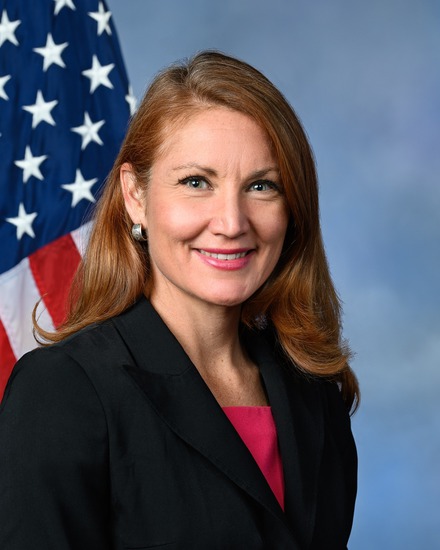
Rep. Melanie A. Stansbury
Sponsored bills
Maddy summaryHR 5295, the Expanding the VOTE Act, modifies Section 203 of the Voting Rights Act to expand language access for voters. It requires states and localities to provide voting materials (including ballots and instructions) in the language of covered language minority groups, with new provisions for American Indian and Alaska Native languages requiring tribal government consultation for unwritten languages. The bill creates $15 million in grants to help jurisdictions provide voting materials in languages that don’t currently trigger Section 203 coverage, while mandating continued provision for those groups in future elections. It also directs a study to evaluate lowering population thresholds for language protections and expanding the definition of covered languages.
Maddy summaryThe Housing for All Act of 2023 allocates significant federal funding to address housing shortages and homelessness, with key provisions including $45 billion for the Housing Trust Fund, $40 billion for the HOME Investment Partnerships Program, and 500,000 new housing vouchers in 2024 that will increase to 1 million annually by 2027. The bill directly affects low-income families, people with disabilities, elderly individuals, communities of color, and those experiencing homelessness by expanding rental assistance, supporting permanent housing solutions, and creating new programs like Safe Parking Programs and Eviction Protection Grants. It establishes a Racial Equity Commission to examine structural racism in housing and requires coordination between housing and behavioral health services through new grant programs. The legislation also includes $500 million for converting hotels and commercial spaces into permanent housing and $800 million for legal assistance to prevent evictions. These provisions aim to increase housing stability, reduce homelessness, and address racial disparities in housing access across the United States.
Rural Hospital Technical Assistance Program Act This bill provides statutory authority for the Rural Hospital Technical Assistance Program within the Department of Agriculture (USDA). Under the bill, USDA must establish and maintain (directly or by grant, contract, or cooperative agreement) a program to help eligible hospital facilities in rural areas with a population of 50,000 inhabitants or less. The program must provide tailored technical assistance and training to hospital facilities to identify development needs for maintaining essential health care services and support action plans for financial, operational, and quality improvement projects to meet these needs. Development needs include (1) constructing, expanding, and modernizing health care facilities; (2) increasing telehealth capabilities; and (3) acquiring or upgrading health care information systems (e.g., electronic health records). The program must also provide technical assistance and training to help hospital facilities to better manage their financial and business strategies and identify, and apply for assistance from, USDA loan and grant programs. In selecting eligible hospital facilities to participate in the program, USDA must give priority to borrowers and grantees of certain USDA rural assistance programs. USDA must also submit an annual report to Congress on the progress and results of the program.
Maddy summaryHR 4277, the Saving America’s Pollinators Act of 2023, would immediately cancel all registrations for neonicotinoid pesticides (including imidacloprid and clothianidin) and ban their sale, use, and future registration. This directly affects farmers and crop producers who currently use these pesticides on over 150 million acres of crops like corn and soybeans, where seed coatings are widely applied. The bill also ends exemptions for seed-treated pesticides and requires the Environmental Protection Agency to revoke tolerances for pesticide residues in food within six months. Additionally, it mandates the U.S. Fish and Wildlife Service’s newly established Center for Pollinator Conservation to monitor native bee populations and coordinate federal actions to reverse pollinator declines.
Maddy summaryThis bill reauthorizes the Collaborative Forest Landscape Restoration Program through 2032, increasing annual funding from $4 million to $8 million. It expands the program's scope to include wildfire risk reduction across public, Tribal, private, and State lands - especially in the wildland-urban interface - and prioritizes watershed health and drinking water protection. The bill requires standardized monitoring for projects and allows new implementation tools like conservation finance agreements. It directly affects collaborative groups working on forest restoration across multiple land ownerships.
Maddy summaryThis bill would reform credit reporting practices by shortening the time negative information stays on consumer credit reports (to 4-7 years instead of 7-10 years), removing medical debt from credit reports, and requiring faster removal of fully paid or settled debts. It would provide credit restoration for victims of predatory mortgage lending, defrauded private education loan borrowers, and those experiencing financial abuse. The bill also expands identity theft protections including 1-year and 7-year fraud alerts, security freezes, and free credit monitoring for certain vulnerable consumers. These changes would directly affect consumers with credit reports, credit reporting agencies, and creditors who rely on credit information for lending and other decisions.
Maddy summaryThis bill authorizes increased federal funding for early childhood special education programs under the Individuals with Disabilities Education Act (IDEA). It specifically restores funding for Part C (services for infants and toddlers with disabilities) and Section 619 (preschool programs for children with disabilities ages 3-5) by setting annual appropriations from $503 million to $1.22 billion for Section 619 and $932 million to $1.73 billion for Part C through 2028. These funds would directly support states in delivering high-quality early intervention and preschool services to children with disabilities and their families. The bill aims to reverse decades of reduced per-child funding, which had fallen significantly from historical highs.
Maddy summaryThe Ethics in Energy Act of 2023 prohibits large energy companies (including major electric utilities and natural gas providers) from charging customers for political influence spending. It requires these "covered utilities" to stop recovering expenses like lobbying, campaign contributions, or PR campaigns aimed at shaping regulations or elections from customer rates. Utilities must submit detailed annual reports on such spending to the Federal Energy Regulatory Commission (FERC), and FERC can impose penalties (up to triple the amount recovered) that must be refunded to customers. Penalties are split: half goes to ratepayers as rebates, half funds FERC’s enforcement.
Maddy summaryHR 5113, the REACH Our Tribes Act, requires the U.S. Department of Agriculture to establish an annual consultation process with Tribal Governments on budget requests and program reauthorizations (like farm bills), including 30 days' notice before meetings and public reports summarizing discussions and responses. It also mandates USDA to publicly report on funding provided to Tribal entities through its programs and improve outreach for underutilized programs. Additionally, the bill creates an interagency task force to streamline application requirements for economic development programs and a public online repository listing all federal economic development programs available to tribes. These provisions directly affect Tribal Governments and Tribal entities (including tribes, tribal organizations, and businesses) by enhancing their input in budget decisions and improving access to federal resources.