

Maddy summary# Summary of the "Protecting Our Democracy Act" This comprehensive legislation aims to strengthen democratic processes, increase government transparency, and prevent foreign interference in elections. Key provisions include: ## Ethics and Transparency - **Ethics Pledge**: Requires all appointees to sign an ethics pledge committing to: - Ban on gifts from registered lobbyists - 2-year revolving door ban (prohibiting participation in matters related to former employers) - Golden parachute ban (no special payments from former employers) - Commitment to decision-making based on public interest - **Tax Transparency**: Requires presidential and vice presidential candidates to disclose 10 years of tax returns, with sitting presidents submitting returns within 30 days of enactment ## Campaign Finance and Foreign Interference - **Foreign Contact Reporting**: Requires political committees to report any contact with "covered foreign nationals" within 1 week - **Enhanced Penalties**: Criminal penalties of up to $1 million and 5 years in prison for violations - **Online Advertising Rules** ("Honest Ads Act"): - Requires clear disclosure of who paid for political ads online - Mandates machine-readable public databases of political ads - Requires visible sponsor identification that remains when ads are shared - Defines "qualified political advertisements" to include various online formats ## Preventing Patronage Systems - Limits exceptions to competitive service for federal positions - Restricts transferring positions between competitive and excepted service - Requires employee consent for position transfers ## Use of Federal Property - Prohibits holding national political conventions on federal property - Requires publicly available visitor records at White House and other official locations (with privacy exceptions) The legislation establishes detailed definitions, reporting requirements, and enforcement mechanisms across multiple agencies, with the goal of increasing transparency, preventing foreign interference, and ensuring ethical conduct in government service.
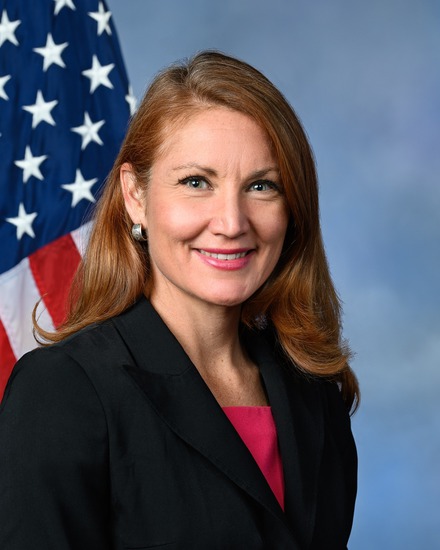
Rep. Melanie A. Stansbury
Sponsored bills
Maddy summaryThis bill establishes a federal system to coordinate efforts across agencies to address health risks from extreme heat. It creates a National Integrated Heat Health Information System (NIHHIS) and an interagency committee to develop a strategic plan for heat health planning and response. The bill authorizes funding for community resilience projects that prioritize historically disadvantaged communities and those with environmental justice concerns. It mandates a study to identify gaps in heat information and response systems across the country. The legislation aims to reduce health impacts of extreme heat, particularly for vulnerable populations including the elderly, low-income communities, and communities of color.
Maddy summaryThe ACHE Act requires the National Institute of Environmental Health Sciences to study health impacts of mountaintop removal coal mining on communities near mining sites in Kentucky, Tennessee, West Virginia, and Virginia. It temporarily halts all new federal permits for such mining until a health risk determination is made, while mandating ongoing pollution monitoring (water, air, soil) at existing sites with monthly public reporting. The bill directly affects coal mining companies operating in designated steep-slope regions of those four states. Key provisions include the health study, permit moratorium, and public monitoring requirements, which end once the health risk determination is published.
Maddy summaryThis bill creates a federal loan repayment program to help mental health professionals (like counselors, psychologists, and social workers) repay student loans. It directly affects individuals who have taken out education loans for mental health degrees and agree to work in underserved areas. Key provisions require participants to commit to 3-6 years of full-time service in designated mental health shortage areas or counties with high overdose death rates, with funding increased to $100 million annually for 2023-2032. The program expands eligibility to cover all mental health-related fields, including behavioral health roles.
Maddy summaryThe Communications, Video, and Technology Accessibility Act of 2023 requires video programming providers to provide closed captions and audio description for all online video content, including live and near-live programming. It mandates that video playback devices (such as smart TVs and streaming devices) include accessible controls for captions and audio description, with specific requirements for labeling and discoverability. The bill establishes advisory committees to develop technical standards for accessibility and updates requirements for video conferencing services to include built-in captioning and compatibility with assistive technologies. These provisions directly affect video service providers, device manufacturers, and video conferencing platforms, aiming to improve accessibility for people who are deaf, hard of hearing, blind, or DeafBlind.
Maddy summaryHR 4832, the Indian Programs Advance Appropriations Act of 2023, changes how funding is allocated for key Native American programs. It requires that starting in fiscal year 2024, new budget authority for specific accounts under the Bureau of Indian Affairs, Bureau of Indian Education, and Indian Health Service must be made available immediately for the current fiscal year *and* include advance funding for the next fiscal year. The bill mandates annual reports by July 31 each year, including workload estimates and resource sufficiency assessments developed with tribal consultation. This affects tribal programs funded through accounts like Operation of Indian Programs, Contract Support Costs, and Indian Health Services, aiming to improve budget planning predictability.
Maddy summaryThis bill amends federal farm disaster assistance to provide full coverage for crop losses caused by drought or disasters for farmers relying on acequias (traditional community irrigation systems in New Mexico). It requires the USDA to cover all losses suffered by these producers under Section 196 of the Federal Agriculture Improvement and Reform Act, rather than partial assistance. The bill also eliminates special permits needed for routine acequia maintenance or minor repairs on federal land, allowing community members to manage infrastructure without federal approval. Finally, it mandates a USDA report within two years detailing how many acequia-dependent farmers received aid, program accessibility, and targeted assistance efforts.
Maddy summaryThe Headwaters Protection Act of 2023 reauthorizes and improves the Water Source Protection Program under the Healthy Forests Restoration Act, focusing on protecting watersheds and water supplies on National Forest lands and adjacent non-Federal lands. It expands eligible partners to include acequia associations, local water management entities, land-grant mercedes, and private water delivery organizations, requiring projects to address watershed health, water quality, climate resilience, and wildfire risk. The bill increases annual funding to $30 million (for fiscal years 2024-2033) and sets aside 10% for non-Federal partner capacity building. It also mandates adjacent landowner support for projects on their property and clarifies that the program does not alter land ownership or management.
Maddy summaryThis bill provides additional federal funding to help state agencies cover administrative costs for three nutrition programs. Specifically, it allocates 70% of the funds to the Commodity Supplemental Food Program, 20% to the Emergency Food Assistance Program, and 10% to the Senior Farmers' Market Nutrition Program for their operational expenses. The funding totals $1 million annually for fiscal years 2024 through 2028. It directly affects state agencies managing these programs by increasing their resources for administrative tasks, without changing program benefits or eligibility for participants.
Maddy summaryThis bill establishes a federal pilot program to help homeless individuals access SNAP (Supplemental Nutrition Assistance Program) benefits. It authorizes $12.5 million annually (2024-2029) to fund grants for community organizations, homeless service providers, and public housing agencies to provide direct outreach, application assistance, transportation to SNAP offices, and staff training. The program specifically targets barriers like lack of documentation and awareness, focusing on helping homeless households enroll in SNAP by connecting them with existing resources. Grantees must report annually on outcomes, including the number of homeless individuals served and enrollment impacts. The pilot runs for up to 5 years, with funds supplementing (not replacing) existing state/local programs.