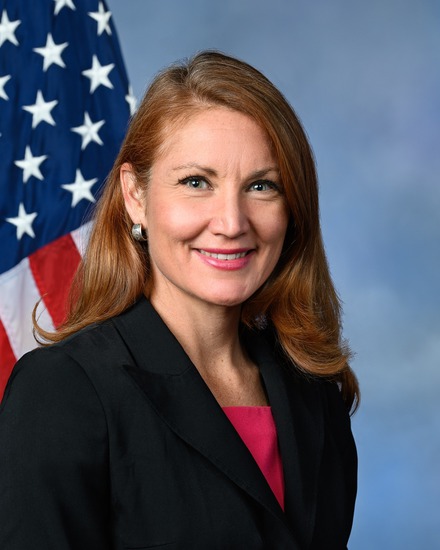
Photo of Melanie A. Stansbury
D United States House · District 1 · New Mexico On the 2026 ballot

Rep. Melanie A. Stansbury

Compare
Total votes
2,694
all sessions
Attendance
98%
52 missed
Near the chamber average
With party
98%
of cast votes
Higher than 85% of chamber peers
Bipartisan score
1%
crosses aisle rarely
Lower than 86% of chamber peers
Sponsored
1,707
bills & resolutions
Higher than 90% of chamber peers
Committees
5
assignments
1,707 bills and resolutions

Sponsored bills

Total
1,707
Primary
56
Co-sponsor
1,651
This page
1,707
matching current filters
Co-sponsor HRES 1109
In committee · United States House · Co-sponsor
Recognizing the historic Woman Suffrage Procession of 1913 and honoring the courageous suffragists who fought tirelessly for women's right to vote.

Maddy summaryHRES 1109 is a symbolic resolution commemorating the 1913 Woman Suffrage Procession in Washington, DC, where suffragists led by Alice Paul and Inez Milholland marched to demand voting rights for women. It honors the participants' courage during a protest that drew 500,000 spectators despite violent opposition, highlighting how this event advanced the national push for the 19th Amendment. The resolution does not create new laws but reaffirms support for voting rights equality, connecting the 1913 march to ongoing efforts to protect democratic access. It specifically acknowledges the intersectional struggles of women of color in the suffrage movement. As a commemorative resolution, it has no binding policy effect.

In committee Mar 26, 2024 1 co-sponsor
Co-sponsor HR 7826
In committee · United States House · Co-sponsor
Tribal Community Protection Act of 2024

Maddy summaryHR 7826, the Tribal Community Protection Act of 2024, amends the Edward Byrne Memorial Justice Assistance Grant Program to require written notification about restraining orders issued on tribal lands. It directly affects federally recognized Indian tribes and tribal lands by mandating that law enforcement send certified mail notifications to tribes and the Bureau of Indian Affairs regarding such orders. The key provision specifies that written notification must be sent via registered or certified mail with return receipt, ensuring tribes receive official notice of restraining orders affecting their communities. This change applies to programs funded under the Justice Assistance Grant Program and uses existing definitions for "tribal lands" and "Indian tribe" from federal law.

In committee Mar 26, 2024 1 co-sponsor
Co-sponsor HR 2882
Signed into law · United States House · Co-sponsor
Further Consolidated Appropriations Act, 2024

Maddy summary# Summary of the Federal Appropriations Bill This document is a comprehensive appropriations bill for fiscal year 2024, allocating funds across various federal departments and agencies. It contains five main titles: 1. **Department of the Treasury Appropriations Act, 2024**: Allocates funds for Treasury operations including the Internal Revenue Service (over $12 billion), the Bureau of Engraving and Printing, and the Financial Crimes Enforcement Network. Includes numerous restrictions on IRS activities, such as prohibitions on targeting citizens for First Amendment rights and restrictions on conference spending. 2. **Executive Office of the President Appropriations Act, 2024**: Funds the White House, Office of Management and Budget, National Security Council, and other executive offices. Includes requirements for budget impact statements on executive orders. 3. **Judiciary Appropriations Act, 2024**: Allocates over $5.9 billion for federal courts, including salaries for judges, court operations, defender services ($1.45 billion), and court security ($750 million). Includes provisions for court security improvements and judicial training. 4. **District of Columbia Appropriations Act, 2024**: Provides federal funding for District of Columbia programs including $40 million for resident tuition support, $292 million for District courts, $46 million for defender services, and $286 million for the Court Services and Offender Supervision Agency. 5. **Independent Agencies Appropriations Act**: Funds various independent agencies including the Consumer Product Safety Commission ($150.9 million), Election Assistance Commission ($55 million), and Administrative Conference of the United States. Key restrictions across the bill include: - Prohibitions on using funds to target citizens based on First Amendment rights - Restrictions on IRS activities related to taxpayer targeting - Requirements for transparency in information technology spending - Specific limitations on how funds may be transferred between accounts - Prohibitions on certain regulatory actions (like banning gas stoves) The bill contains numerous administrative provisions, reporting requirements, and specific funding allocations for various programs and services across the federal government.


Signed into law Mar 23, 2024 1 co-sponsor
Primary HR 7811
In committee · United States House · Lead sponsor
Postsecondary Student Success Act of 2024

Maddy summaryThe Postsecondary Student Success Act of 2024 establishes a competitive grant program to help colleges and universities improve graduation rates for high-need students, including those from low-income backgrounds, first-generation college students, caregivers, students with disabilities, and military-connected individuals. Eligible institutions must propose evidence-based reforms (categorized by research strength) and detail how grant funds will support student retention through services like mentoring, academic support, career preparation, and transfer pathway improvements. The bill reserves 2% of funds for Tribal Colleges and Universities and requires 20% of funds to prioritize the highest-research-backed reforms (tier 3), while mandating specific uses like emergency financial aid and career coaching. It also mandates evaluations to measure reform effectiveness and requires a congressional report within 18 months of enactment.

In committee Mar 22, 2024 0 co-sponsors
Co-sponsor HR 7766
In committee · United States House · Co-sponsor
Protecting Consumers from Deceptive AI Act

Maddy summaryHR 7766, the Protecting Consumers from Deceptive AI Act, requires AI developers and major online platforms to clearly label AI-generated content. It mandates that audio or visual content created by generative AI include machine-readable disclosures about its origin (e.g., "AI-generated"), with measures to prevent tampering, and platforms must display these labels without removal. The law applies to companies with significant revenue ($50M+ annually) or user scale (25M+ monthly active users), such as social media platforms and content services. The Federal Trade Commission will enforce these labeling requirements as deceptive practices, treating violations under existing FTC authority.

In committee Mar 22, 2024 1 co-sponsor
Co-sponsor HR 7688
In committee · United States House · Co-sponsor
AADAPT Act

Maddy summaryThe AADAPT Act reauthorizes and expands the Project ECHO grant program to specifically address Alzheimer's disease and dementia care. It provides $1 million annually (2026-2031) for grants to eligible health care entities - such as rural clinics, tribal organizations, or community health centers - to develop online training programs for primary care providers working in underserved areas (including rural, frontier, or medically underserved communities). These programs aim to improve provider retention, increase early diagnosis of dementia, and enhance quality care. The bill requires grantees to report on outcomes and ensures funding supplements, rather than replaces, existing resources.

In committee Mar 22, 2024 1 co-sponsor
Co-sponsor HR 7782
In committee · United States House · Co-sponsor
Green New Deal for Public Housing Act

Maddy summaryThis bill would provide federal grants to public housing agencies to modernize public housing through energy efficiency upgrades, infrastructure improvements, and renewable energy systems. It requires all public housing to become "zero-carbon homes" that produce enough renewable energy to meet their own consumption within 10 years. The bill includes specific requirements for workforce development, hiring from low- and very low-income communities (40% in year 1, 50% in year 2, 90% after that), and contracting with resident-owned businesses (20% in year 1, 30% in year 2, 50% after that). It also mandates resident and community engagement in planning, and requires public housing agencies to meet specific energy efficiency and water quality standards. The bill directly affects all public housing agencies managing housing for low- and very low-income residents across the United States, including tribal housing entities.

In committee Mar 21, 2024 1 co-sponsor
Co-sponsor HR 7770
In committee · United States House · Co-sponsor
Rosie the Riveter Commemorative Coin Act

Maddy summaryHR 7770, the Rosie the Riveter Commemorative Coin Act, authorizes the U.S. Mint to produce and sell three commemorative coins honoring women who worked on the U.S. home front during World War II. It specifies $5 gold coins (max 50,000), $1 silver coins (max 400,000), and half-dollar coins (max 750,000), all to be issued between January 1, 2025, and December 31, 2025. Each coin sale includes a surcharge ($35 for gold, $10 for silver, $5 for half-dollar), with all surcharge funds directed to the Rosie the Riveter Trust for maintaining the Rosie the Riveter WWII Home Front National Historical Park and educational programs. The coins will feature designs reflecting the legacy of diverse women workers and must meet specific weight, diameter, and composition standards.

In committee Mar 21, 2024 1 co-sponsor
Primary HR 7761
In committee · United States House · Lead sponsor
Postsecondary Student Success Act of 2024

Maddy summaryThe Postsecondary Student Success Act of 2024 provides competitive federal grants to colleges and universities to increase participation, retention, and graduation rates for high-need students. It directly affects high-need students - defined as those from low-income backgrounds, first-generation college students, caregivers, students with disabilities, or others facing barriers - and requires grantees to use evidence-based programs, including Tier 1-3 reforms (e.g., mentoring, career coaching, or transfer pathway improvements). The bill reserves 2% of funds for Tribal Colleges and Universities and mandates that 20% of grant funds support Tier 3 evidence-based practices proven to significantly improve student outcomes. Grants must include specific plans for student services, career preparation, and evaluation, with funds restricted to direct student support and program implementation.

In committee Mar 20, 2024 0 co-sponsors
Co-sponsor HR 7752
In committee · United States House · Co-sponsor
PTO Act

Maddy summaryThe PTO Act establishes a standard for paid annual leave, requiring most employers to provide employees with 1 hour of paid leave for every 25 hours worked, up to a maximum of 80 hours per 12-month period. It directly affects private sector employees and certain government workers, including those at the Government Accountability Office, Library of Congress, and federal agencies covered under the Congressional Accountability Act. The bill prohibits employers from interfering with employees' use of leave for any reason, requires clear notice of leave policies, and protects employees from retaliation for taking leave. It includes enforcement mechanisms through the Department of Labor, allowing employees to file complaints or lawsuits for violations of their leave rights. The Act takes effect 180 days after enactment, with specific provisions for collective bargaining agreements.

In committee Mar 20, 2024 1 co-sponsor
Showing 821 to 830 of 1,707 bills
Previous 1 … 82 83 84 … 171 Next