

Maddy summaryThe Stateless Protection Act of 2024 would create "stateless protected status" for noncitizens in the United States who are stateless (not recognized as citizens by any country). The bill would allow these individuals to apply for protection from deportation, employment authorization, travel documents, and adjustment to lawful permanent resident status (a green card). It establishes a process for determining statelessness, requiring the Department of Homeland Security to consider evidence from various sources including international organizations and foreign governments. The legislation directly affects approximately 218,000 stateless people living in the U.S., who currently face barriers to work, education, healthcare, and travel due to their legal status. The bill also includes provisions for preventing statelessness internationally and updating U.S. laws to prevent future cases of statelessness.
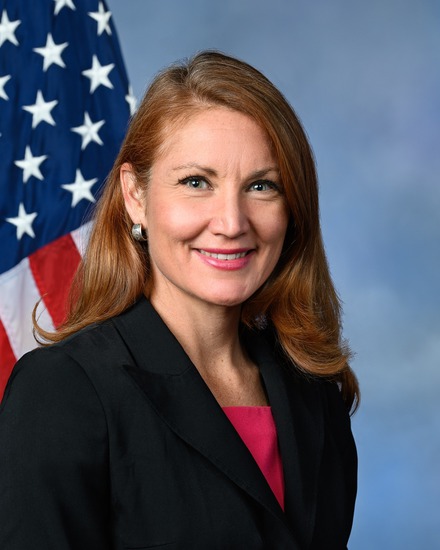
Rep. Melanie A. Stansbury
Sponsored bills
No Capital Gains Allowance for American Adversaries Act This bill treats gains and dividends derived from transactions involving countries of concern as ordinary income. The bill defines countries of concern to include China (including Hong Kong and Macao and excluding Taiwan), Russia, Belarus, Iran, and North Korea.
Maddy summaryThis bill reauthorizes the Morris K. Udall and Stewart L. Udall Foundation's funding through fiscal year 2029, extending the current authorization period. It clarifies that interest earned from new appropriations to the Foundation's Trust Fund must be subject to annual congressional approval, rather than being automatically available. The bill also requires an audit of the Foundation by the Department of the Interior's Inspector General within four years of enactment. These provisions ensure continued operation of the Foundation's programs, which support environmental and public health initiatives, while adding transparency through the audit requirement.
Maddy summaryHR 7634, the Plastic Pellet Free Waters Act, prohibits plastic pellets and pre-production plastic materials from being discharged into water through wastewater, spills, or runoff from specific facilities. It directly affects plastic polymer production facilities, plastic molding and forming facilities, and any point source (like packaging or transport operations) handling plastic pellets. The bill requires the EPA to issue a final rule within 60 days of enactment banning these discharges and updating all relevant wastewater, stormwater, and performance standards in permits and regulations. This creates a legal requirement for facilities to prevent plastic pellet pollution in waterways, targeting a major source of ocean plastic pollution.
Maddy summaryThis concurrent resolution (HCONRES 97) recognizes the gender wage gap, noting that women working full-time earn 84 cents for every dollar earned by men. It highlights racial disparities (e.g., Latinas earn 57 cents, Black women 69 cents) and the economic impact of the gap, including $965 billion in annual lost wages for women. As a symbolic resolution, it does not create new laws or policies but formally acknowledges the issue and reaffirms Congress’s commitment to addressing wage inequality.
Maddy summaryThis bill establishes a Federal Advisory Panel to analyze climate change risks to federal retirement investments and advise on transitioning toward low-carbon portfolios. It directly affects the Federal Retirement Thrift Investment Board (which manages retirement funds for over 5 million federal employees) by requiring the panel to assess fossil fuel investments, examine other pension funds' climate strategies, and produce a report within one year. Key mechanisms include creating a new "Climate Choice Stock Index Fund" that excludes fossil fuel companies (if the Board determines fossil fuel investments aren't financially sound), and mandating annual climate cost reports from the Federal Reserve and SEC. The bill focuses on aligning retirement fund investments with climate risk management while maintaining financial responsibility, without mandating immediate divestment.
Maddy summaryThis resolution recognizes the 65th anniversary of the March 10, 1959, Tibetan uprising and condemns the Chinese government's human rights violations related to a hydropower dam project in Derge, Tibet. The resolution specifically highlights that the dam would displace approximately 2,000 Tibetans and destroy six historical monasteries with religious artifacts, including 13th-century murals. It also condemns the February 2024 detention of over 1,000 Tibetans who protested the dam project. The resolution calls on the Biden administration to demand China halt the dam construction, release detained protesters, and respect Tibetan cultural rights and development input as required by U.S. law.
Maddy summaryHRES 1068 is a symbolic House resolution condemning all forms of rape and sexual violence against women globally, both during conflicts and in peacetime. It specifically denounces the weaponization of sexual violence in recent conflicts (including Hamas attacks on Israel, Sudan, Ukraine, and others) and highlights ongoing issues in the U.S. and worldwide. The resolution calls for international action to hold perpetrators accountable and prioritize eliminating gender-based violence in conflict settings. As a non-binding statement, it does not create new laws or allocate funding but formally expresses congressional disapproval of sexual violence.
Maddy summaryThis House resolution (HRES 1036) expresses the U.S. House of Representatives' support for designating February 29, 2024, as "Rare Disease Day." It acknowledges the global observance of Rare Disease Day - first recognized in the U.S. in 2009 - and highlights the challenges faced by the over 25 million Americans living with rare diseases (affecting fewer than 200,000 people in the U.S. each). The resolution recognizes the importance of improving awareness, encouraging early diagnosis, and supporting efforts to develop treatments for rare diseases. It is a symbolic gesture with no new policies or funding, aligning with the annual global observance of Rare Disease Day.
Maddy summaryThis bill requires the General Services Administration to review and improve the federal subaward reporting system within 180 days, focusing on accuracy, consistency, and public access. It mandates a standardized reporting plan within one year to reduce administrative burden on recipients while expanding data collection to include second-tier subawards (beyond the first tier currently reported). Federal agencies must implement these changes by year two, with annual progress reports to Congress. The law directly affects federal agencies managing grants and their recipients, aiming to make subaward data more complete, transparent, and easier to access for the public.