

Maddy summaryThis bill amends U.S. Code to lower the minimum student enrollment required for high schools to establish or maintain a Junior Reserve Officers' Training Corps (JROTC) program, reducing the threshold from 100 to 50 students. It directly affects high schools seeking to start or sustain JROTC units, particularly those with smaller student populations. The key provision changes the existing requirement under Title 10, U.S. Code, making it easier for schools to qualify for JROTC participation. This is a straightforward policy adjustment to existing law, with no additional funding or program changes specified.
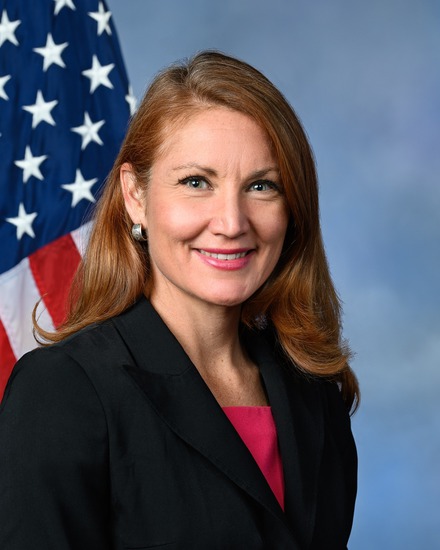
Rep. Melanie A. Stansbury
Sponsored bills
Maddy summaryHRES 1127 is a symbolic House resolution commemorating the 45th anniversary of the Taiwan Relations Act (TRA) and reaffirming U.S. policy toward Taiwan. It does not create new law but formally reiterates the U.S. commitment to Taiwan under the TRA framework, including regular defense transfers to support Taiwan's self-defense and advocacy for Taiwan's meaningful participation in international organizations. The resolution highlights longstanding U.S.-Taiwan cooperation on trade, security, education, and global challenges like public health and cybersecurity. It specifically calls on the Secretary of State to advance Taiwan's international engagement and supports existing programs like the Taiwan Fellowship Program and the American Institute in Taiwan. As a procedural resolution, it expresses congressional support for current policy without altering legal obligations.
Maddy summaryHRES 1124 is a non-binding resolution designating the last Tuesday of April each year as "APOL1-Mediated Kidney Disease (AMKD) Awareness Day." It specifically aims to raise public awareness about a genetic condition (AMKD) that disproportionately affects Black Americans, as approximately 13% of Black people carry high-risk APOL1 gene variants linked to a 1-in-5 chance of developing kidney disease. The resolution encourages individuals with African ancestry to consider genetic testing and adopt preventive health measures like regular doctor visits and healthy lifestyles to reduce kidney failure risk. It does not create new programs or funding but seeks to highlight existing health disparities and promote early intervention.
Maddy summaryThis bill directs the U.S. Treasury to instruct the U.S. representative at the International Monetary Fund (IMF) to immediately review and suspend IMF surcharges on member countries. It specifically targets the 200-300 basis point fees applied to IMF loans exceeding certain thresholds, which the bill states constitute up to 39% of debt payments for some nations like Ecuador and Egypt, and will cost Ukraine an estimated $1.5 billion in surcharges from 2024-2028. The review requires a 365-day analysis of surcharge impacts on national budgets (including health, education, and food security), effectiveness in reducing IMF credit risk, and potential unintended consequences like pushing countries toward predatory loans. The bill mandates this review be completed and results published within a year, with surcharges suspended during the process.
Maddy summaryThe STAGE Act establishes a federal grant program to support professional nonprofit theaters. Eligible theaters (nonprofits producing live performances with fair wages, 3+ years of programming, and financial need or community focus) can receive grants covering payroll, facility repairs (prioritizing accessibility), marketing, and workforce training. Grants max out at $16 million per entity or 20% of its prior year's expenses, with $1 billion annually allocated for 2024-2028. The bill also mandates a federal study on sustaining the nonprofit arts sector, including input from artists and community stakeholders.
Maddy summaryThe STAMP Act of 2024 bans state and local governments from taxing menstrual products. It prohibits taxes on items like pads, tampons, menstrual cups, discs, and period underwear that meet industry standards. The law directly affects consumers purchasing these products and state/local governments that previously imposed such taxes. It takes effect 120 days after enactment, removing tax burdens on menstrual products nationwide.
Commission on Youth Homelessness Act This bill requires the Department of Housing and Urban Development to establish a commission on youth homelessness comprised of representatives from specified federal agencies and nonprofit organizations. The commission must submit a report to Congress that includes (1) how federal, state, tribal, and local laws, regulations, and policies have harmed or otherwise impacted youth and young adults who are homeless or at risk of homelessness; (2) a list of laws, regulations, and policies that unnecessarily target youth and young adults who identify as Black, Indigenous, people of color, or LGBTQIA+; and (3) legislative recommendations to prevent and end youth and young-adult homelessness.
Maddy summaryThis bill requires federal agencies to include specific equity goals in their planning documents. Agencies must set at least one goal (or 20% of total goals, whichever is greater) focused on improving services for underserved communities and individuals, defined as groups systematically denied full participation in economic, social, and civic life. Agencies must also consult with community groups, local governments, and research partners when developing these plans. The law amends existing planning requirements under Titles 5 and 31 of the U.S. Code to implement these changes.
Maddy summaryHR 7862 directs federal agencies to annually report on converting unused government-owned buildings into affordable housing. It establishes two grant programs: a $1.75 million annual grant for exploring office-to-residential conversions, and a $250 million annual program for states and local governments to convert underutilized public buildings into rental housing. The state/local program requires converted housing to maintain affordability for 30 years, with at least 20% of units reserved for households earning ≤50% of local median income, or 40% for households ≤60% of median income. This bill directly affects federal agencies (through reporting) and state/local governments (through grant funding), focusing on repurposing vacant public property to expand affordable housing options.
Maddy summaryHRES 1110 is a symbolic resolution passed by the U.S. House of Representatives in March 2024 to commemorate March 2024 as National Women’s History Month. It formally supports the month’s goals, recognizes women and organizations advancing women’s history education, and highlights the intersectional contributions of Black, Hispanic, Asian, Native American, Pacific Islander, LGBTQ+, and disabled women throughout U.S. history. The resolution has no legal effect or policy changes - it serves solely as a ceremonial acknowledgment of historical milestones and ongoing advocacy for gender equality. It directly affects all Americans by affirming the significance of women’s historical contributions through official congressional recognition.