

Maddy summaryHR 769, the All Aboard Act, requires Amtrak to refund passengers who paid for rail service that was canceled or delayed over 3 hours due to Amtrak's failures, with refunds issued in the original payment form within 7 days (or after dispute resolution). It also bans Amtrak's current "run-to-fail" maintenance strategy (keeping assets running until they break) and mandates a new maintenance plan within 2 years, replacing the old approach. The bill applies to all Amtrak passenger services and commuter rail on Amtrak-owned tracks. Failure to comply could result in loss of federal funding.
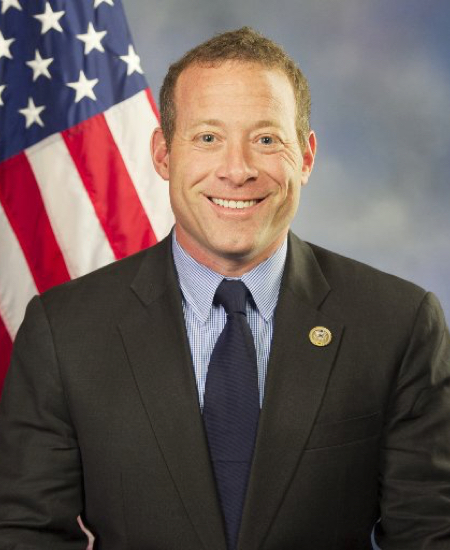
Rep. Josh Gottheimer
Sponsored bills
Maddy summaryHCONRES 4 is a symbolic resolution expressing Congress's support for tax-exempt fraternal benefit societies (like mutual aid organizations). It recognizes these groups, which have over 7 million members nationwide, as historically and currently providing critical community benefits - including life/health insurance, charitable work, and volunteer services - valued at over $3.8 billion annually. The resolution affirms that their tax-exempt status under Section 501(c)(8) of the Internal Revenue Code remains beneficial and should continue to be promoted. This is a non-binding expression of congressional sentiment, not a policy change.
Maddy summaryThis resolution (HRES 72) expresses the House of Representatives' support for designating January 30, 2025, as "CTE and RHI Awareness Day." It aims to raise public awareness about chronic traumatic encephalopathy (CTE) and repeated head impacts (RHI), which are linked to brain damage from head injuries - commonly affecting athletes, military veterans, and others with exposure to repeated head trauma. The resolution encourages the CDC and NIH to share information on CTE/RHI in public education materials and recognizes researchers, patients, and families impacted by these conditions. As a symbolic resolution, it does not create new laws or policies but promotes public education and reflection on these health issues.
Maddy summaryThis resolution expresses the House of Representatives' position that Congress should take steps to prevent the privatization of the United States Postal Service (USPS), ensuring it remains a federal independent agency. It highlights USPS’s constitutional role, self-sustaining nature (relying on service revenue, not taxpayer funds), and critical functions - serving 168 million addresses daily, supporting rural communities, and underpinning e-commerce. The resolution opposes privatization, noting it would raise prices, reduce services, and harm the $1.9 trillion mailing industry. As a non-binding resolution, it reflects the House’s stance but does not create new law or policy.
Maddy summaryHRES 76 is a symbolic resolution recognizing "Gold Shield Families" - the families of fallen police officers, firefighters, EMTs, correction officers, emergency dispatchers, and emergency service providers who died in the line of duty. It formally honors these families for their sacrifices and resilience, affirming that their struggles should not be forgotten. The resolution does not create new policies or funding but serves as a public statement of national appreciation. It directs the House to transmit a copy to the President and make it publicly available for recognition. This is a commemorative measure with no binding policy changes.
Maddy summaryThe STAR Act of 2025 adds a 25% tax credit for qualified semiconductor design expenses incurred by U.S. companies. It directly affects businesses conducting semiconductor design in the United States, covering both in-house costs (like wages and supplies for U.S. design work) and contracted design services. The credit excludes duplicating existing products, cosmetic design, or activities unrelated to performance or reliability improvements. This incentive expires for design expenses paid after December 31, 2036.
Maddy summaryHR 768, the Holocaust Education and Antisemitism Lessons Act, requires the U.S. Holocaust Memorial Museum Director to study how states and school districts currently teach about the Holocaust and antisemitism in K-12 schools. The study will examine curriculum requirements, teacher training, educational materials used, and assessment methods across all states and a representative sample of school districts and schools. It specifically aims to identify gaps, resources needed, and how schools address antisemitism and genocide prevention in their teaching. The Museum must submit a report to Congress within three years of the bill's enactment, detailing findings on current practices and challenges. This bill does not mandate new teaching requirements but seeks to understand existing approaches to Holocaust education.
Maddy summaryHR 764, the Global Health, Empowerment and Rights Act, removes two barriers for foreign nongovernmental organizations (NGOs) seeking U.S. foreign assistance. It ensures these organizations cannot be denied funding solely because they provide health services (like counseling and referrals) using non-U.S. government funds, as long as those services comply with local laws. The bill also requires that foreign NGOs face the same rules on using non-U.S. funds for advocacy and lobbying as U.S. NGOs receiving similar aid. This directly affects international health-focused NGOs working in countries where U.S. aid is provided.
Maddy summaryHR 807, the Public and Private Sector Ransomware Response Coordination Act of 2025, requires the Treasury Secretary to submit a report to Congress within one year of enactment. The report will examine current coordination between government agencies and financial institutions during ransomware attacks, assess whether financial institutions timely share attack information with authorities, and evaluate if better reporting mechanisms are needed. This bill directly affects financial institutions by focusing on how they report ransomware incidents and how government agencies use that information, without creating new laws or funding.
Maddy summaryThis bill authorizes the posthumous presentation of a Congressional Gold Medal to honor Colonel Young Oak Kim, a Korean American military leader and community advocate who died in 1994. It directs the Treasury Secretary to design and strike the medal, which will be displayed at the Smithsonian Institution, particularly at the National Portrait Gallery. The bill does not create new policies or affect any legal rights; it is purely a commemorative gesture recognizing Kim’s military service (including the Distinguished Service Cross and leadership in the 100th Infantry Battalion/442nd Regimental Combat Team) and his civic work founding community centers in Los Angeles. The medal is symbolic, with no financial or legal impact on any individuals or programs.