

Health Care Workforce Innovation Act of 2025 This bill establishes the Health Care Workforce Innovation Program within the Health Resources and Services Administration to provide grants to federally qualified health centers, rural health clinics, and post-secondary vocational programs for developing education and training for allied health professionals (e.g., professionals providing clinical or non-clinical support services, community health workers, and health education specialists). Specifically, grant recipients must use the funds to carry out innovative, community-based programs to train allied health professionals, with a focus on supporting rural and underserved areas. Grant recipients may use the funds to launch or expand health care professional partnerships (e.g., between a grant recipient and a school), establish apprenticeship or other career programs, or invest in training equipment, among other activities.
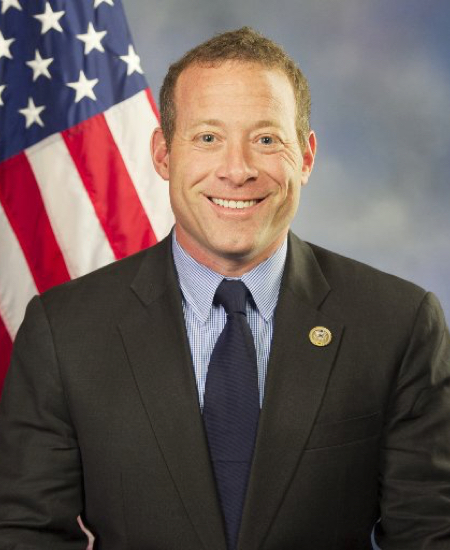
Rep. Josh Gottheimer
Sponsored bills
Maddy summaryHR 951 authorizes the U.S. Mint to produce commemorative coins (gold $5, silver $1, and half-dollar) in 2028 to mark the 250th anniversary of the Declaration of Independence. Surcharges from coin sales ($35 per gold coin, $10 per silver, $5 per half-dollar) will fund the Stephen Siller Tunnel to Towers Foundation, supporting programs for Gold Star families, first responders, veterans, and their families. The coins must meet specific weight, size, and composition standards, with mintage limits set at 100,000 gold, 500,000 silver, and 750,000 half-dollar coins. All surcharge proceeds directly benefit the Foundation’s existing initiatives, such as mortgage-free housing and scholarships, without requiring additional federal funding.
Maddy summaryHR 964, the Rosa Parks Day Act, would designate Rosa Parks Day as a legal public holiday for federal employees and institutions. The bill amends Title 5 of the U.S. Code to add "Rosa Parks Day" to the list of recognized federal holidays, following Thanksgiving Day. This change would establish a new annual observance on the day designated by the President, requiring federal offices to close and employees to receive paid time off. The bill directly affects federal operations and employees, creating a new standard for federal holiday observance.
Maddy summaryHJRES 32 is a symbolic congressional resolution expressing support for designating February 3-7, 2025, as "National School Counseling Week." It does not create new laws or funding but honors school counselors' roles in supporting students' academic, social-emotional, and career development. The resolution encourages public recognition of counselors' contributions, including helping students navigate challenges like mental health, bullying, and college readiness. It specifically references the American School Counselor Association's designation of this week and aims to raise awareness about the importance of school counseling services. The resolution has no binding effect on schools or budgets.
Stop Antiabortion Disinformation Act or the SAD Act This bill prohibits deceptive advertising for reproductive health services. Specifically, the bill makes it unlawful for a person (i.e., individual, partnership, corporation, association, or organization) to deceptively advertise the reproductive health services they offer, including by misrepresenting that the person (1) offers or provides contraception or abortion services (or referrals for such contraception or abortion services), or (2) employs or offers access to licensed medical personnel. The bill provides for enforcement by the Federal Trade Commission. In addition to any other penalty, violations are subject to a civil penalty that may not exceed the greater of $100,000 (adjusted annually for inflation) or 50% of the revenue earned during the preceding 12-month period by the ultimate parent entity of the person who violated the bill.
Maddy summaryHR 869, the Keep Our PACT Act, mandates specific annual funding levels for two key education programs: Title I of the Elementary and Secondary Education Act (ESEA) and the Individuals with Disabilities Education Act (IDEA). For Title I, it requires funding in fiscal years 2026-2035 that equals the difference between the 2025 funding level and set annual dollar targets (e.g., $20.5 billion for 2026). For IDEA, it sets mandatory annual funding levels that gradually increase to reach 40% of the national average per-pupil expenditure for students with disabilities by 2035. The bill directly affects public school districts and students, particularly those with disabilities, by guaranteeing these funding levels rather than relying on annual appropriations.
Maddy summaryThis bill requires federal agencies that haven't met a specific goal for awarding contracts to service-disabled veteran-owned small businesses to provide employee training on increasing such contracts. The Small Business Administration, working with the Office of Veterans Business Development, must issue guidance on best practices within 180 days and submit annual reports to Congress listing agencies that missed the target and detailing their training. It directly affects federal agencies with underperforming contracting records and aims to improve opportunities for service-disabled veteran-owned small businesses. The policy focuses on accountability through training, guidance, and reporting rather than altering existing contracting rules.
Maddy summaryThis bill expands the Anti-Boycott Act of 2018 to cover boycotts promoted or enforced by international governmental organizations (IGOs), not just foreign countries. It adds "international governmental organization" to key definitions in the law and requires the President to annually report to Congress on foreign countries and IGOs that foster or impose such boycotts. The law directly affects U.S. businesses and entities subject to boycotts by IGOs, like the United Nations or World Trade Organization. The changes are technical amendments to existing definitions and reporting requirements.
Medicare Patient Access and Practice Stabilization Act of 2025 This bill increases certain payment adjustments under the Medicare physician fee schedule for services furnished between April 1, 2025, and January 1, 2026.
Maddy summaryHR 887, the Lower Grocery Prices Act, directs the Government Accountability Office (GAO) to study 20 years of food-at-home cost trends using the Consumer Price Index and other economic data. The GAO must submit a report to Congress within 180 days of the bill’s enactment, detailing its findings and recommendations for lowering grocery costs. This bill does not directly lower prices or change existing policies - it only mandates a study to inform potential future legislative action. The report will be shared with specific congressional committees focused on finance and commerce.