

Maddy summaryHR 1007, the Antisemitism Awareness Act of 2025, clarifies how the Department of Education enforces Title VI of the Civil Rights Act of 1964 to address discrimination against Jewish individuals. It requires the Department to consider the International Holocaust Remembrance Alliance (IHRA) definition of antisemitism when investigating complaints involving discrimination based on actual or perceived Jewish ancestry or ethnic characteristics. This affects Jewish students and communities in K-12 schools and colleges receiving federal funding, as it ensures antisemitism is assessed under existing civil rights protections. The bill does not create new laws but specifies that the IHRA definition - already used by the Department since 2018 - must be applied in Title VI enforcement cases.
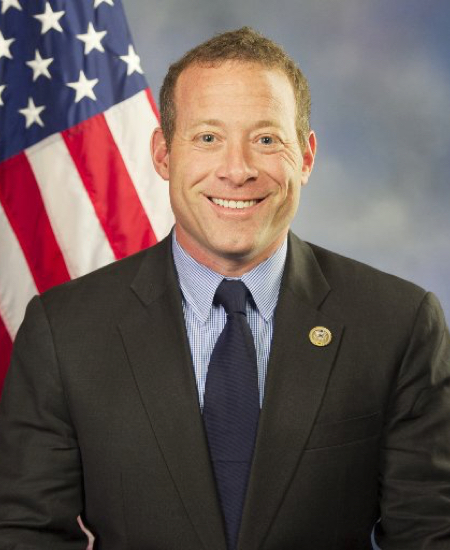
Rep. Josh Gottheimer
Sponsored bills
Maddy summaryThis bill establishes a federal right to access contraception, protecting individuals' ability to obtain contraceptives and health care providers' ability to offer them without government interference. It prohibits states from banning or restricting contraceptive services, products, or information, including laws that force providers to deny care based on personal beliefs or limit access to specific methods. The law immediately overrides conflicting state regulations and ensures that contraception remains available regardless of factors like race, income, disability, or location. It applies to all individuals and providers, building on existing federal protections like the Affordable Care Act's coverage requirements.
Maddy summaryHR 835, the 9/11 Memorial and Museum Act, provides a one-time federal grant of $5-10 million to the National September 11 Memorial & Museum (operated by an IRS 501(c)(3) organization) for its operations, security, and maintenance. The bill requires the museum to offer free admission to veterans, first responders, and victims' families, plus weekly free public hours, and mandates annual financial audits and public reporting to Congress. Grant funds must be used to preserve the site, educate visitors, and increase access for economically disadvantaged groups. The funding is subject to annual appropriations and does not authorize ongoing federal support beyond the one-time grant.
This resolution supports federal investment in public K-12 schools, affirms that the Department of Education (ED) plays a vital role in the public education system, and states that public education funding should not be diverted (e.g., through the use of vouchers) to privately run K-12 schools. The resolution also rejects any claim that the executive branch has the legal authority to (1) dismantle or relocate ED or any of its major offices; or (2) reduce federal funding for public education, block federal grants for education, or transfer funding burdens for education to state and local governments.
Stop the Wait Act of 2025 This bill phases out the initial waiting period for Social Security Disability Insurance (SSDI) benefits and eliminates the waiting period for certain disabled individuals to become eligible for Medicare. Under current law, individuals generally must wait five months after the onset of disability to begin receiving SSDI benefits. The bill would gradually reduce this waiting period before eliminating it entirely in the year 2030. Further, the bill would eliminate the 24-month waiting period for certain disabled workers and other individuals to become eligible for Medicare. Under current law, individuals under the age of 65 may generally enroll in Medicare after they have been eligible for SSDI or Social Security child’s, widow’s, or widower’s benefits by reason of disability for 24 months. The bill would eliminate this waiting period for individuals for whom the annual cost of certain medical insurance would exceed a specified percentage of their household income (i.e., those who cannot afford minimum essential coverage). Medicare eligibility for these individuals must be available retroactively to the first month that an individual qualified for SSDI or Social Security child’s, widow’s, or widower’s benefits by reason of disability.
Maddy summaryHR 942, the "Banning SPR Oil Exports to Foreign Adversaries Act," prohibits the export of petroleum products drawn from the U.S. Strategic Petroleum Reserve to China, North Korea, Russia, Iran, and any entity owned or controlled by these countries or the Chinese Communist Party. The Secretary of Energy may grant a waiver for such exports if certified as serving U.S. national security interests, but must issue implementing rules within 60 days of enactment. This policy directly affects U.S. energy exports and entities seeking to purchase SPR oil from the listed adversaries.
Maddy summaryThis bill reauthorizes the Dr. Lorna Breen Health Care Provider Protection Act, extending mental health support programs for healthcare professionals through 2030 (previously ending in 2024). It requires funded programs to specifically address reducing administrative burdens on healthcare workers while continuing to promote access to mental health and substance use disorder services. The legislation directly affects healthcare providers across the U.S. who may access these federally supported resources. Key provisions include extending funding periods and mandating that grant recipients focus on easing workplace administrative tasks, alongside maintaining existing awareness initiatives. The bill does not create new programs but continues and refines existing mental health support for the healthcare workforce.
Maddy summaryThe HOPE Act of 2025 creates tax-advantaged "HOPE Accounts" for individuals to pay qualified medical expenses. These accounts allow tax-free savings with annual contribution limits of $4,000 for self-only coverage or $8,000 for family coverage, and employers can contribute up to 50% of these limits. Distributions for qualified medical expenses are tax-free, but amounts used for non-medical purposes are taxed at ordinary rates plus a 30% penalty. The bill would take effect for taxable years beginning after December 31, 2025, and applies to individuals with minimum essential health coverage who don't participate in other similar accounts like HSAs or FSAs.
This bill provides for the presentation of a Congressional Gold Medal to the Freedom Riders, in recognition of their contribution to civil rights by fighting for equality in interstate travel.
Maddy summaryHR 922, the Period PROUD Act of 2025, allocates $1.9 billion annually (2025-2028) through the Social Services Block Grant Program, with $200 million specifically dedicated each year (2026-2029) to provide free menstrual products to low-income menstruating individuals. It requires states to distribute these funds to eligible nonprofits with experience in community distribution of basic needs, integrating the program with existing services like SNAP, Medicaid, and WIC. The bill mandates that funds supplement, not replace, other existing programs, prohibits limiting where products can be distributed, and caps administrative costs at 9% of allocated funds. States must report annually and an evaluation of the program’s effectiveness will be completed by 2031.