

Maddy summaryHR 794, the Lunar New Year Day Act, would designate the Lunar New Year as a federal holiday by adding it to the list of official federal holidays under Title 5 of the U.S. Code. This change would directly affect federal government operations and employees, who would observe the holiday on the date of the Lunar New Year each year. The bill’s sole mechanism is amending the existing holiday schedule to include "Lunar New Year Day" following the Birthday of Martin Luther King, Jr. It does not create new programs, allocate funding, or impact non-federal entities.
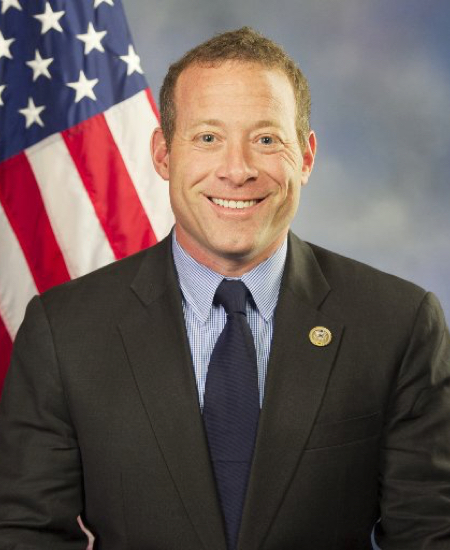
Rep. Josh Gottheimer
Sponsored bills
Maddy summaryHR 770, the Accountability for Veterans Act, requires the Secretary of Veterans Affairs to submit a report to Congress within 180 days of the bill's enactment. The report must address three specific issues: the causes of delays in disability claims appeals, ways to improve resources for service members and spouses in the Transition Assistance Program, and management problems within VA health care systems. This is a procedural bill focused solely on gathering information and analysis, not implementing new benefits or policies. It directly affects the Department of Veterans Affairs, which must compile and deliver the report to congressional committees. The bill does not change existing laws or funding but aims to identify systemic issues for potential future action.
Maddy summaryThis resolution celebrates the historical and ongoing contributions of Hindu Americans to the U.S. economy, culture, and society, including their roles in fields like Ayurveda, yoga, and the arts. It specifically condemns Hinduphobia, anti-Hindu bigotry, hate, and intolerance, addressing rising hate crimes against Hindu places of worship (mandirs) and individuals. As a non-binding symbolic resolution, it does not create new laws or policies but serves to affirm support for Hindu Americans' religious freedom and community.
Maddy summaryHRES 65 is a non-binding House resolution affirming existing medication abortion access and addressing concerns about the Comstock Act. It specifically references a December 2022 Department of Justice memo confirming that federal law does not prohibit mailing abortion medications like mifepristone when sent without intent to violate the law. The resolution condemns restrictions on reproductive health care access, including medication abortion, and rejects efforts to misuse the Comstock Act to threaten such services. As a symbolic statement (not new legislation), it expresses congressional support for current legal access to medication abortion without creating new policy changes.
Maddy summaryHRES 68 is a non-binding House resolution expressing strong disapproval of the President’s announcement to withdraw the U.S. from the Paris Agreement. It commends states, businesses, and citizens supporting the Agreement, urges the President to reverse the withdrawal decision, and calls for Congress to prioritize U.S. climate leadership. The resolution does not create new laws or affect specific groups but formally states the House’s position against withdrawing from the international climate accord. It was introduced by 115 co-sponsors and reflects broad congressional concern about reversing U.S. climate commitments.
Maddy summaryHR 733 requires the President to review U.S. sanctions against 48 specific Hong Kong officials within 180 days of the bill's enactment. The review must determine if these officials - such as top government leaders (e.g., Chief Executive John Lee) and judicial figures (e.g., Chief Justice Andrew Cheung) - still meet criteria under four existing sanctions laws. The President must submit a detailed justification to congressional committees, including the Foreign Relations and Financial Services committees. This bill mandates a formal review process but does not alter current sanctions or guarantee any changes. The focus is solely on evaluating whether existing sanctions remain appropriate.
Maddy summaryHR 712, the Child and Animal Abuse Detection and Reporting Act, amends federal law to require the national clearinghouse tracking child abuse and neglect data to also collect information on animal abuse incidents connected to child abuse cases. Specifically, it expands the existing data collection framework to include "the incidence of any such cases related to animal abuse," such as when a family's pets are harmed during a child abuse situation. This means state child welfare agencies reporting to the federal clearinghouse must now include animal abuse data tied to child abuse incidents, without requiring separate animal cruelty reports. The bill directly affects the federal agency managing the clearinghouse (within the Department of Health and Human Services) and state child welfare systems that provide this data.
Maddy summaryHR 703, the Main Street Tax Certainty Act, makes a key tax deduction permanent for small business owners. It removes the temporary sunset provision (subsection (i)) from Section 199A of the tax code, ensuring the qualified business income deduction remains available for eligible small businesses. This change directly affects pass-through business owners (like S-corps, partnerships, and sole proprietorships) who currently qualify for this deduction. The permanent change takes effect for tax years starting after December 31, 2025.
Maddy summaryThe SAFE Grilling Act requires the Consumer Product Safety Commission to create and implement a public awareness campaign within one year of enactment. The campaign will educate the public about grill-related fire and injury risks and teach safe grilling practices, such as proper cleaning and handling. It authorizes $5 million in funding to support this effort. The bill directly affects all grill users in the U.S., aiming to reduce injuries and fires based on data showing over 22,000 annual emergency room visits from grill incidents.
Maddy summaryHR 615 creates a refundable tax credit for individuals covering up to $350 of gas and electricity costs paid directly to utilities for their primary residence. It applies to taxpayers with modified adjusted gross income under $400,000 for joint filers or $200,000 for single filers, excluding dependents and costs already covered by other credits. The bill requires landlords including utility costs in rent to provide annual receipts to tenants and the IRS. This credit directly affects homeowners and renters paying utility bills for their main residence, with the credit amount capped at $350 per year. It does not apply to secondary homes or utility costs covered elsewhere in tax law.