

Maddy summaryHRES 441 is a symbolic House resolution expressing support for designating May 2025 as "Mental Health Awareness Month." It does not create new laws, allocate funding, or change existing policies - it solely aims to raise public awareness about mental health challenges. The resolution cites statistics on rising mental health issues (including youth depression, suicide rates, and disparities in care access) to underscore the need for greater attention. It encourages the public, schools, and organizations to use the month to promote mental well-being and reduce stigma, but contains no concrete policy changes or mandates.
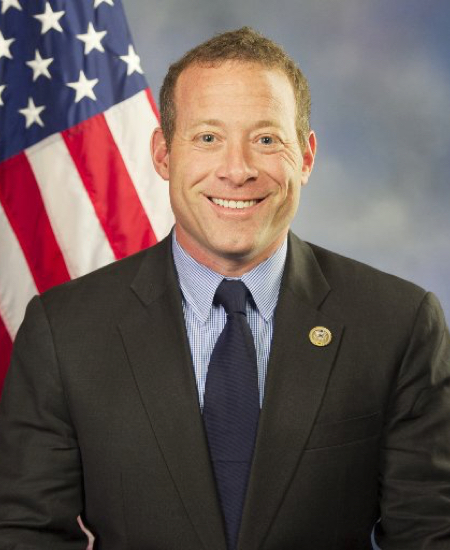
Rep. Josh Gottheimer
Sponsored bills
Maddy summaryThis bill prohibits the U.S. military from discriminating against service members or applicants based on gender identity. It bans policies that would deny service, involuntarily separate members, deny medically necessary healthcare, or require service in a gender different from one's identity. The law defines "gender identity" broadly to include a person's internal sense of gender, appearance, and mannerisms, regardless of sex assigned at birth. It directly affects transgender and gender-diverse individuals currently serving or seeking to serve in the Armed Forces.
Maddy summaryThe DEFIANCE Act of 2025 creates a new civil legal remedy for victims of non-consensual intimate digital forgeries (synthetic images or videos manipulating real people into sexual contexts without consent). It allows affected individuals to sue perpetrators in federal court for damages up to $250,000, injunctions to remove content, and privacy protections like pseudonyms. The bill specifically covers cases where forgeries are created or shared with intent to disclose, including scenarios involving sexual assault or harassment. It expands existing federal protections under 15 U.S.C. 6851 to address digital forgeries while ensuring state laws remain in effect.
Maddy summaryThis bill amends federal education law to require K-12 schools to include Asian American, Native Hawaiian, and Pacific Islander (AANHPI) history in American history and civics education. It directs the Department of Education to update curriculum standards, teacher training programs, and national assessments to ensure AANHPI contributions and experiences are integrated into existing history lessons. The policy affects all public schools receiving federal education funding by mandating specific inclusion of AANHPI history alongside traditional American history content. This change aims to address historical gaps in curricula that have excluded these communities' diverse roles and experiences.
Maddy summaryHR 3533, the Blockchain Regulatory Certainty Act, creates a legal exemption for most blockchain developers and service providers. It prevents these entities from being classified as money transmitters, financial institutions, or subject to related licensing requirements under federal or state law - unless they personally control users' digital assets. The bill specifically exempts developers who create blockchain software or provide access to blockchain networks (like public ledgers for digital assets), as long as they lack unilateral authority over those assets. This provides regulatory clarity for the industry while preserving existing intellectual property laws and state regulations that align with the bill.
Maddy summaryThis bill would establish 18-year fixed terms for all Supreme Court justices, replacing lifetime appointments. It requires the President to nominate one justice every two years (during first and third years after presidential elections), with Senate confirmation within 90 days, and prohibits reappointments after a single term. Current justices would be phased out in order of seniority as new justices are appointed under this schedule. The bill directly affects all sitting and future Supreme Court justices by mandating term limits and a structured appointment process.
Maddy summaryHR 3510, the Saving Students with Software Act, creates a federal grant program to help schools implement suicide prevention software. The bill directs the Secretary of Education to award grants to states for covering costs of software that monitors student device use in elementary and secondary schools (as defined by existing law). This software automatically alerts school staff if a student types words or phrases related to self-harm or suicide. The program aims to provide schools with funding to adopt this specific monitoring tool, directly affecting school districts and students using school-provided devices. Grants are available for software designed to detect and report concerning language during student device use.
Maddy summaryHR 3506 reauthorizes annual funding for the Healthy Food Financing Initiative through fiscal year 2030, setting specific mandatory funding levels starting at $25 million for 2026 and increasing to $50 million annually after 2029. The bill directs the Commodity Credit Corporation to allocate these funds to support projects expanding access to healthy food in underserved communities. It directly affects low-income neighborhoods lacking grocery stores and local food businesses seeking financing for development or expansion. The legislation provides no new policy mechanisms beyond establishing these fixed annual funding amounts.
Maddy summaryHR 3511, the Preparing for the Future Act, establishes a federal grant program to support students pursuing school psychology degrees. It provides up to $8,000 annually (capped at $16,000 total) for tuition and fees at approved institutions, contingent on maintaining academic standards (e.g., GPA equivalent to 3.25 or high test scores) and agreeing to serve as a full-time school psychologist in a "covered school" for four academic years within eight years of graduation. Covered schools are defined as public or nonprofit elementary/secondary schools with fewer than one psychologist per 500 students and in Title I-eligible districts. Failure to complete the service obligation converts the grant into a repayable federal loan with interest.
Maddy summaryThe AGRITOURISM Act (HR 3470) creates a new Office of Agritourism within the U.S. Department of Agriculture (USDA) to support farm-based tourism businesses. The Office, led by a Director appointed by the Secretary, will coordinate USDA programs and provide technical assistance to help small and family-run farms diversify income through activities like farm tours, on-farm sales, accommodations, and farm-related events. It will update USDA programs to reflect best practices, share resources with agritourism businesses, and facilitate partnerships to promote rural economic development. This bill directly affects rural agricultural businesses and the USDA’s approach to fostering sustainable tourism in rural communities.