

Maddy summaryHR 1147 establishes the Veterans Accessibility Advisory Committee to improve accessibility for veterans with disabilities across Department of Veterans Affairs (VA) services. The committee, composed of 15 members including four veterans with disabilities, four accessibility experts, two VA staff, and five veteran service organization representatives, will assess barriers in VA facilities, digital services, benefits, and communications. It must submit biennial reports identifying accessibility gaps and recommending improvements, with the VA required to respond to these reports within 90 days. The committee directly affects veterans with disabilities by mandating regular VA consultation on compliance with accessibility laws like the Americans with Disabilities Act and Section 508 of the Rehabilitation Act.
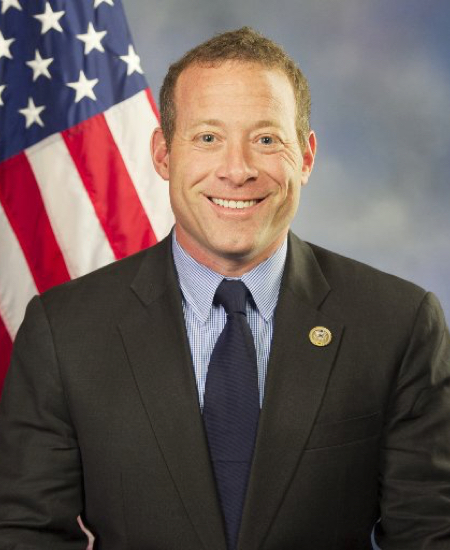
Rep. Josh Gottheimer
Sponsored bills
Maddy summaryHR 217, the CHIP IN for Veterans Act of 2025, makes permanent a program allowing the Department of Veterans Affairs (VA) to accept donated properties and facility improvements from communities. This directly affects veterans by expanding potential access to VA services through locally donated facilities, such as buildings or renovations. The key provision removes the temporary expiration date from a 2016 pilot program, ensuring the VA can permanently accept these donations without needing periodic reauthorization. The bill updates related sections of the U.S. Code to reflect this permanent change, effective December 16, 2026. It does not alter eligibility for veterans or VA benefits but changes how facilities may be sourced.
Maddy summaryHR 3498, the Henrietta Lacks Congressional Gold Medal Act, authorizes a commemorative gold medal to honor Henrietta Lacks for her contribution to science through her immortal HeLa cells. The bill directs the Treasury Secretary to strike the medal, which will be presented posthumously by Congress and displayed at the Smithsonian Institution. It also permits the sale of bronze duplicates to cover costs, with proceeds going to the U.S. Mint fund. This is a ceremonial recognition of Lacks' legacy, not a policy change affecting any group or requiring new regulations.
Maddy summaryHR 3501 would require Medicare providers to screen beneficiaries aged 65 and older for cognitive impairment during annual wellness visits and initial preventive physical exams, using tools approved by the National Institute on Aging. The screening must be documented in the patient’s medical record. This change applies to visits starting January 1, 2026, and aims to support early detection of conditions like Alzheimer’s through standard preventive care. The bill directly affects Medicare beneficiaries, providers, and caregivers by integrating cognitive screening into routine preventive services.
Maddy summaryThis non-binding resolution (HRES 424) supports designating May 16, 2025, as "National Honor Our LGBT Elders Day." It encourages federal, state, local governments, nonprofits, schools, and healthcare providers to observe the day through programs addressing health disparities and unique challenges faced by LGBTQ+ older adults. The resolution specifically urges culturally competent healthcare for this community and prioritization of their health rights in government programs and aid efforts. It does not create new laws or funding but formally recognizes the need for greater awareness and support.
Maddy summaryHR 3463 (COUNTER Act) expands the U.S. military's authority to counter drone threats by allowing the Department of Defense and Coast Guard to neutralize unmanned aircraft systems without being restricted by certain federal laws. It exempts related technology, procedures, and protocols from public disclosure requirements under federal and state laws, and permits military commanders to delegate these actions. The bill applies to both domestic and overseas operations, clarifying that other federal laws do not apply to U.S. military or Coast Guard activities mitigating drone threats abroad. Key changes include broadening legal authority beyond previous restrictions and extending reporting deadlines for related activities.
Stronger Communities through Better Transit Act This bill requires the Department of Transportation (DOT) to establish a grant program to support operating projects for public transportation and related service improvements, particularly in underserved communities and areas of persistent poverty. Specifically, the bill requires DOT to allocate funding under the program for urbanized areas, states, and Indian tribes that are recipients of funds under either the Federal Transit Administration's (FTA's) Urbanized Area Formula Funding program or Formula Grants for Rural Areas program. Eligible recipients may use funding for operating costs associated with projects that improve public transportation service for transit-dependent populations and support increased transit ridership (e.g., service expansion, information technology enhancements, and workforce development). DOT must apportion the funding so that recipients receive funds that are proportional to their share of operating costs. The bill also provides for an increased federal cost share for operating assistance for projects or programs carried out in areas of persistent poverty or underserved communities. DOT must set up a multimodal access measurement interface for public agencies to aid transit agencies in determining and reporting on access to jobs and essential services. A grant recipient must (1) report specific information to the FTA for inclusion in the National Transit Database, and (2) survey transit riders and non-riding residents regarding transit service improvements. Further, the bill expands the purposes of the public transportation programs to include supporting public transportation's role in combating climate change through growing/retaining transit ridership.
Maddy summaryHR 3443 creates a new Medicare payment model to provide supplemental funding for ground and air ambulance services that administer specific life-saving medications (like epinephrine, lidocaine, and blood products) during emergencies. It directly affects EMS agencies serving Medicare beneficiaries by requiring them to apply for participation, meet data reporting standards (including patient outcomes and service metrics), and receive monthly or quarterly supplemental payments based on costs for maintaining medication supplies and data systems. The model runs for at least 5 years, with a requirement for a congressional report analyzing whether the payments improve medication access, patient outcomes, and care quality - especially for rural and underserved communities. The bill also mandates a MedPAC report on EMS payment structures and EMTALA guidance to reduce "wall time" delays in hospital handoffs.
Maddy summaryHR 3460, the AI Whistleblower Protection Act, prohibits employers from retaliating against employees or independent contractors who report AI security vulnerabilities or AI violations to regulators, Congress, or internal supervisors. It directly affects workers in AI development, deployment, or use - such as software engineers or safety auditors - who identify risks like stolen AI technology or failures to address safety dangers. Key provisions include banning termination, demotion, or harassment for lawful reporting, requiring employers to reinstate affected workers with double back pay, and blocking contracts that force arbitration to resolve retaliation claims. The bill establishes a 180-day window to file complaints with the Labor Department or sue in court, with remedies covering legal fees and compensatory damages. It applies broadly to any employer in commerce, ensuring protections cannot be waived by employment agreements.
Maddy summaryHRES 413 is a non-binding House resolution condemning Hamas for its October 7, 2023, attacks on Israel, which killed over 1,200 people and took more than 250 hostages. It specifically demands that Hamas immediately release the 58 remaining hostages (including four U.S. citizens: Edan Alexander, Itay Chen, Omer Neutra, Judi Weinstein, and Gad Haggai) and return them to safety. The resolution also recognizes that hostage-taking violates international law and calls on the White House to continue efforts to secure all hostages' release. As a symbolic resolution, it does not create new laws or policies but formally expresses the House's stance.