

Maddy summaryHR 6714, the American Products in Parks Act, requires all items sold in National Park System gift shops and visitor centers to be made in the United States. Specifically, it mandates that final assembly, significant processing, and all or virtually all ingredients/components must originate domestically, effective one year after enactment. The bill directs the Secretary of the Interior to create certification and enforcement procedures to verify compliance. This directly affects park gift shop vendors and suppliers, requiring them to source products domestically to continue selling within national parks.
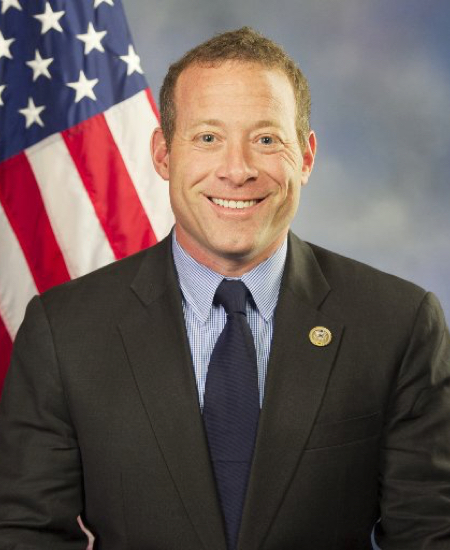
Rep. Josh Gottheimer
Sponsored bills
Maddy summaryHR 6718, the Professional Student Degree Act, amends the Higher Education Act to clarify the definition of a "professional degree" for federal education purposes. It replaces the previous definition with a new section listing specific degrees that meet the criteria, including Pharmacy (Pharm.D.), Law (J.D.), Medicine (M.D.), Dentistry (D.D.S.), Veterinary Medicine (D.V.M.), and others like Nursing (D.N.P.) and Business Administration (M.B.A.). This definition requires degrees to signify both completion of academic requirements for professional practice (often requiring licensure) and skills beyond a bachelor's level. The bill directly affects students pursuing these designated degrees by formally recognizing them under federal education law, without creating new programs or changing funding.
Maddy summaryThe Protect America's Workforce Act cancels an executive order issued on March 27, 2025, that excluded certain groups from federal labor-management relations programs, making it legally unenforceable. It also ensures that all collective bargaining agreements between federal agencies and labor unions, which were active as of March 26, 2025, remain fully effective until their agreed terms expire. This directly affects federal agencies, labor unions, and the employees covered by these agreements. The bill prevents federal funds from being used to implement the canceled executive order while preserving existing labor agreements.
Miracle on Ice Congressional Gold Medal Act This act provides for the award of Congressional Gold Medals to the members of the 1980 U.S. Olympic men's ice hockey team in recognition of the team's achievement at the 1980 Winter Olympic Games.
Maddy summaryThe HIRRE Prosecutors Act of 2025 establishes a federal grant program to help state, local, tribal, and territorial prosecutor offices hire, retain, and train prosecutors and support staff. It authorizes $10 million annually (2026-2030) for competitive grants, covering up to 75% of eligible costs, with preference given to rural, tribal, and areas rehiring laid-off prosecutors. Grantees must cover the remaining 25% of costs (or qualify for a waiver), and funds cannot replace existing state/local funding but must supplement it. All funded projects require data tracking and annual performance evaluations by the Attorney General.
Maddy summaryHR 6682, the Endometriosis CARE Act, requires federal agencies to advance research, improve treatment access, and increase awareness for people with endometriosis - a chronic condition causing pelvic pain and fertility challenges affecting an estimated 10% of reproductive-age individuals. The bill mandates $50 million annually for NIH research on endometriosis treatments and cures, directs HHS to analyze barriers like insurance coverage and provider shortages in accessing care, and funds public education campaigns targeting underserved racial, ethnic, and minority groups. It also requires HHS to develop provider training materials on diagnosis and care, and to commission a National Academies study on disparities in endometriosis treatment across race, geography, and insurance status. The legislation focuses on data collection, education, and research rather than altering existing insurance coverage or treatment protocols.
Maddy summaryThe Keeping All Students Safe Act prohibits the use of unlawful seclusion and restraint in schools receiving federal funding, including physical restraint that restricts breathing or blood flow, chemical restraint not prescribed for medical treatment, and mechanical restraint. The bill requires schools to use less restrictive interventions first, mandates that staff using physical restraint be trained and certified through State-approved programs, and requires immediate parent notification after any restraint incident. States must develop plans to monitor compliance, collect and report data on restraint incidents (disaggregated by race, disability status, and school type), and implement positive behavioral interventions. The bill provides $40 million annually for five years to support states in implementing these requirements and improving school climate through evidence-based approaches.
Maddy summaryHR 6651 requires federal agencies (including the FBI, Homeland Security, and USPS) to develop a coordination strategy within 180 days to improve information sharing on organized retail crime networks. The strategy must help state/local law enforcement gather evidence for prosecutions and boost collaboration between agencies, retailers, and crime task forces. Agencies must submit a joint report within 180 days, and the Comptroller General will publish a separate report on private-sector law enforcement cooperation within one year. The bill defines "organized retail crime" as coordinated theft or fraud for interstate distribution of stolen goods, directly affecting federal agencies, law enforcement, and the retail industry.
Maddy summaryHR 6678, the Senior Legal Hotline Act of 2025, authorizes $10 million annually (2027-2031) to fund competitive grants for nonprofits or government partnerships to establish or operate statewide legal hotlines serving older adults. The hotlines must provide free, phone-based legal counseling, referrals, and advocacy on civil issues to seniors with the greatest economic or social need, coordinating with existing legal aid providers across each state. Grantees must contribute 25% of costs from non-Federal funds and ensure staff/volunteers have no conflicts of interest. This bill directly affects older individuals facing legal barriers they cannot afford to resolve, expanding access to free legal assistance through a coordinated state network.
Maddy summaryThe Safer Schools Act of 2025 establishes a 5-year federal pilot program providing grants to public schools for security risk assessments and physical security upgrades. Public schools that have experienced violent incidents involving multiple people are prioritized for both types of grants. Schools receiving assessment grants must first identify vulnerabilities, while improvement grants fund specific security measures like panic alarms linked to local police, with federal funds covering up to 50% of costs. The program allocates $600 million total ($100M-$300M annually), requiring schools to submit financial reports and post-implementation safety surveys, with annual congressional reports tracking outcomes.