

Maddy summaryThe "Peace Through Strength Against Russia Act of 2025" proposes to significantly expand and strengthen U.S. sanctions against the Russian Federation and its supporters. The bill mandates blocking property and restricting visas for Russian government officials, state-owned financial institutions, and entities supporting Russia's defense industrial base or war efforts in Ukraine, including those involved in kidnapping Ukrainian children. Key provisions prohibit U.S
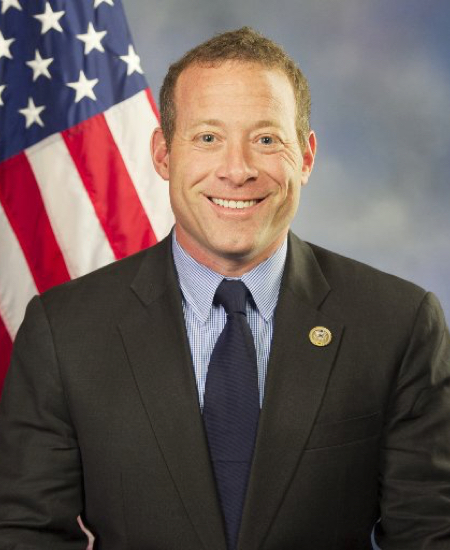
Rep. Josh Gottheimer
Sponsored bills
Maddy summaryThe S.T.O.P. Illicit Vapes Act establishes a federal multi-agency task force to combat the illegal importation, distribution, and sale of e-cigarettes. Co-chaired by the Attorney General and Health Secretary, the task force includes representatives from agencies like the FDA, Customs and Border Protection, and the FBI, and must meet monthly to coordinate enforcement efforts. It will submit semiannual reports to Congress detailing agency actions against illicit e-cigarette operations and recommend improvements to address public health concerns. The task force is set to expire 10 years after its establishment.
Maddy summaryThe RESTRICT Act (HR 6879) requires U.S. companies to obtain a license before exporting advanced computer chips to countries listed in a specific export control group (as of January 2025) and to regions like Hong Kong and Macau. It also blocks licenses for exports to entities primarily located in countries of concern (including those same nations plus Hong Kong and Macau). U.S. companies may avoid the license requirement if they meet strict conditions, such as limiting foreign ownership to 10% and implementing security measures to prevent misuse. The law expires five years after enactment.
Maddy summaryAlyssa's Act of 2025 expands the Federal Clearinghouse on School Safety Evidence-based Practices to collect and analyze school safety data, including information on school shootings and emergency response effectiveness. The bill creates a National School Safety Data Center to track incidents, injuries, and response methods, while requiring emergency response maps for schools to meet specific digital standards for accessibility and real-time updates. It also establishes a program to develop and test panic alarm technology for schools, and mandates annual reports on school safety master plans developed by states and local educational agencies. The legislation requires coordination with the U.S. Secret Service's National Threat Assessment Center to align school safety practices with evidence-based approaches.
Maddy summaryThis bill eliminates waiting periods for Social Security disability benefits and Medicare coverage for individuals diagnosed with young-onset Alzheimer's disease. It amends the Social Security Act to add "young-onset Alzheimer's" (as defined by the Social Security Commissioner) to the list of conditions qualifying for immediate disability benefits, removing a 5-month waiting period for applications filed after its enactment date. It also waives the standard 24-month waiting period for Medicare coverage when young-onset Alzheimer's is diagnosed, effective for benefits starting after the bill's enactment. These changes directly affect people with young-onset Alzheimer's seeking timely access to critical financial and health coverage.
Maddy summaryThis bill establishes a digital system for TRICARE members to electronically file and track complaints about access to care at military medical facilities. It requires the Defense Department to create a system where beneficiaries can submit complaints online, view their status in real time, and have complaints automatically aggregated quarterly for review. The system mandates annual reports to Congress comparing complaint types (e.g., specialty vs. primary care, pediatric vs. non-pediatric, administrative hurdles) and detailing facility-level actions taken to address issues. The goal is to improve transparency and accountability in military healthcare access.
Maddy summaryThis bill requires the federal government to annually calculate each state's net federal tax contribution (what states pay in federal taxes versus what they receive in federal spending). It mandates that the Commerce Secretary calculate states' tax burdens based on where individuals reside and business activity occurs, while the OMB calculates federal spending per state based on where federal contracts are performed. The results must be reported to Congress and published online within 180 days each year. This creates a transparent, annual accounting of federal fiscal flows between states, affecting all 50 states directly through standardized reporting.
Essential Caregivers Act of 2025 This bill prohibits certain health care facilities from limiting the access of essential caregivers to residents of those facilities, including during designated emergency periods. Specifically, the bill generally prohibits Medicare skilled nursing facilities, Medicaid nursing facilities, Medicaid intermediate care facilities, and associated inpatient rehabilitation facilities from restricting the access of essential caregivers to residents of the facilities, including during emergency periods in which visitation rights are otherwise restricted. During emergency periods, facilities may restrict access for an initial period of up to seven days and for one additional maximum seven-day period (if the additional period is approved by the state health department). Facilities may restrict access for a total of 7 days (or 14 days with the approval of the state health department) during an emergency period. Essential caregivers must agree to comply with any safety protocols set by the facility, which may be no more stringent for caregivers compared to those for staff. Caregivers who fail to comply with these requirements may be denied access, subject to an appeals process.
Maddy summaryHR 6763, the Shelter Act, creates a 25% tax credit for both individuals and businesses to offset qualified disaster mitigation expenditures on their primary residences or places of business. For individuals, the credit is capped at $3,750 annually (or $7,500 for joint returns) with a cumulative $15,000 limit per dwelling, while businesses receive a $5,000 annual limit. Qualified expenditures include roof reinforcement, flood barriers, fire-resistant materials, and other measures to protect against natural disasters like hurricanes, floods, and wildfires. The credit phases out for higher-income taxpayers and cannot be claimed for government-funded improvements, applying to expenses incurred after December 31, 2025.
Maddy summaryThis bill establishes a Diversity and Inclusion Administrator at the Department of Labor to increase African American participation in apprenticeships. It requires all new and renewing registered apprenticeship programs to submit plans boosting African American enrollment and creates competitive grants for programs targeting underserved communities in fields like construction, healthcare, and tech. The grants fund outreach, mentoring, and support services to help African American youth access and complete apprenticeships. The bill directly affects African American young people and apprenticeship programs nationwide, with $2 million authorized for fiscal year 2026.