

Maddy summarySammy's Law requires large social media platforms (those with over 100 million monthly users or $1 billion in annual revenue) to create real-time tools allowing parents or third-party safety software providers to help protect children under 17 from online harms. Platforms must provide secure access to children's account data for safety software providers that register with the Federal Trade Commission and meet strict security and privacy requirements. Third-party providers can only use the data to address specific risks like cyberbullying, trafficking, or abuse, and must delete data after 14 days unless needed for a safety concern. The law creates a federal standard that prevents states from making their own rules about this type of platform access.
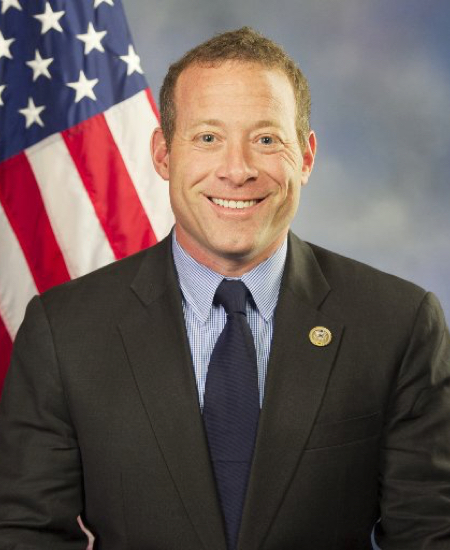
Rep. Josh Gottheimer
Sponsored bills
Maddy summaryThis concurrent resolution (HCONRES 65) is a symbolic congressional commendment of state and local governments that have affirmed reproductive rights as human rights. It recognizes efforts by jurisdictions like Carrboro, North Carolina; Austin, Texas; and Fulton County, Georgia, which passed resolutions or proclamations declaring abortion access a human right and condemning criminalization of pregnancy outcomes. The resolution urges states to repeal restrictive abortion laws and protect access to reproductive care, but it does not create new legal requirements or fund programs. As a procedural resolution, it has no binding effect on federal or state law.
Maddy summaryHR 6575, the CommonGround for Affordable Health Care Act, extends enhanced premium tax credits for health insurance through 2026, directly benefiting millions of lower and middle-income Americans purchasing coverage through the ACA marketplace. The bill modifies income thresholds for premium subsidies, creating new income tiers that maintain or increase financial assistance for households earning up to 1,000% of the poverty level. It includes provisions to prevent fraud in health insurance exchanges by imposing civil penalties on agents and brokers who provide false information, and requires transparency in pharmacy benefit manager contracts to improve drug pricing accountability. The legislation also extends the annual open enrollment period for health insurance exchanges for the 2026 plan year, allowing more time for people to enroll or change coverage.
Maddy summaryHR 6592 redefines Medicaid-covered "private duty nursing" as "continuous skilled nursing services" for complex-care patients requiring multiple hours of daily nursing care (as determined by states), mandating these services be provided by licensed nurses (RNs or LPNs). It requires the Secretary to develop national quality standards for these services through a stakeholder working group, to be published within one year. The bill also updates Medicaid waiver services and quality measures to include continuous skilled nursing services, with standards reviewed every eight years. This directly affects complex-care Medicaid beneficiaries and their nursing providers across all states.
Maddy summaryThis bill expands Medicare coverage for home infusion therapy by changing how external infusion pumps and certain non-self-administered drugs are treated as durable medical equipment. It requires that these items be covered if three conditions are met: the drug's FDA-approved instructions require professional supervision, a qualified home infusion supplier administers/supervises the therapy at home, and the drug requires at least 12 infusions annually (either IV/subcutaneous or at pump-requiring rates). The bill directly affects Medicare beneficiaries needing long-term infusion drugs and qualified home infusion therapy suppliers. It also mandates that Medicare notify patients about cost-sharing differences between home infusion therapy and other care settings. This policy change clarifies coverage for specific home-based infusion treatments under defined safety and frequency requirements.
Maddy summaryThis bill authorizes the placement of a memorial honoring women who supported the U.S. war effort during World War II (including those working as pilots, engineers, and in factories) on federal land in Washington, D.C. It specifies two locations: Area I on the National Mall map or the National Mall Reserve, as defined in existing law. The memorial was previously authorized by Section 702 of the 2023 Consolidated Appropriations Act (Public Law 117-328), and this bill clarifies its permitted locations.
Maddy summaryThis bill requires the Director of National Intelligence to submit a report within 180 days of enactment detailing China's purchases of Iranian oil and financial transactions supporting Iran's ballistic missile program since 2020, including how China uses shell companies and transshipment points to avoid sanctions. The report must cover assessments of these activities and be sent to Congress and the Treasury Department. Six months after the report is submitted, the Treasury Secretary must determine whether China is engaging in sanctionable activities and report that finding to Congress. The bill directly affects U.S. government agencies (National Intelligence Director, Treasury, and Congress) and targets China's circumvention of sanctions on Iran.
Maddy summaryThis bill recognizes the service of individuals who were members of the U.S. Cadet Nurse Corps between July 1, 1943, and December 31, 1948, by treating that service as active duty for specific burial-related benefits. It requires the Secretary of Defense to issue an honorable discharge to eligible individuals within one year of the bill's enactment, designating their discharge date. The bill allows for commemorative items like service medals or plaques but clarifies that recipients will not receive most VA benefits (only headstones/markers under specific chapters of law). It directly affects living cadet nurses from that era and their families for burial purposes.
Maddy summaryThis bill directs the American Battle Monuments Commission to correct historical errors by identifying Jewish World War I and II veterans buried overseas under incorrect Christian markers (Latin crosses) and replacing them with appropriate markers. It establishes a 10-year program to contact families of affected veterans, with the Commission funding the effort at $500,000 annually through nonprofit contracts. The program specifically targets veterans buried in foreign U.S. military cemeteries with markers indicating non-Jewish faith, addressing a documented mistake affecting approximately 900 Jewish servicemembers. This directly affects Jewish veterans' families by honoring their heritage and correcting past burial inaccuracies.
Maddy summaryThis bill (HR 249) renames two specific facilities at Paterson Great Falls National Historical Park in honor of the late Congressman Bill Pascrell, Jr. The Great Falls Scenic Overlook Trail Bridge will be called "Bill Pascrell, Jr. Scenic Overlook Trail Bridge," and Overlook Park will be called "Bill Pascrell, Jr. Overlook Park." All federal references in laws, maps, documents, or records will automatically update to reflect these new names. As a procedural naming bill, it has no policy or funding impact beyond the official renaming of park features.