

Humane and Existing Alternatives in Research and Testing Sciences Act of 2022 [ sic ] or the HEARTS Act of 2022 [ sic ] This bill establishes a center within the National Institutes of Health (NIH) and requires other activities to promote alternatives to using animals in research and testing. The duties of the center include developing nonanimal research models (e.g., advanced cell cultures and advanced imaging systems) and training scientists about the methods. Additionally, if a federal department or agency or federally funded research entity uses animals for research and testing, it must develop and update plans for reducing such uses and periodically report on the number and types of animals that they use to the center. The center must establish a standard process for entities to submit and update their plans and reports and for making the plans and reports publicly available. The NIH must also provide incentives for the use of nonanimal research and generally ensure that nonanimal alternatives are considered when reviewing and approving research applications and proposals. Further, NIH applications for research grants must include an assurance that nonanimal methods for carrying out the research are unavailable.
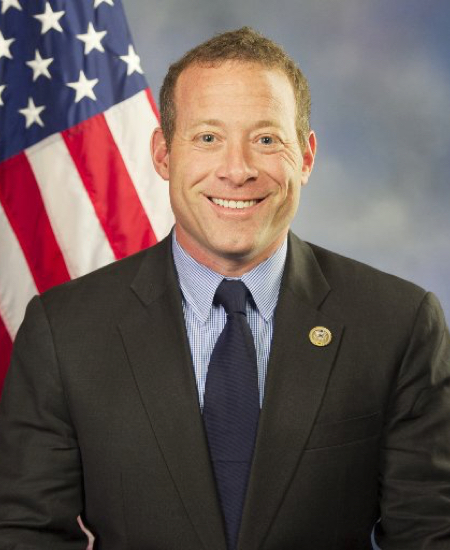
Rep. Josh Gottheimer
Sponsored bills
United States-Taiwan Advanced Research Partnership Act of 2023 This bill authorizes the Department of Homeland Security to enter into cooperative research activities with Taiwan to strengthen preparedness against cyber threats and enhance capabilities in cybersecurity.
Maddy summaryThe PREP Civics and Government Act (HR 1133) amends the National Foundation on the Arts and the Humanities Act of 1965 to explicitly include "civics and government" as a subject within the humanities. This change allows the National Foundation on the Arts and the Humanities to fund educational programs focused on civics and government through existing grant programs. The bill directly affects the Foundation’s funding priorities and organizations applying for humanities grants, such as schools, museums, and community groups offering civics education. It does not create new funding but expands eligibility for current humanities grants to cover civics and government content.
Maddy summaryThis bill renames a specific park area within the Gateway National Recreation Area on Staten Island as the "Senator James L. Buckley Seashore." It directly affects the park itself and all official U.S. government references to that location. The key provision updates all federal laws, maps, regulations, and documents to use the new name instead of the previous description. This is a procedural change with no impact on park operations or public access. The bill does not alter any policies or affect residents or visitors beyond the naming convention.
Maddy summaryThe RISEE Act of 2023 creates a National Oceans and Coastal Security Fund to support coastal communities and ecosystems. It allocates 37.5% of offshore wind revenue directly to eligible coastal states using a formula based on tidal shoreline length, coastal population density, and distance from offshore wind projects. States must use these funds for coastal protection, habitat restoration, infrastructure, or fisheries research, with strict annual reporting requirements to the Department of the Interior. The bill prohibits using these funds for litigation or creating marine monuments, ensuring resources directly support coastal community needs.
Maddy summaryHR 726, the Veterans for Mustangs Act, amends the Wild Free-Roaming Horses and Burros Act to require the Secretary of the Interior to prioritize recruiting military veterans for training in on-range fertility control methods for wild horse and burro populations. The bill mandates that veterans complete a certification program (like the PZP applicator course) and receive appropriate compensation, with the Bureau of Land Management allowed to contract these veterans for management activities without classifying them as federal employees. This directly affects military veterans seeking employment opportunities and the Bureau of Land Management’s approach to managing wild horse populations. The key change is embedding veteran recruitment into the standard process for implementing fertility controls, replacing previous management language with specific veteran-focused provisions.
Maddy summaryHR 1088, the Shirley Chisholm Congressional Gold Medal Act, authorizes a posthumous Congressional Gold Medal to honor Congresswoman Shirley Chisholm, the first African-American woman elected to Congress (1968) and the first Black candidate for a major party's presidential nomination (1972). The bill directs the Treasury Secretary to design and strike a gold medal featuring Chisholm's image, which will be presented by Congress and then permanently displayed at the Smithsonian Institution. Duplicate bronze medals may be sold to the public to cover production costs, with proceeds deposited into the U.S. Mint fund. This bill commemorates Chisholm's legacy and achievements without creating new laws or affecting any current policies.
Maddy summaryThis bill authorizes a posthumous Congressional gold medal for Constance Baker Motley, a pioneering civil rights attorney and federal judge. It directs the Treasury to strike a gold medal featuring her image and name, to be presented to her son, Joel Motley III, and niece, Constance Royster. The medal is a commemorative tribute recognizing her historic contributions to civil rights and her service as the first African-American woman appointed to a federal judgeship. No new policies or programs are created; the bill solely honors her legacy through a commemorative medal.
Maddy summaryHR 902, "Ellie’s Law," authorizes $10 million annually from fiscal years 2024 through 2028 for the National Institute of Neurological Disorders and Stroke to conduct broader research on unruptured brain aneurysms. The funding aims to study diverse patient populations by age, sex, and race, supplementing existing research budgets without replacing them. This bill directly affects researchers and future patients by increasing federal investment in a condition impacting 6.6 million Americans, with current federal spending at only $2.08 per affected person yearly. The legislation focuses on advancing scientific understanding to improve prevention and treatment, citing the high mortality rate (50% fatal) and significant healthcare costs ($4.1 billion annually in direct costs) associated with brain aneurysm ruptures.
Maddy summaryHR 873, the Water Quality and Environmental Innovation Act, establishes a new federal fund to support projects using emerging technologies for water quality protection. The fund, financed by annual EPA fee transfers from 2024-2028, awards grants to U.S. universities, nonprofits, and private companies to implement solutions like AI monitoring, robotics, seaweed farming, or plastic removal systems addressing threats including algal blooms, microplastics, and sea-level rise. All project data must be publicly accessible, and the EPA must report annually to Congress on funded projects and their effectiveness. The bill directly affects water quality initiatives by prioritizing technology-driven approaches over traditional methods.