

Maddy summaryHR 1321, the "More Homes on the Market Act," increases the tax exclusion for gains from selling a primary residence. It doubles the exclusion amount from $250,000 to $500,000 for single filers and from $500,000 to $1,000,000 for married couples filing jointly. The bill also adds automatic annual inflation adjustments to these amounts starting in 2023, ensuring the exclusion keeps pace with rising costs. This change directly affects homeowners who sell their primary residence and meet the ownership and use requirements under current tax law. The policy modifies the Internal Revenue Code to make selling a home less financially burdensome for qualifying homeowners.
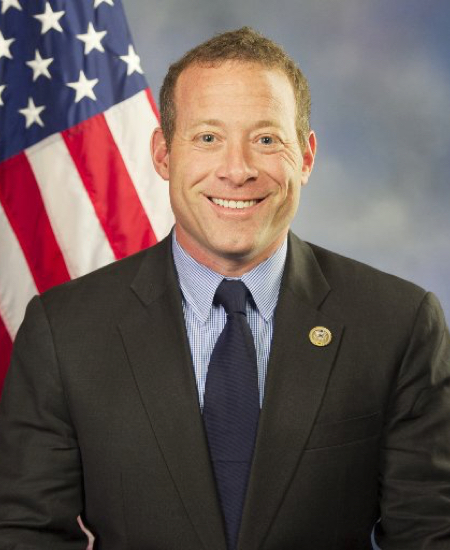
Rep. Josh Gottheimer
Sponsored bills
Maddy summaryThe Military Spouse Hiring Act expands the Work Opportunity Tax Credit to include military spouses. Employers who hire a spouse of an active-duty military member - certified by a local agency as meeting eligibility requirements on the hiring date - can claim this tax credit. The credit reduces the employer's federal tax liability for hiring such individuals. This provision applies to new hires after the bill's enactment date.
Maddy summaryThe United States Foundation for International Conservation Act of 2023 establishes a new independent foundation to provide long-term funding for the management of protected areas and conservation projects in eligible countries. The Foundation will be governed by a Board with government officials and private sector representatives, and it will fund projects that require non-U.S. Government funding to match the U.S. funding provided. Projects must demonstrate community support, environmental safeguards, and economic benefits for local communities. The Foundation will operate for 10 years with $100 million authorized annually for fiscal years 2024-2033, and must report annually to Congress on its activities and outcomes.
Maddy summaryHRES 183 is a symbolic resolution designating the third Friday of March as "National FIRST Robotics Day" to recognize robotics' role in STEM education. It encourages schools and educators to observe the day with activities promoting robotics, math, and science learning, and urges states to fund afterschool robotics programs using existing ESSA funds. The resolution does not create new laws or funding but formally supports this annual observance to inspire youth interest in STEM careers. It directly affects schools and educators who choose to participate in the designated day.
Maddy summaryThis bill establishes pay equity for federal firefighters by adjusting how their retirement benefits are calculated and setting a standard workweek. It requires retirement annuities to include overtime hours worked as part of a firefighter's regular schedule (e.g., overtime during standard shifts), rather than excluding them. The bill also mandates a maximum 60-hour regular workweek for federal firefighters, set by the Office of Personnel Management within one year of enactment. These changes directly affect federal firefighters, aiming to improve pay comparability with municipal firefighters and other federal employees while supporting recruitment and retention.
Maddy summaryHR 1249, the Opportunities for Fairness in Farming Act of 2023, regulates agricultural "checkoff programs" that collect mandatory fees from producers to fund commodity promotion and research. The bill prohibits checkoff boards from using funds for lobbying, engaging in conflicts of interest, anticompetitive behavior, or disparaging other commodities. It requires boards to publicly disclose all budgets and disbursements, including recipient identities and purposes, and mandates regular audits by the USDA Inspector General and the Comptroller General. These provisions directly affect all 25+ existing checkoff programs (covering commodities like cotton, dairy, pork, and wheat) by enforcing transparency and preventing misuse of producer-funded promotion dollars.
Maddy summaryThis bill creates a new diplomatic position: a Special Envoy for the Abraham Accords within the U.S. Department of State. The envoy, appointed by the President with Senate approval and holding ambassadorial rank, will directly advise the Secretary of State and coordinate U.S. government efforts to expand and strengthen the Abraham Accords. Key duties include engaging nations without formal diplomatic ties to Israel, consulting with relevant NGOs, and working with regional ambassadors to advance the agreements. The position targets U.S. diplomatic strategy in the Middle East, specifically focusing on deepening the Abraham Accords framework.
Maddy summaryHR 1247 would award a Congressional Gold Medal to the Freedom Riders collectively, honoring their pivotal role in challenging segregation in interstate travel during the Civil Rights movement. The medal, to be struck by the U.S. Mint and displayed at the Smithsonian Institution, recognizes their nonviolent protests that led to the 1961 federal ban on segregation in interstate public facilities. This is a symbolic tribute with no legal effect, as the bill does not create new policies or alter existing laws.
Maddy summaryHR 1244 authorizes Congress to award a gold medal collectively to Africans and their descendants who were enslaved in the U.S. from 1619 to 1865, recognizing their contributions to America's economic foundation. The bill directs the Treasury Secretary to design and strike the medal, which will be permanently displayed at the Smithsonian's National Museum of African American History & Culture. It also permits the sale of bronze duplicates to cover costs, with proceeds going to the U.S. Mint. This is a commemorative measure, not a policy change, focusing on symbolic recognition of historical contributions.
Maddy summaryThe Richard L. Trumka Protecting the Right to Organize Act of 2023 strengthens workers' rights to organize unions by making it harder for employers to interfere with organizing efforts. Key provisions include changing the definition of "employee" to make it more difficult to classify workers as independent contractors, prohibiting employers from threatening to permanently replace striking workers, and requiring employers to provide voter lists for union elections. The bill also creates a new electronic voting system for union elections, strengthens whistleblower protections for workers reporting labor violations, and increases penalties for unfair labor practices. These changes directly affect workers seeking to form unions, employers who may interfere with organizing, and labor organizations. The bill aims to make it easier for workers to exercise their right to collective bargaining under the National Labor Relations Act.