

Maddy summaryThe Universal School Meals Program Act of 2023 would establish a universal school meals program providing free breakfast and lunch to all children enrolled in participating schools, regardless of family income. Key provisions include eliminating income-based eligibility requirements for school breakfast and lunch programs, setting specific reimbursement rates ($2.80 for breakfast and $4.63 for lunch with annual inflation adjustments), and prohibiting schools from collecting debt for unpaid meals or "shaming" students. The bill also replaces references to "free or reduced price" with "economically disadvantaged students" in related laws and establishes new methods for identifying children from low-income backgrounds. This legislation would directly affect all public schools participating in the National School Lunch Program and School Breakfast Program.
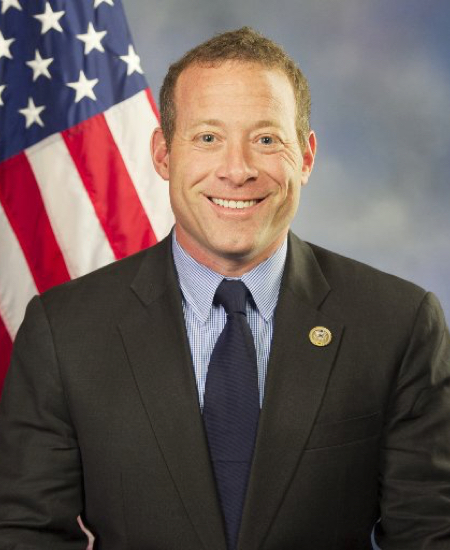
Rep. Josh Gottheimer
Sponsored bills
Maddy summaryThis bill removes a barrier for college students seeking food assistance by amending the SNAP program rules. It directly affects students enrolled at least half-time in recognized colleges or training programs, who were previously automatically ineligible unless they met separate requirements. The key change eliminates the prior restriction (in section 6(e)) that barred most higher education students from SNAP, allowing them to qualify under the new provision in section 3(m)(5)(F). The changes take effect January 2, 2024.
Maddy summaryThis bill standardizes voluntary date labels on most packaged foods by requiring uniform phrases: "BEST If Used By" for quality dates (indicating quality may decline) and "USE By" for discard dates (indicating when food should be discarded). It applies to manufacturers of non-infant formula foods who choose to include dates, with no requirement to use them. The law mandates clear, conspicuous placement of these phrases and prohibits states from creating conflicting labeling rules. It excludes infant formula and takes effect two years after enactment, with federal agencies required to educate consumers about the new labels.
Maddy summaryThe Closing the Meal Gap Act of 2023 amends the Food and Nutrition Act to update how SNAP (Supplemental Nutrition Assistance Program) benefits are calculated. It replaces the "thrifty food plan" with a "low-cost food plan" based on a specific 4-person family diet, requiring the government to reevaluate this plan by 2029 and every 5 years after. The bill also updates medical expense deductions, eliminates time limits on benefits, and allows Puerto Rico to join SNAP with specific transition requirements. These changes directly affect SNAP recipients, particularly in Puerto Rico, Hawaii, and Alaska, by adjusting benefit calculations to better reflect current food costs.
Maddy summaryHR 3773, the Stop Anti-Semitism on College Campuses Act, requires colleges and universities receiving federal funding to prohibit any event promoting antisemitism on campus. This includes not hosting, facilitating, funding, or supporting such events. The bill adopts the International Holocaust Remembrance Alliance's 2016 definition of antisemitism - including contemporary examples - as the standard for determining prohibited conduct. The law directly affects all institutions covered by the Higher Education Act of 1965.
Maddy summaryHR 3713 creates federal grants to fund comprehensive school-based mental health programs for students in grades K-12, including those in Bureau of Indian Education schools. It requires partnerships between schools and community mental health providers to deliver trauma-informed, culturally appropriate services addressing suicide risk, grief, violence, and trauma exposure. The bill authorizes $300 million annually (2024-2027) for these programs, mandating privacy protections under HIPAA and FERPA, and requires annual reporting on program effectiveness.
Maddy summaryHR 3723, the Medical Device Electronic Labeling Act, allows medical device manufacturers to provide required labeling exclusively through electronic means instead of physical labels. This change directly affects manufacturers of prescription devices and in vitro diagnostic devices, removing the prior requirement for physical labeling at the point of use in healthcare facilities or blood establishments. The bill amends the Federal Food, Drug, and Cosmetic Act to replace outdated language about physical labeling with a general requirement for "devices (including in vitro diagnostic devices)." This simplifies compliance by enabling digital solutions like QR codes or online portals for labeling information. The policy change is a direct regulatory update with no new funding or enforcement mechanisms.
Maddy summaryHR 3577, the Medical and Health Stockpile Accountability Act of 2023, requires the federal government to create an automated tracking system for critical medical supplies held in the national stockpile and shared with state, tribal, local, and private entities like hospitals and manufacturers. The system must provide near real-time data on supply levels, establish standardized reporting for product categories and inventory, and ensure private entities' data remains confidential and cannot be used for reallocation or commercial purposes. It mandates annual testing of the system, provides $250 million for development (2024-2029), and offers support to smaller healthcare facilities without automated tracking systems. The bill directly affects federal agencies managing the stockpile, healthcare providers, and medical supply manufacturers by standardizing and securing supply chain data during emergencies.
Maddy summaryHR 3186, the Supporting Veteran Families in Need Act, permanently authorizes funding for supportive services for very low-income veteran families living in permanent housing. It amends Section 2044(e) of the U.S. Code to establish ongoing annual funding authority starting in fiscal year 2025, replacing previous temporary or annual appropriations. This change ensures consistent financial assistance for essential services like childcare, transportation, and counseling that help these families maintain stable housing. The bill directly affects eligible veteran families meeting specific income and housing criteria, providing them with reliable support through a permanent funding mechanism.
Maddy summaryH.J.Res. 65 designates November 9th each year as "Gold Star Father's Day" to honor fathers who have lost children serving in the U.S. Armed Forces. The resolution recognizes these fathers' sacrifice, aligns with existing recognition of Gold Star Mothers (since 1936), and supports efforts to honor military families. It does not create new benefits or legal requirements but formally designates a day for national recognition of fathers who lost children in military service. This symbolic resolution follows Georgia's 2017 designation of November 9 as "Georgia Gold Star Father's Day."