

Uyghur Human Rights Protection Act This bill designates certain residents of the Xinjiang region in China as prioritized refugees of special humanitarian concern and addresses other related issues. This priority designation shall apply to individuals (and the spouses, children, and parents of such individuals) who (1) reside in or fled Xinjiang and who suffered persecution on account of their peaceful political, religious, or cultural activities or associations, or have a well-founded fear of such persecution; or (2) have been formally charged, detained, or convicted for certain peaceful actions related to Xinjiang. Such an individual may not be denied admission into the United States based primarily on an arrest or other adverse government action due to that individual's participation in protests. The bill also waives certain immigration-related requirements for such individuals. Furthermore, a Chinese national seeking refugee status shall be considered to have been persecuted on account of political opinion if the Chinese government revoked that individual's residency in any region of China because the individual submitted a nonfrivolous application for a U.S. immigration benefit. Similarly, if the Chinese government revoked a Chinese national's citizenship, nationality, or residency because that individual filed for a U.S. immigration benefit, that revocation shall constitute a changed circumstance. (Among other things, a changed circumstance may allow an individual who has been rejected for asylum to apply again.)
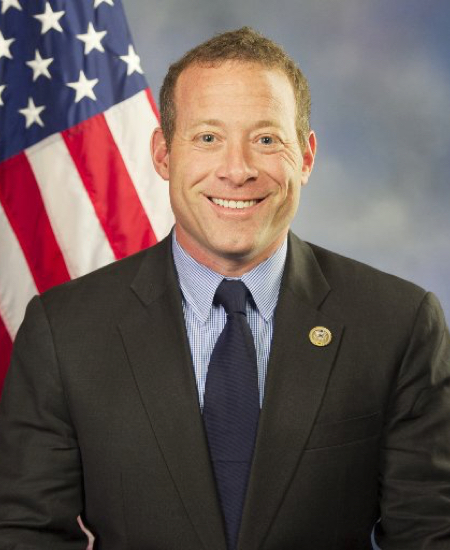
Rep. Josh Gottheimer
Sponsored bills
Maddy summaryThe American Family Act establishes a monthly child tax credit of $250 per month for each child under age 6 and $300 per month for each child aged 6-18, with income limits of $150,000 for joint filers and $112,500 for other filers. The credit is refundable, meaning it can be paid even if the taxpayer owes no income tax, and will be adjusted annually for inflation. The bill includes detailed rules for determining eligibility, including requirements that the child resides with the taxpayer for more than half the month and provisions to prevent fraud through recapture of improperly received payments. The credit will be paid monthly in advance rather than as a single annual payment, with specific mechanisms for calculating and distributing the payments.
Maddy summaryHR 3854, the Manufacturing Partnership Improvement Act, amends the National Institute of Standards and Technology Act to strengthen support for small manufacturers and exporters. It requires the Manufacturing Extension Partnership Advisory Board to include at least one labor organization representative focused on manufacturing production workers or apprenticeship programs, and mandates new partnerships between Manufacturing Extension Centers and federal agencies. Specifically, centers must collaborate with Small Business Administration offices (for loan guidance), Economic Development Administration offices (for federal assistance), Department of Labor offices (for workforce development), and U.S. Export Assistance Centers (for export support). These changes aim to improve coordination and access to resources for small manufacturers seeking loans, training, or export opportunities. The bill does not create new programs but refines existing structures to better serve the manufacturing sector.
Maddy summaryThe National Senior Investor Initiative Act of 2023 establishes a new Senior Investor Taskforce within the Securities and Exchange Commission (SEC) to address challenges faced by investors aged 65 and older, including financial exploitation and cognitive decline. The taskforce will identify regulatory gaps, coordinate with agencies like state regulators and law enforcement, and issue biennial reports to Congress with recommendations for improving protections. It also mandates a Government Accountability Office (GAO) study examining the economic costs, frequency, and policy responses to financial exploitation of seniors. The SEC will use existing funds to implement these provisions without creating new positions or spending.
Maddy summaryHR 3812, the Financial Stability Oversight Council Improvement Act of 2023, amends the process for the Financial Stability Oversight Council (FSOC) to regulate large nonbank financial companies. It requires the FSOC to first determine that alternative actions - such as new regulatory standards, company plans, or agency measures - are impractical or insufficient before voting on regulatory actions against these companies. This change directly affects the FSOC’s decision-making and U.S. nonbank financial firms potentially subject to oversight. The key provision mandates consultation with the company and its primary regulator before the Council proceeds with a formal determination. The bill focuses on procedural clarity in financial stability oversight without creating new regulatory requirements.
Maddy summaryHR 3808 extends the visa cap for Afghan allies from 38,500 to 58,500, covering Afghan nationals who worked with U.S. forces or international missions in Afghanistan (e.g., interpreters, translators) under the 2009 Afghan Allies Protection Act. It requires the State Department to create a strategy within 180 days to improve processing efficiency, including reviewing staffing, data collection, and appeal procedures for pending applications. The bill also adds provisions for reimbursing applicants' medical exam costs, allowing virtual interviews for visa applications, and ensuring denials include appeal options. These changes directly affect Afghan allies awaiting visas and aim to accelerate their resettlement in the U.S.
Maddy summaryHR 698, the Assault Weapons Ban of 2023, prohibits the sale, manufacture, transfer, and possession of specific firearms and ammunition devices commonly referred to as "assault weapons" and "large capacity magazines" in interstate commerce. The bill defines "semiautomatic assault weapons" to include rifles like AR-15s and AK-47s, as well as firearms with specific features such as folding stocks, pistol grips, threaded barrels, and detachable magazines holding more than 15 rounds. It exempts law enforcement, military, antique firearms, and weapons already lawfully owned before the law's enactment (known as "grandfathered" weapons). The bill also requires new identification markings on these weapons and large capacity magazines, and adds background check requirements for transfers of grandfathered weapons.
Maddy summaryThis resolution (HRES 462) is a symbolic House of Representatives measure commemorating the 1989 Tiananmen Square events as described in the resolution and condemning China's government for "continued and intensifying crackdown on human rights" in mainland China and Hong Kong. It specifically calls on China to end censorship about the events, allow a UN investigation, uphold Hong Kong's autonomy under the Joint Declaration, and permit exiled activists to return safely. The resolution makes no binding policy changes but expresses support for human rights movements in China, Hong Kong, Tibet, and Xinjiang. As a non-binding resolution, it does not alter U.S. law or policy.
Maddy summaryThis House resolution symbolically recognizes May as Jewish American Heritage Month, celebrating Jewish Americans' historical contributions to U.S. society and culture. It references rising antisemitism in 2022 (including ADL data showing a 36% increase in incidents) and includes a non-binding call for leaders to combat antisemitism. As a purely symbolic resolution, it does not create new policies or legal requirements.
Maddy summaryHR 3792 extends U.S. security funding for Israel through 2028 (Section 3) and expands energy cooperation to include advanced nuclear technologies and carbon capture (Section 5). It requires annual reports on regional security partnerships involving Israel (Section 6) and ensures countries in the Abraham Accords can access U.S. development programs (Section 8). The bill also mandates reports on diplomatic efforts against ICC investigations targeting the U.S. and Israel (Section 10) and encourages people-to-people programs to strengthen the Abraham Accords (Sections 7, 9). These provisions directly affect Israel’s diplomatic engagement, security partnerships, and economic cooperation in the Middle East.