

This resolution condemns all manifestations of expressions of racism and anti-Asian, Native Hawaiian, and Pacific Islander or ethnic intolerance. The resolution calls on federal law enforcement officials, working with state and local officials, to expeditiously and vigorously investigate all reports of hate crimes and threats against Asian Americans, Native Hawaiians, and Pacific Islanders in the United States; work to improve the reporting of such hate crimes; and hold the perpetrators of those crimes, incidents, or threats accountable and bring the perpetrators to justice.
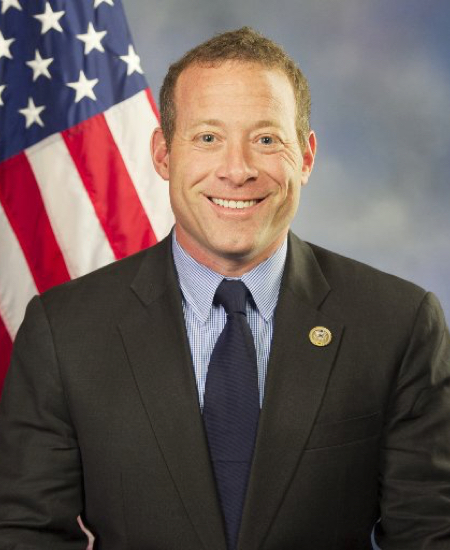
Rep. Josh Gottheimer
Sponsored bills
Maddy summaryThis resolution (HRES 443) is a symbolic gesture by the U.S. House of Representatives supporting National Poppy Day, observed on the Friday before Memorial Day. It formally endorses the tradition of wearing red poppies to honor veterans who died serving in the U.S. Armed Forces, referencing the poppy’s historical symbolism from World War I. The resolution encourages all U.S. citizens, residents, and visitors to wear a poppy that day as a sign of appreciation for military service. It does not create new laws, programs, or obligations - it is purely a statement of recognition.
Maddy summaryThis bill creates a new tax credit for expenses related to "qualified access technology for the blind" under the Internal Revenue Code. It allows taxpayers to claim a credit of up to $2,000 per year (adjusted for inflation) for costs paid for hardware, software, or IT that converts visual information into formats usable by blind individuals, covering the taxpayer, their spouse, or a dependent who is blind. The credit is limited to $2,000 over any three consecutive tax years per blind individual and expires after 2028. It directly affects blind individuals and their families who purchase qualifying assistive technology. The credit cannot be claimed for expenses already covered by other tax deductions or credits.
Maddy summaryThis bill creates a new Department of Homeland Security (DHS) joint task force specifically focused on stopping opioid trafficking at the border, particularly fentanyl and synthetic opioids. It allows DHS to partner directly with private sector organizations (like pharmaceutical or logistics companies) to temporarily assign their employees to the task force, with the private companies covering all costs - without requiring standard federal advisory committee processes. The bill also requires DHS to collaborate with other federal, state, local, tribal, and international agencies on this effort and to report annually on resource gaps and how well the task force is coordinating with others. The primary effect is to enhance DHS's border security operations targeting opioid smuggling through new private-sector partnerships and interagency coordination.
Maddy summaryThis bill amends the Older Americans Act to better serve LGBTQI older adults (defined as lesbian, gay, bisexual, transgender, queer, intersex individuals, and those living with HIV) by adding specific definitions and creating new support structures. It establishes an Office of LGBTQI Inclusion within the Administration on Aging, led by a Director and Assistant Director, to coordinate services, advocate for this community, and collect data on their challenges. The bill also creates a National Resource Center on LGBTQI Aging to provide training and resources to organizations serving LGBTQI older adults and requires data collection on discrimination against them in long-term care settings. These changes aim to improve access to culturally competent services and address the unique needs of LGBTQI older adults through concrete policy updates.
Maddy summaryHR 3639, the After Hours Child Care Act, creates a new Child Care and Development Innovation Fund to improve access to child care for parents working nontraditional hours (such as evenings, nights, or weekends). The bill directly affects working parents with young children and eligible child care providers who serve these families. It authorizes competitive grants (ranging from $25,000 to $500,000) to providers or partnerships with businesses/community organizations to expand after-hours care programs, establish workplace child care, or improve existing facilities. Grantees must cover 25% of costs, and the Secretary of Health and Human Services must report biennially on program impact to Congress.
Maddy summaryHRES 439 is a non-binding resolution expressing the House of Representatives' support for keeping the U.S. Postal Service (USPS) as an independent federal agency, not subject to privatization. It highlights USPS's constitutional role, self-sustaining nature (relying on service revenue, not taxpayer funds), and its importance to rural communities, e-commerce, and over 600,000 employees. The resolution urges Congress to take action to preserve USPS's independence, emphasizing that privatization could raise prices, reduce services, and harm the nation's mail infrastructure. As a procedural resolution, it does not change law but formally states the House's position.
Maddy summaryThe Safer Schools Act of 2023 establishes a 5-year pilot program providing federal grants to public schools for security assessments and physical safety upgrades. It offers two types of grants: (1) funding for independent security risk assessments (prioritizing schools that have experienced violent incidents), and (2) grants for "hard security improvements" like panic alarms linked to local law enforcement, with 50% federal funding (waivable for financial need). Schools must submit financial reports and security assessment results to qualify, and recipients must report on vulnerability fixes and student safety perceptions. The program allocates $100-300 million annually over five years, ending in 2028, with mandatory annual reports to Congress on school security outcomes.
This resolution encourages the U.S. Holocaust Memorial Museum to continue its work in educating the public about the dangers of antisemitism and the origins of the Holocaust, congratulates those responsible for the creation of the museum, condemns antisemitism, supports educational and community-based programs that counter antisemitism and hate, and supports the designation of a U.S. Holocaust Memorial Museum Day.
Simplify Automatic Filing Extensions Act or the SAFE Act This bill eliminates the penalty for failure to pay income tax for individual taxpayers who timely pay 125% of their income tax liability for the immediately preceding taxable year.