

Maddy summaryHR 3425 creates federal grants to community colleges and college consortia with agriculture programs, helping them expand workforce training, education, and research in farming and related fields. The bill prioritizes colleges partnering with local farms for hands-on student training and allows grant funds to cover equipment, faculty development, and apprenticeships. It authorizes $20 million annually from 2024-2029 for these programs and requires a 3-year evaluation report to Congress. The law directly affects community colleges offering agriculture-focused education, aiming to strengthen their capacity to serve students and the agricultural industry.
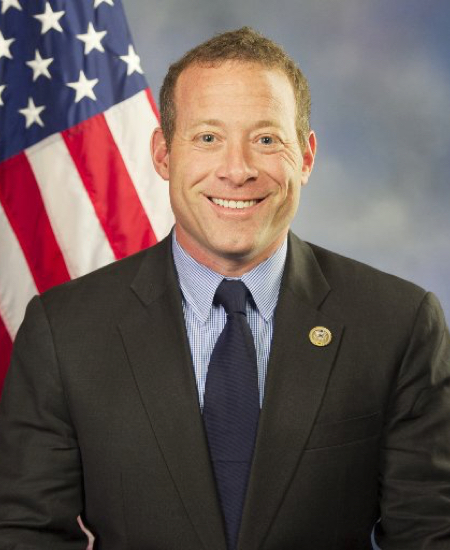
Rep. Josh Gottheimer
Sponsored bills
Maddy summaryThe LGBTQI+ and Women's History Education Act of 2023 would provide $2 million annually for five years to develop educational resources about women's and LGBTQI+ history for K-12 classrooms. The bill directs the Smithsonian's National Museum of American History to create inclusive teaching materials that address historical gaps where women and LGBTQI+ individuals, particularly those of color and with disabilities, have been underrepresented. These resources would include digital content, print materials, and professional development for teachers to help implement more comprehensive curricula. The bill aims to address findings showing only 13% of named historical figures in textbooks are women and that LGBTQI+ history is often omitted or marginalized in school curricula. The program would require annual reports to Congress on how funds are used, with the program set to sunset in 2028.
Maddy summaryHR 4305, the Shelter Act, creates a 25% nonrefundable tax credit for individuals and businesses to offset costs of qualifying disaster mitigation improvements. Individuals can claim up to $2,500 annually for home upgrades like reinforced roofs, flood barriers, fire-resistant materials, or storm shelters, provided the property is in a federally designated disaster area and meets specific safety standards. Businesses may claim up to $5,000 for similar safety upgrades at their locations in disaster-prone zones. The credit phases out for higher-income taxpayers (individuals over $100,000 AGI, businesses over $5 million average gross receipts) and requires documentation proving compliance with building codes. The provisions apply to taxable years beginning after December 31, 2023.
Maddy summaryHR 4289 prohibits "buy now, pay later" financing for firearms classified as "assault weapons" under the bill. It bans such loans for consumers purchasing these weapons and makes it illegal for dealers, manufacturers, or importers to accept funds from these loans for assault weapon sales. The law defines assault weapons to include rifles with features like folding stocks, detachable magazines, or pistol grips, and pistols with specific attachments or capacity limits. Violations carry $100,000 civil penalties assessed by the Attorney General. This directly affects consumers seeking to finance these weapons and the businesses selling them.
Veterans Healthcare Improvement Act This bill requires the Government Accountability Office to review and report on the budget requests for Department of Veterans Affairs medical care accounts in the President's submitted budgets for FY2024-FY2026. Medical care accounts are the following accounts of the Veterans Health Administration: Medical Services, Medical Support and Compliance, Medical Facilities, and Medical Community Care.
Maddy summaryThe HUBS for Veterans Act of 2023 establishes a federal grant program to improve transition support for service members, veterans, and their spouses. It authorizes $10 million over five years for grants to nonprofit organizations, state/local boards, or veterans service groups to coordinate key services - including career training, mental health support, legal aid, and benefits access - during the shift from military to civilian life. Eligible entities must cover at least half the program costs through matching funds. The program requires coordination between the Labor and Veterans Affairs departments, with priority given to organizations offering multiple integrated services.
Maddy summaryHRES 488 is a non-binding resolution calling on the Biden administration to transfer Army Tactical Missile Systems (ATACMS) to Ukraine. It requests immediate provision of these long-range missiles - capable of striking targets up to 200 miles away - to help Ukraine counter Russian forces by targeting logistics hubs and command centers deeper in occupied territory. The resolution notes Ukraine already operates compatible launch systems and cites that allies like the UK and France have provided similar long-range weapons without triggering significant Russian escalation. It emphasizes that delaying this transfer could prolong the war and that the U.S. possesses sufficient existing stockpiles to fulfill the request while maintaining military readiness. The resolution does not mandate action but urges the administration to act.
Maddy summaryThis bill improves the VA Work-Study program for veterans and active-duty military members by expanding eligible work opportunities to include roles with state/local governments and nonprofits that support veterans. It establishes a higher minimum wage standard, requiring payments to meet the highest of federal, state, or local minimum wage rates. The bill also requires electronic time tracking for participants and annual public reporting on program data, including participant demographics, wages, hours worked, and participating schools. These changes apply to work-study payments made on or after January 1, 2026.
Maddy summaryThis bill establishes the John Lewis Civil Rights Fellowship Program within the Fulbright exchange system to honor civil rights leader John Lewis and advance U.S. foreign policy through global civil rights education. It creates a new fellowship for U.S. early- to mid-career professionals, selecting at least 25 annually for 10-month programs to conduct research or intern with approved organizations in countries participating in Fulbright exchanges. Fellows must complete a work plan, attend an orientation in Washington, DC, and present findings at an annual summit, with the State Department covering costs for travel, lodging, and expenses. The program requires annual reports on participant demographics and program effectiveness, and expires seven years after enactment.
Maddy summaryThe Equality Act (HR 15) would amend federal civil rights laws to explicitly prohibit discrimination based on sexual orientation and gender identity in public accommodations, housing, employment, credit, and jury service. It amends the Civil Rights Act of 1964 to include sexual orientation and gender identity as protected characteristics under existing sex discrimination provisions. The bill would require businesses, housing providers, employers, and government entities to provide equal access and services without regard to a person's sexual orientation or gender identity. It includes specific definitions for gender identity and sexual orientation to clarify protections across all covered areas. The law would apply to all entities covered by the Civil Rights Act of 1964, including those receiving federal funding.