

Maddy summaryThis House Resolution condemns the April 2023 conflict in Sudan between the Sudanese Armed Forces (SAF) and Rapid Support Forces (RSF), calling for an immediate ceasefire and adherence to prior cease-fire agreements. It urges the U.S. government to scale up humanitarian aid, prioritize support for displaced civilians and children, and apply sanctions against those obstructing Sudan’s democratic transition or violating international law. The resolution directs U.S. agencies to coordinate with local actors, ensure aid reaches civilians, and develop strategies for civilian-led negotiations. As a non-binding statement, it expresses congressional support for Sudanese civilians and democratic transition without creating new legal requirements or funding.
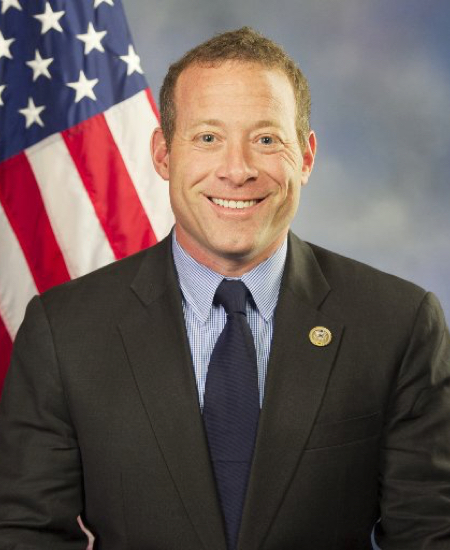
Rep. Josh Gottheimer
Sponsored bills
Amend the Code for Marriage Equality Act of 2023 This bill amends the Internal Revenue Code, the Social Security Act (SSA), and other federal laws to replace (1) references to wife or husband with references to spouse , and (2) references to husband and wife or husband or wife with references to married couple or married person. For purposes of federal laws or regulations, marriage is defined as a legal union between two people as spouses. The bill eliminates a definition of spouse that refers only to a person of the opposite sex who is a husband or a wife. Requirements concerning compensation to a surviving wife after the disability or death of a person employed at a military, air, or naval base outside the United States are revised to make surviving spouses eligible for such compensation. The bill makes similar revisions to the Family and Medical Leave Act of 1993, the Federal Mine Safety and Health Act of 1977, and other federal statutes. The bill revises title II (Old Age, Survivors, and Disability Insurance) of the SSA to consolidate separate provisions for a wife's insurance benefits and a husband's insurance benefits into a single standard for a spouse's insurance benefits.
Maddy summaryThis bill creates a federal grant program to help communities address childhood trauma from violence or neglect. It authorizes $10 million annually (2024-2027) for states, local governments, tribes, and community organizations to establish "adverse childhood experiences response teams." These teams would develop protocols for trauma cases, connect families with mental health services, train first responders, and break down barriers to care. The program directly supports children exposed to trauma and the organizations providing services to them.
Child Care Investment Act of 2023 This bill increases the employer-provided child care tax credit, the amount excludable from gross income for dependent care flexible spending accounts, and makes the household and dependent care tax credit refundable. Among other provisions, the bill increases the rate of the employer-provided child care tax credit from 25% to 50% and increases the maximum credit amount from $150,000 to $500,000. It also increases (1) the pre-tax deduction for dependent care flexible spending accounts from $5,000 to $10,000, plus an additional $2,000 for each eligible dependent; and (2) the rate of the household and dependent care tax credit and makes such credit refundable.
Maddy summaryHR 1548, the *Improving Access to Small Business Information Act*, is a procedural bill that modifies the Securities Exchange Act of 1934. It excludes actions taken by the Small Business Capital Formation Advocate from being classified as "collection of information" under the Paperwork Reduction Act (a law limiting government paperwork burdens). This change specifically affects how the Advocate’s work is regulated, not small businesses themselves. The bill does not create new policies or directly impact small business operations, but streamlines administrative processes for the Advocate’s role.
Maddy summaryThis bill prohibits U.S. federal agencies from entering new contracts with companies that boycott Israel after January 1, 2024. Companies must certify they are not boycotting Israel at contract signing, and contracts must include this prohibition. It applies to federal contracts over $100,000 for services or IT with companies employing more than 10 people. If a company violates the boycott prohibition, the agency must terminate the contract after 30 days unless the company ends the boycott. The bill explicitly states it does not infringe on First Amendment rights or take sides on the Israeli-Palestinian conflict.
Maddy summaryHR 4550 creates a federal grant program to help public elementary, secondary, and preschool schools recruit and retain paraprofessionals (school support staff like teaching assistants). The bill directs the Secretary of Education to fund state education agencies, which then distribute subgrants to schools - prioritizing those serving high numbers of low-income students - to support activities like mentoring programs, professional development, and wage increases or certification assistance (e.g., for special education or English learner support). States must report annually on wage baselines, paraprofessional numbers, and program outcomes. This bill directly affects schools and paraprofessionals, with funding authorized for fiscal years 2024-2028.
Maddy summaryThe DISCLOSE Act of 2023 would increase transparency in political spending by requiring organizations making campaign-related disbursements over $10,000 to disclose the names and addresses of their major donors, including the top five funders for political communications. It would close loopholes allowing foreign nationals to secretly fund election activities through corporations or other entities by expanding the definition of prohibited foreign contributions. The bill would mandate "stand by every ad" disclosure requirements for political communications across all media, including audio, video, and internet ads, requiring clear identification of funders. It would also require reporting of disbursements related to Federal judicial nominations, which currently aren't subject to disclosure requirements. These provisions would apply to corporations, labor organizations, and certain nonprofits that engage in political activity.
Maddy summaryThe IDEA Full Funding Act (HR 4519) mandates specific annual increases in federal funding for special education programs under the Individuals with Disabilities Education Act (IDEA). It requires Congress to appropriate increasing amounts each fiscal year - from $5.87 billion for 2024 up to $55.53 billion for 2033 - to reach 40% of the national average per-pupil expenditure for public schools by 2033. This directly affects all public school districts serving students with disabilities, as federal IDEA funding supports their special education services. The bill sets fixed dollar amounts or percentage targets (whichever is greater) for each fiscal year, aiming to gradually close the long-standing gap between promised and actual federal funding. It does not alter eligibility for services but mandates higher, phased funding levels to meet the 40% target.
Maddy summaryHR 4412, the Tick Identification Pilot Program Act of 2023, creates a federal pilot program allowing states to apply for grants to establish tick identification services. Residents would submit photos of ticks online with location and date details, and tick experts would identify species, assess disease risk, and provide prevention advice within 72 hours. States implementing the program must maintain a database of encounters, including location, tick identification, and educational materials provided. The pilot prioritizes states with high Lyme disease cases and runs through 2027, with annual CDC reports to Congress on collected data.