

Maddy summaryHR 4413, the Stamp Out Lyme Disease Act, authorizes the U.S. Postal Service to sell a special semipostal stamp (where the price exceeds regular postage) to fund Lyme disease research. The extra revenue from stamp sales will be sent directly to the National Institute of Allergy and Infectious Diseases (NIAID) for tick-borne illness research, with funds specifically protected from being used to offset NIAID's regular budget. The stamp would be available for at least six years, beginning one year after the bill becomes law, and the proceeds cannot reduce other federal funding for NIAID. This bill creates a new public funding mechanism for research, directly affecting those who purchase the stamp and the NIAID research programs.
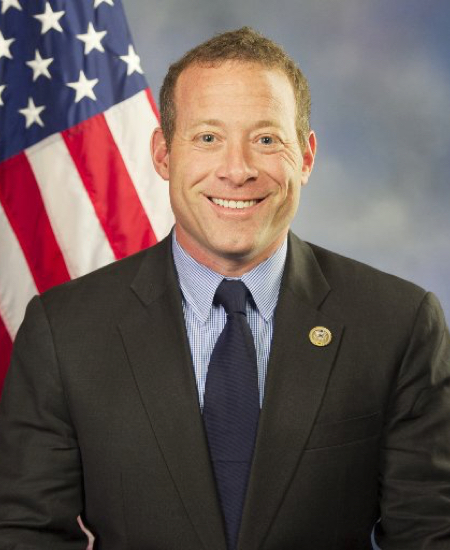
Rep. Josh Gottheimer
Sponsored bills
Maddy summaryThe Promising Pathway Act creates a new FDA review pathway for drugs treating serious or life-threatening conditions, allowing provisional approval within 90 days if they show substantial safety evidence and early efficacy comparable to existing treatments. It directly affects drug manufacturers (sponsors), patients with urgent medical needs, and insurers, requiring mandatory patient registries tracking outcomes and side effects with a 90% participation goal. The bill mandates that insurers cover these provisionally approved drugs as if fully approved (without denying coverage as "experimental") and requires sponsors to submit annual reports to Congress on registry data and approval progress. Provisional approval lasts up to 8 years (2 years initially, renewable up to three times) but requires market launch within 180 days and allows FDA withdrawal if safety concerns arise or efficacy falls below standard treatments.
This resolution expresses the sense of the House of Representatives that (1) lesbian, gay, bisexual, transgender, queer, intersex, and asexual (LGBTQIA+) rights are human rights and protected by the U.S. Constitution; (2) LGBTQIA+ Pride Month should be celebrated; and (3) all Americans should be treated equally regardless of sexual orientation, sex characteristics, or gender identity.
Maddy summaryHRES 561 is a non-binding House resolution opposing state laws that criminalize access to essential health care. It specifically condemns using criminal penalties against people for pregnancy outcomes (such as miscarriages), seeking abortion or contraception, or receiving gender-affirming care, and disapproves of punishing health care providers or supporters for facilitating such care. The resolution affirms that patients deserve access to reproductive and gender-affirming health services without fear of prosecution or discrimination. It emphasizes that criminalizing these health care decisions violates patient rights and ethical provider obligations, without creating new legal requirements.
Maddy summaryThis bill prohibits defendants in federal criminal cases from using a victim's LGBTQ+ identity (sexual orientation, gender identity, or expression) as a legal excuse for violence or to reduce sentences - a practice known as the "LGBTQ+ panic defense." It specifically bans arguments that a "nonviolent sexual advance or perception" of the victim's identity justified the crime, while allowing evidence of the defendant's past trauma under standard evidence rules. The law directly affects federal criminal trials where defendants attempt to justify violence against LGBTQ+ victims using prejudice-based excuses. It also requires the Attorney General to report annually on federal prosecutions involving bias-motivated crimes against LGBTQ+ individuals.
Maddy summaryThe MARCH for Military Servicemembers Act repeals a restriction that previously prohibited the use of Department of Defense (DoD) funds and facilities for abortion care. This change directly allows military healthcare providers to offer abortion services using DoD resources within military treatment facilities. It affects active-duty service members, veterans, and dependents receiving care through the military health system. The policy removes a longstanding barrier to accessing abortion care under the DoD’s healthcare framework.
Maddy summaryThis bill establishes a federal grant program to fund high-impact tutoring in K-12 schools, primarily targeting students in schools with high poverty (Title I schools) and those experiencing significant academic declines since the pandemic. It requires tutoring to meet specific standards: at least 30 minutes per student, three days per week, with a 3:1 student-to-tutor ratio, and alignment with classroom instruction. States receive 80% of funds to award subgrants to local schools, which must submit detailed plans, provide monthly progress reports, and partner with research organizations to evaluate program effectiveness. The program prioritizes schools with the greatest academic need and mandates accountability through annual reviews of student outcomes by state agencies and an independent Advisory Board.
Canadian Snowbird Visa Act This bill authorizes the Department of Homeland Security to admit into the United States qualifying Canadian citizens as long-term nonimmigrant visitors. A qualifying Canadian citizen is an individual who (1) is at least 50 years old, (2) maintains a Canadian residence, (3) owns a U.S. residence or has rented a U.S. accommodation for the duration of the individual's stay, (4) is not inadmissible or deportable, (5) will not engage in employment or labor for hire in the United States other than for a non-U.S.-based person or entity by whom the Canadian citizen was employed in Canada or for whom the Canadian citizen performed services in Canada, and (6) will not seek certain forms of assistance or benefits. A qualified individual may be admitted for up to 240 days during any single 365-day period. The spouse of such an individual may be admitted under the same terms, except that the spouse is not required to separately satisfy the requirement for owning or renting a residence in the United States. An individual admitted into the United States under this bill shall have nonresident alien tax status.
Maddy summaryHR 4422 (Global Respect Act) requires the President to publicly identify foreign officials responsible for violence, torture, or arbitrary detention against LGBTQI individuals and block their entry to the U.S., including revoking visas for them and their immediate families. It mandates annual reporting to Congress on the list of sanctioned individuals, the reasons for additions/removals, and efforts to coordinate with other countries on similar sanctions. The bill also updates U.S. human rights reporting requirements to explicitly include data on violence and discrimination against LGBTQI people worldwide. These measures aim to increase accountability for human rights violations against LGBTQI individuals without advocating for specific policy outcomes.
Fair and Equal Housing Act of 2023 This bill prohibits discrimination, in the context of various housing practices, against individuals based on their sexual orientation or gender identity.