

Maddy summaryHR 4787, the Volunteer First Responder Housing Act, provides housing benefits for volunteer firefighters and emergency medical responders who meet specific service requirements. It allows qualified volunteers to receive an $18,000 annual income deduction when applying for USDA single-family home loans, and qualifies them for discounted home purchases under HUD’s Good Neighbor Next Door program (normally for certified firefighters/EMTs). To qualify, volunteers must have served continuously for two years (meeting minimum hour requirements or active membership) and hold state certification, with employer verification confirming their eligibility. This directly affects volunteer first responders in communities served by eligible fire departments or emergency services organizations.
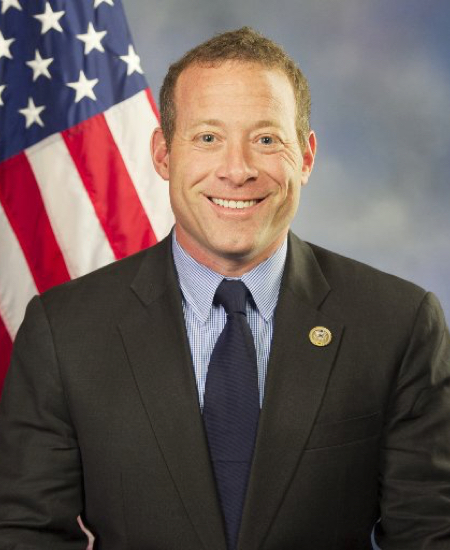
Rep. Josh Gottheimer
Sponsored bills
Maddy summaryThis bill amends the Child Nutrition Act to extend liability protections for food and pet supply donations. It adds definitions for "pet," "emotional support animal," and "pet supply" to the Act, clarifying that donations of pet food or supplies for pets, service animals, or emotional support animals are covered. The key provision (Section 22(c)(4)) shields donors and nonprofits from civil/criminal liability when donating such items in good faith for direct distribution to animals. It directly affects pet food donors, animal welfare nonprofits, and local governments distributing pet supplies. The bill does not create new programs but modifies existing donation rules to include pet-related items.
Reporting Instances of Non-authorized Grift Act of 2023 or the RING Act of 2023 This bill requires creditors to establish a hotline for assisting consumers who are 50 years of age or older to resolve billing errors and mitigate fraud. Consumers who call the hotline must have the option to receive assistance from a live English- or Spanish-speaking individual and not from an automated system.
Maddy summaryH.J.Res. 25 would remove the 1979 deadline for states to ratify the Equal Rights Amendment (ERA), which was originally proposed in 1972. This bill directly affects states that ratified the ERA after the deadline (such as Nevada, Illinois, and Virginia in 2017-2018) by making their ratifications legally valid. The key provision states that the ERA is valid as part of the Constitution if ratified by three-fourths of states, regardless of the original deadline. The bill does not create new rights but aims to finalize the constitutional amendment process by eliminating the time limit.
This resolution condemns the 1994 attack on the Argentine Jewish Mutual Association Jewish Community Center in Buenos Aires, Argentina, and calls for the perpetrators, including Iranian and Hezbollah operatives, to be held accountable for their crimes.
Maddy summaryHR 4709, the U.S.-Israel Anti-Killer Drone Act of 2023, amends a reporting requirement in the National Defense Authorization Act to enhance U.S.-Israel cooperation on countering Iranian drone threats. The bill requires the Secretary of Defense to submit a report within 180 days detailing the status of joint efforts to develop and deploy counter-drone technologies, including assessments of current capabilities and proposed policy changes. It also increases funding for this cooperation from $40 million to $55 million annually. The bill directly affects U.S. and Israeli military operations by mandating formal coordination to address Iran’s growing arsenal of armed drones, which have been used against U.S. allies like Israel and Saudi Arabia. This is a procedural bill focused on improving existing coordination, not on new weapons or sanctions.
Maddy summaryHR 4721, the Main Street Tax Certainty Act, makes a permanent the 20% tax deduction for eligible small business owners under Section 199A of the tax code. This provision directly affects pass-through business owners (like S-corps, partnerships, and sole proprietorships) who qualify for the deduction. The bill achieves this by removing the temporary expiration language (subsection (i)) from the existing tax code provision. The key change is ending the need for annual congressional extensions of this deduction, providing long-term tax certainty for small businesses.
Maddy summaryThis bill increases funding for home modifications for disabled veterans using VA home health services. It raises the maximum annual amount veterans can receive for home improvements from $6,800 to $10,000 and for structural alterations from $2,000 to $5,000. The bill also requires annual adjustments to these amounts based on inflation, using the Consumer Price Index, to maintain their real value over time. These changes apply only to veterans who first apply for these benefits after the bill's enactment date.
Maddy summaryHR 2768, the PFC Joseph P. Dwyer Peer Support Program Act, establishes a VA grant program to fund peer-to-peer mental health support for veterans. It provides up to $250,000 per grant to eligible nonprofits, veteran service organizations, or state/local Tribal agencies to create programs where veterans serve as peer specialists offering 24/7 nonclinical support. The program requires adherence to VA-developed standards for volunteer training and service delivery, while prohibiting the collection of veterans' personally identifying information. The bill authorizes $25 million over three years to implement this initiative, directly benefiting veterans seeking accessible mental health assistance through peer networks.
Maddy summaryHR 1774, the VA Emergency Transportation Act, expands VA benefits to cover emergency transportation for veterans. It amends existing law to replace "emergency treatment" with "emergency services" throughout, explicitly including ambulance or air ambulance transport as covered services. This means veterans needing emergency transport to or from a medical facility (to receive treatment) can now have those costs reimbursed by the VA. The bill directly affects veterans who require urgent medical transport, clarifying that such transportation is part of their covered VA benefits.