

Maddy summarySammy's Law of 2023 requires large social media platforms (defined as those with over 100 million monthly users or $1 billion in annual revenue) to create and maintain application programming interfaces that allow parents or legal guardians to delegate account management for children aged 13 or older to third-party safety software providers. These providers must register with the Federal Trade Commission, agree to use data solely for child safety, and follow strict rules about data disclosure. The law establishes a national standard that prevents states from creating their own requirements for this feature while including FTC enforcement mechanisms and data security provisions. The legislation aims to give parents more tools to monitor and protect children from specific online harms like cyberbullying, trafficking, and violence on major social media platforms.
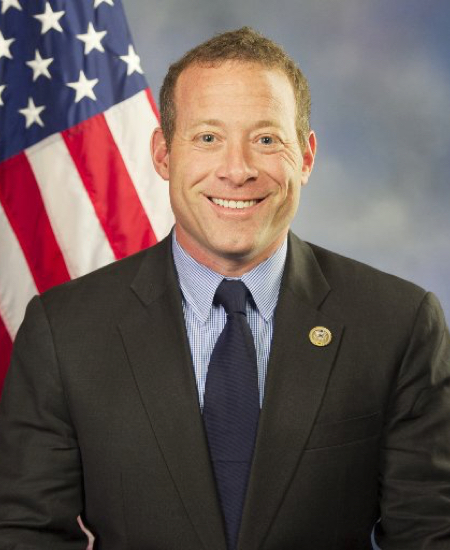
Rep. Josh Gottheimer
Sponsored bills
Maddy summaryThis bill directs the Secretary of Health and Human Services to create and implement a standardized graphic symbol indicating when language interpretation services and translated materials are available for healthcare. It affects healthcare providers, insurers, public health departments, and other entities serving people with limited English proficiency. The symbol must be simple, widely understood, and work across printed and digital formats, with research and community testing to guide its design. The Secretary must finalize the symbol within 18 months and develop an education plan to promote its use, while allowing it to replace current notice requirements if testing shows it improves access.
Maddy summaryHR 5667, the Pay Our Military Act, ensures continued pay and allowances for active-duty military members, reservists, Department of Defense civilians, and qualifying contractors during any government funding gap in fiscal year 2024. It appropriates funds from the Treasury to cover these payments if regular appropriations bills aren't passed before the end of the fiscal year. The funding automatically terminates once regular appropriations are enacted or by January 1, 2025, whichever comes first.
Maddy summaryHR 5808, the Preventing Deep Fake Scams Act, establishes a federal Task Force to address AI-driven financial fraud risks. The Task Force, composed of key financial regulators (Treasury, Federal Reserve, CFPB, FDIC, and others), must issue a report within one year detailing current protections, standard AI definitions, deep fake risks, best practices for institutions, and regulatory recommendations. This bill directly affects banks, credit unions, and financial service providers by requiring them to report on AI security measures and collaborate with the Task Force. The report aims to help financial institutions protect consumers from identity theft and fraud using deep fake technology, without creating new regulations itself.
Maddy summaryThis bill requires federal agencies to adjust contract prices to reimburse contractors for paying employees during government funding lapses (e.g., shutdowns). It covers costs for furloughed, laid-off, or reduced-hour workers, or for restoring paid leave used during the lapse, with a weekly cap of $1,442 per employee. Directly affecting federal contractors and their employees who experienced work disruptions due to funding gaps, it mandates agencies to make these adjustments promptly after enactment. Contractors must provide proof of costs, and the Office of Federal Procurement Policy must report on implementation to Congress within a year.
Maddy summaryHR 5807, the MICROGRID Extension Act, extends a federal tax credit for microgrid controller systems from expiring at the end of 2024 to December 31, 2032. This credit helps businesses and communities offset costs for installing microgrids - localized energy systems that operate independently during power outages to serve vulnerable areas. The extension applies to tax years beginning after December 31, 2024, directly benefiting developers and local governments investing in resilient energy infrastructure. It provides continued financial incentive for projects that enhance power reliability in communities prone to grid disruptions.
Maddy summaryThis bill amends the Water Resources Development Act of 2020 to create a new provision allowing the Secretary of the Army Corps of Engineers to partner with water and irrigation districts in designated areas. Specifically, it authorizes the Secretary to enter agreements with these districts for the use or sale of new technologies developed through a demonstration program, aimed at speeding up the removal of harmful algal blooms. The key mechanism focuses on facilitating the deployment of innovative solutions to address algal blooms in targeted regions. This directly affects water management districts operating in areas identified as high-priority for bloom mitigation under the existing law.
Maddy summaryThis bill exempts Purple Heart medal recipients from paying standard passport application fees. It directly affects military veterans who have been awarded the Purple Heart for combat wounds. The key mechanism amends the 1920 Passport Act to add a specific fee waiver for these veterans when applying for passports. This change would reduce costs for eligible veterans seeking to travel internationally using official U.S. passports.
Maddy summaryThis bill prevents federal regulators from requiring banks, credit unions, and trust companies to treat custody assets (like digital assets held for clients) as liabilities on their financial statements or to hold extra capital against them. It specifically stops institutions from recognizing liabilities for digital asset services they don’t own, unless those liabilities exceed related expenses. The law applies broadly to depository institutions but includes an exception: commingled cash held for third parties must still be listed as a liability. Key provisions aim to clarify accounting rules for digital assets, reducing regulatory complexity for financial institutions managing client custody. It directly affects banks, credit unions, and trust companies handling digital assets or custody services.
Maddy summaryThe WIC for Kids Act expands eligibility for the Special Supplemental Nutrition Program for Women, Infants, and Children (WIC) by adding new qualifying pathways. It allows children to qualify if they live in households where someone receives Head Start, Indian reservation food assistance, or Puerto Rico/Northern Mariana Islands nutrition block grants, and streamlines documentation by permitting states to use existing records. The bill extends certification periods for children from one to two years and automatically enrolls infants born to current WIC participants. This directly affects low-income families with children who qualify for related assistance programs but previously faced barriers to WIC access.