

Maddy summaryThe Abbey Gate Gold Star Families Dignified Transport Act changes how the government covers transportation costs for the remains of fallen service members. It requires the government to pay directly for transporting remains to two locations (with the second being a national cemetery), eliminating the need for families to pay upfront and seek reimbursement. This policy directly affects Gold Star Families - those who have lost a service member in the line of duty - by reducing financial and administrative burdens during funeral arrangements. The bill amends U.S. Code Section 1482 to replace reimbursement with direct payment for these specific transportation needs.
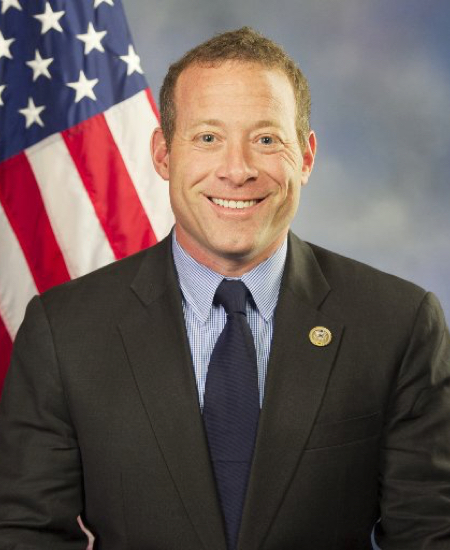
Rep. Josh Gottheimer
Sponsored bills
Maddy summaryHR 5728, the Government Shutdown Impact Report Act of 2023, requires the Congressional Budget Office (CBO) to issue daily reports during government shutdowns. The CBO must submit reports within 24 hours of each shutdown day, detailing specific economic impacts like lost GDP, unprovided Small Business Administration assistance, lost park revenue, and tourism revenue declines. These reports will provide Congress with real-time data on the costs of shutdowns to taxpayers and the economy. The bill directly affects how Congress receives information about shutdown consequences, mandating standardized, frequent reporting on economic and service disruptions.
Maddy summaryHR 5704, the Protecting Student Athletes From Concussions Act, requires states to certify that public schools have concussion safety plans by 2025. These plans mandate schools to: (1) immediately remove students showing concussion symptoms from activities and require a doctor's written clearance before returning to sports; (2) provide academic accommodations like modified assignments during recovery; (3) post science-based concussion information visibly at schools; and (4) develop concussion management teams including medical professionals and parents. The bill directly affects all public K-12 schools, student athletes, parents, and school staff by standardizing concussion response and recovery support. It aims to ensure consistent safety protocols, academic support, and medical oversight for student athletes across all school-sponsored activities.
Maddy summaryThis bill requires federal financial regulators (like the Fed and Consumer Bureau) to create guidance for banks within 180 days of enactment. The guidance directs banks to help consumers and businesses affected by government shutdowns - including furloughed federal workers, DC employees without pay, and contractors with reduced income - by adjusting loan terms, preventing payment hardships, and stopping negative credit reporting during temporary financial difficulties. Banks must also immediately notify regulators, consumers, and businesses if a shutdown begins. After a shutdown ends, regulators must report to Congress on the guidance's effectiveness and update it within 180 days if needed.
Maddy summaryThis bill extends the funding period for the Distance Learning and Telemedicine Program from 2023 to 2028. It directly affects rural communities by ensuring continued access to telehealth services and educational programs through this existing federal initiative. The key provision is a simple amendment to the program's authorization date in existing law, without creating new requirements or altering the program's scope. The change ensures uninterrupted support for rural healthcare and education providers relying on this funding.
Maddy summaryHR 5246, the National Agricultural Crisis Hotline Act of 2023, creates a federally funded 24/7 crisis hotline specifically for farmers, ranchers, farm workers, and their families facing mental health or substance use challenges. The hotline must provide real-time voice and texting support, staffed by licensed professionals trained in agricultural mental health stress, with 24-hour follow-up calls and translation services. It requires collecting detailed call data and partnering with existing farm helplines, the 988 Suicide Lifeline, and USDA programs to connect callers to resources. The bill appropriates $19 million annually (starting 2024) for the hotline's operation, including $4 million yearly for the hotline itself, and mandates an annual effectiveness report to Congress. This directly addresses the documented crisis of elevated suicide rates among agricultural workers by expanding accessible, specialized mental health support.
Maddy summaryHR 5203, the AGRITOURISM Act, establishes a new Office of Agritourism within the U.S. Department of Agriculture (USDA). This office, led by a Director appointed by the Secretary, will promote agritourism activities - including farm-based education, recreation, direct sales, accommodations, and dining - to support rural agricultural businesses. The bill requires the USDA to coordinate with existing agencies, update programs, provide technical assistance, and share best practices for agritourism businesses. It directly affects small and family-run farms in all states by integrating agritourism into USDA's existing support systems. The legislation focuses on structural changes within the USDA, not new funding or regulations.
Maddy summaryThis bill establishes special pay rates for wildland firefighters employed by the Forest Service or Department of the Interior. It creates a percentage increase over standard General Schedule base rates (ranging from 1.5% for GS-15 to 42% for GS-1), provides 450% premium pay for days deployed to qualifying wildfire incidents, and requires rest and recuperation leave following incident deployment. These changes apply specifically to firefighters whose duties primarily relate to wildland fires, not structural fires. The bill takes effect on October 1, 2023, and replaces standard pay rates for affected firefighters. Premium pay is not considered part of basic pay for various compensation calculations.
Maddy summaryHR 5686 authorizes $30 million in U.S. humanitarian aid for Armenians in Armenia and Nagorno-Karabakh affected by recent conflicts and blockades, and $12 million in foreign military financing to support Armenia's sovereignty and security cooperation. The bill requires the State Department to develop a strategy protecting Nagorno-Karabakh residents' rights, including cultural heritage and security, and mandates a 90-day report on Azerbaijani military actions during 2022-2023 attacks. It also directs the U.S. to push for International Criminal Court investigations into alleged atrocities and imposes sanctions on Azerbaijani officials involved in blockades or attacks. The legislation focuses on concrete U.S. policy actions - aid, accountability measures, and diplomatic efforts - without prescribing specific outcomes.
Maddy summaryThe Supporting Armenians Against Azerbaijani Aggression Act of 2023 authorizes $30 million in U.S. humanitarian assistance for Armenians in Armenia and Nagorno-Karabakh affected by Azerbaijani military actions and blockade. It repeals a longstanding restriction on aid to Azerbaijan, allocates $10 million for military assistance to Armenia, and requires the U.S. government to develop a strategy protecting Armenians' rights in Nagorno-Karabakh. The bill also mandates a report on alleged Azerbaijani atrocities, authorizes $650 million for energy sector development in Armenia, and requires sanctions on Azerbaijani officials responsible for attacks and the blockade of Nagorno-Karabakh.