

Maddy summaryThis bill amends the Servicemembers Civil Relief Act (SCRA) to improve access to existing financial protections for active-duty service members, reservists, and their dependents. It requires military financial literacy training to include SCRA consumer protections (like interest rate limits), mandates notifications about these benefits at key service milestones (e.g., when entering service or being mobilized), and clarifies that creditors must apply the SCRA interest rate cap to *all* pre-service debts, not just specified ones. Creditors must also provide multiple submission methods (online, mail, fax) for servicemembers to submit required documents. These changes aim to make SCRA benefits easier to understand and utilize without creating new financial obligations.
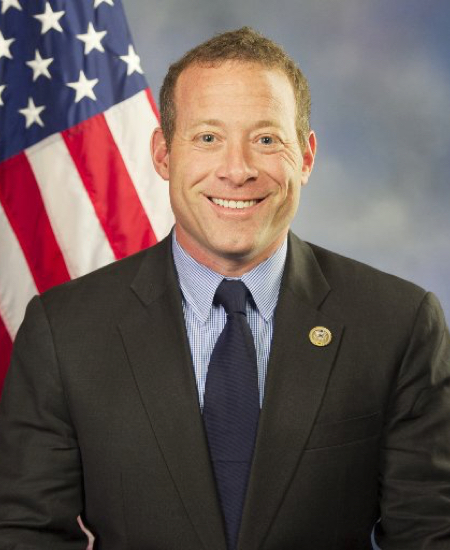
Rep. Josh Gottheimer
Sponsored bills
Maddy summaryHR 7108, the Expanding Access to Mental Health Services in Schools Act of 2024, authorizes federal grants to help high-need public schools hire and retain mental health staff. It targets schools that meet specific criteria: being in the top 15% of need (based on student poverty or other metrics) and failing to meet minimum staffing ratios for counselors, psychologists, or social workers. Grants fund recruitment (through salary stipends or loan repayment), retention (via professional development or incentives), and evidence-based mental health services, with grantees required to contribute 25% matching funds and report annually on provider numbers, demographics, and student-to-provider ratios. The program runs through 2029 and requires all services to comply with privacy laws like FERPA.
Maddy summaryHR 7125, the "No Funds for Forced Labor Act," directs the U.S. Treasury to instruct American representatives at international financial institutions (like the World Bank) to oppose loans for projects that use or risk using forced labor, particularly those linked to Xinjiang. It requires these institutions to vet projects for forced labor risks, detail mitigation efforts, and report annually to Congress on implementation. The bill specifically targets projects involving state-owned entities in Xinjiang or those with credible forced labor allegations, as cited in congressional reports. This policy change aims to prevent U.S.-aligned funding from supporting forced labor practices globally.
Maddy summaryThe ACCESS Act of 2024 creates a federal grant program to help clinics and health care providers expand abortion and reproductive health services in states where abortion is legal (outside of life or health exceptions). It authorizes $200 million annually for fiscal years 2024-2028 to fund specific capacity-building activities, including facility expansions, hiring clinical staff, telehealth services, and culturally appropriate patient resources. Priority is given to providers in states experiencing the highest increases in out-of-state patients seeking abortion care. The bill directly supports health care entities serving patients who travel across state lines for services, aiming to reduce wait times and improve access for vulnerable communities.
Maddy summaryThe Servicemember Apprenticeship Act (HR 7098) directs the Secretary of Defense to study private companies offering registered apprenticeships to military members eligible for the Skillbridge program (Section 1143(e) of Title 10). It requires the Department of Defense to consult with the Department of Labor to create agreements with companies in areas where few apprenticeship opportunities exist for these members. The bill aims to expand access to registered apprenticeship programs by identifying participating entities and facilitating partnerships. This directly affects transitioning service members seeking civilian career training through Skillbridge.
Maddy summaryHR 7097, the College Opportunities for Servicemembers Act, expands educational opportunities for active-duty service members transitioning to civilian careers and veterans. The bill directs the Secretary of Defense to increase agreements with colleges and universities to provide job training and internships through the Skillbridge program, and to support creating dedicated centers at these institutions for military members and veterans seeking job skills. It specifically targets members eligible for Skillbridge under existing law and veterans, using existing higher education institutions defined by the Higher Education Act of 1965. The key mechanism involves federal outreach to colleges to formalize more training partnerships and establish on-campus support centers. This policy directly connects military service members and veterans to civilian career pathways through existing educational infrastructure.
Maddy summaryThe Complete Streets Act of 2024 requires states to establish programs that help local governments, transit agencies, and other eligible entities design and build transportation infrastructure accommodating all users, including pedestrians, cyclists, and public transit riders. States must provide technical assistance and grants for complete streets projects, with 5% of certain transportation funds allocated to these programs. The bill establishes design standards requiring features like protected bike lanes, accessible sidewalks, and appropriate lighting for all transportation projects, applying to new projects on Federal-aid highways within metropolitan areas. It mandates that states develop complete streets policies and prioritization plans to improve safety and accessibility, particularly in underserved communities, with compliance required by 2026 or 2029 for different project types.
Maddy summaryThis bill prohibits U.S. government agencies from contracting with or purchasing biotechnology equipment/services from specific Chinese companies deemed national security threats, including BGI, MGI, Complete Genomics, and WuXi Apptec. It directly affects U.S. federal agencies (for procurement decisions), these Chinese biotech firms (for U.S. market access), and their U.S. contractors using their equipment. Key provisions establish a formal list of "biotechnology companies of concern" and ban government use of their equipment/services, with limited waivers allowed for national security needs. The law focuses on preventing U.S. genetic data collection via these firms, which the government asserts could be accessed by Chinese authorities under Chinese law.
Maddy summaryThis bill updates the broadband speed standards for the Community Connect Grant Program, which provides funding to expand high-speed internet in rural areas. It raises the minimum required downstream speed from "less than" to "less than 100 Mbps" and upstream speed to "at least 20 Mbps," while increasing service speed requirements from 10/1 Mbps to 25/3 Mbps for grant recipients. The program's funding authorization is extended from ending in 2023 to 2028. This directly affects rural communities and service providers receiving these grants by setting clearer, higher technical standards for qualifying broadband service.
Maddy summaryThe provided context does not include sufficient details about HR 7060's specific provisions or policy changes. While the bill's title ("Military Spouse Job Continuity Act") suggests it relates to military spouses' employment, the context only lists a procedural amendment to 37 U.S.C. § 453(g) (striking a paragraph and redesignating another) without explaining the substance of the change. Without the actual bill text or a substantive summary describing how this amendment affects military spouses or job continuity, a factual summary cannot be generated. For accurate information, consult the full bill text or official legislative summaries from Congress.