

Maddy summaryHR 7288, the Armenian Protection Act of 2024, repeals the waiver authority that allows the President to bypass restrictions on U.S. aid to Armenia. Specifically, it prevents the waiver of Section 907 of the Freedom Support Act for fiscal years 2024 and 2025, which currently blocks U.S. assistance to Armenia due to historical disputes. This bill directly affects Armenia's eligibility for certain U.S. foreign aid programs by removing the possibility of executive branch waivers for those years. The key mechanism is the permanent removal of the waiver option under the specified appropriations law, changing the policy landscape for U.S.-Armenia aid relations.
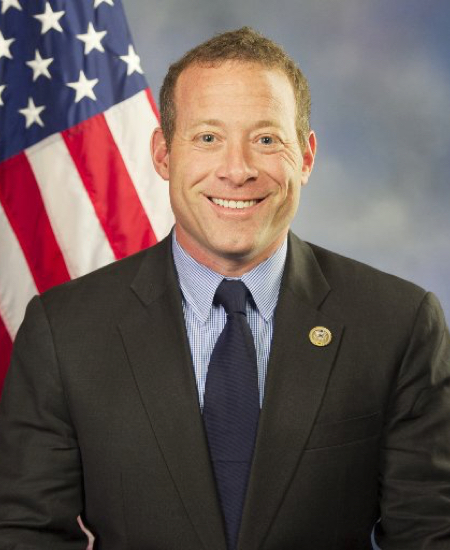
Rep. Josh Gottheimer
Sponsored bills
Maddy summaryThis bill restricts how credit reporting companies share homebuyers' credit reports during mortgage applications. It prevents companies from sending these reports to third parties (like marketers) just because a lender requested them for a mortgage. Only specific entities can receive the reports: the mortgage lender who originated the loan, the company servicing the loan, or the bank holding the homebuyer's account. This directly protects homebuyers' privacy by limiting unauthorized sharing of their financial data.
Maddy summaryThe BIRDIE Act (HR 7228) expands U.S. copyright law to protect the design of golf courses as "architectural works." It specifically adds landscaping, irrigation systems, paths, greens, tees, practice facilities, bunkers, lakes, and topographic features to the copyrightable elements of a golf course design. This applies to courses created after December 1, 1990, or unconstructed courses with unpublished plans existing as of that date, but explicitly excludes mini-golf courses. The bill directly affects owners and designers of golf course layouts by granting them copyright protection for these specific design elements.
Maddy summaryThis symbolic resolution (HRES 989) urges the U.S. House of Representatives to recognize January as "Muslim-American Heritage Month" to honor the contributions of Muslim Americans. It highlights their historical and contemporary roles in U.S. society across fields like business, science, sports, and public service. The resolution calls for public observance through ceremonies and programs but has no legal effect or policy changes. It does not allocate funding, alter laws, or directly affect any specific group beyond raising awareness of Muslim-American heritage.
Maddy summaryHRES 990 is a non-binding resolution expressing the House of Representatives' support for fair treatment of paraprofessionals (like instructional assistants) and education support staff (such as clerical, custodial, and food service workers) in schools. It states these over 3 million frontline workers deserve livable wages, affordable health care, job security, paid leave, professional development, and safe working conditions. The resolution lists specific recommendations, including eligibility for family medical leave and protections against retaliation for reporting workplace issues. It does not create new laws but formally recognizes these staff as essential to school success and calls for policies addressing their current challenges.
Maddy summaryHR 7155 establishes the Abraham Accords Bureau within the FDA to strengthen U.S. healthcare supply chains. The bureau, headquartered at the FDA, will create lists of essential medical products primarily made in "covered countries" (nations with documented religious freedom violations or human rights issues) and identify facilities in Abraham Accords countries (like the UAE and Bahrain) that could support U.S. medical needs. It will facilitate FDA consultations with these countries on manufacturing standards, share regulatory information, and provide technical assistance to help shift production away from covered countries. The bureau must report to Congress within three years on progress in diversifying supply chains and improving FDA coordination with Abraham Accords nations.
Maddy summaryThe Credit for Caring Act of 2024 creates a new federal tax credit for family caregivers. It allows eligible caregivers to claim a credit equal to 30% of qualified caregiving expenses (like home modifications, medical supplies, or respite care) exceeding $2,000 per year, capped at $5,000 annually. To qualify, caregivers must earn over $7,500 in income and provide care for a relative (like a spouse or parent) certified by a healthcare provider as needing long-term care for at least 180 days. The credit phases out for higher earners, with a $75,000 income threshold for single filers and $150,000 for joint returns.
Maddy summaryThis bill amends the McKinney-Vento Homeless Assistance Act to allow federal funding through the Emergency Solutions Grant Program to cover "safe parking" initiatives. It defines "safe parking" as providing homeless individuals living in vehicles (including RVs) with overnight parking alongside re-housing and supportive services to transition to stable housing. The key change makes safe parking programs eligible for federal grant funding that previously did not cover this specific activity. This directly affects homeless individuals residing in vehicles and the service providers operating these programs.
Maddy summaryHR 7132 creates a federal grant program to help state and local governments, tribes, and Native Hawaiian organizations develop and implement housing plans. Grants fund both planning (creating strategies) and implementation (putting strategies into action) to increase housing supply and affordability while avoiding displacement of current residents. At least 10% of funds must support rural communities, and recipients must report annually on progress and submit final evaluations after three years. The program requires comprehensive plans addressing housing needs, land use reforms, and community engagement to expand housing options.
Maddy summaryThe AFIDA Improvements Act of 2024 updates the Agricultural Foreign Investment Disclosure Act to require foreign individuals or entities owning at least 1% of U.S. agricultural land (directly or through multiple ownership tiers) to report their holdings. It creates new enforcement duties for the Farm Production and Conservation Business Center (FPAC-BC) to validate data, ensure compliance, and identify violators. The bill mandates the Secretary of Agriculture to share foreign ownership reports with the Committee on Foreign Investment in the United States (CFIUS) and update agency handbooks using recommendations from a 2024 Government Accountability Office report. These changes apply directly to foreign landowners and agricultural agencies like the Farm Service Agency, aiming to improve transparency around foreign ownership of U.S. farmland.