

Maddy summaryHR 7056, the Access to Family Building Act, establishes federal rights for individuals to access assisted reproductive technology (ART) like IVF without unreasonable restrictions, directly affecting patients seeking fertility treatments and health care providers offering ART services. The bill prohibits states from imposing limitations on ART that are more burdensome than those for comparable medical procedures, fail to advance safety, or unduly restrict access, while allowing health and safety regulations that are necessary and least restrictive. It creates federal enforcement mechanisms, including lawsuits by the Attorney General or affected individuals to challenge violating state laws, and preempts conflicting state regulations. The bill explicitly preserves state authority over health/safety regulations and does not alter existing state insurance coverage laws for ART.
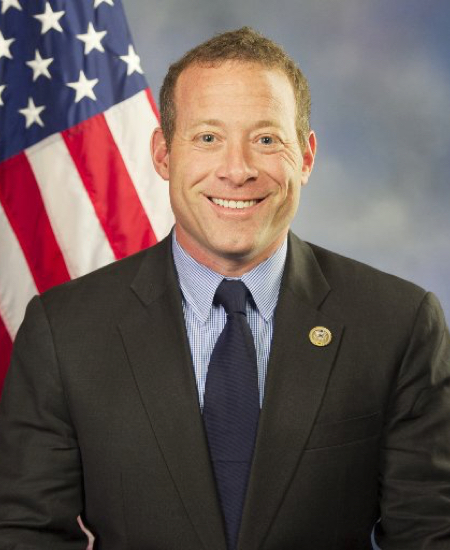
Rep. Josh Gottheimer
Sponsored bills
Maddy summaryThis bill extends the existing ban on undetectable firearms - weapons that evade standard airport or security X-ray detection - for an additional 10 years. It amends the 1988 Undetectable Firearms Act by changing the expiration date from 35 to 45 years after the law's original passage. The measure directly affects firearm manufacturers and sellers who produce or distribute weapons that cannot be detected by conventional screening equipment. This is a renewal of current restrictions, not a new policy, maintaining the same requirements for detecting firearms.
Maddy summaryThe Stronger Communities through Better Transit Act establishes a new federal grant program to improve public transportation service. It provides funding to urban areas, states, and Indian tribes to cover up to 50% of public transit operating costs (up to 80% in persistent poverty areas and 100% for Indian tribes), with requirements to report on service frequency, access to jobs, and conduct community surveys. The program mandates that a majority of funds must benefit underserved communities and areas of persistent poverty, defined as census tracts with high poverty rates or minority populations. Recipients must maintain their transit funding levels and report on improvements in access to essential services. The bill authorizes $20 billion annually for fiscal years 2024-2027.
Maddy summaryThe Supporting Urban and Innovative Farming Act of 2023 establishes a new USDA office to provide technical assistance for urban and innovative agricultural operations, including rooftop farms, hydroponics, and community gardens. It authorizes competitive grants with mandatory annual funding starting at $15 million in 2024 (rising to $50 million by 2028) to support projects improving fresh food access in underserved areas, prioritizing microgrants for individual urban farmers and initiatives serving disadvantaged communities. The bill requires the USDA to collect and report data on urban farming locations, demographics, and production methods like vertical farming and aquaponics. These provisions directly affect urban farmers, community organizations, and local governments working to expand food production in cities.
Maddy summaryHR 3925 establishes a federal grant program to fund youth fishing projects in coastal and Great Lakes areas. The bill authorizes $2 million annually (2024-2028) for grants to eligible entities like nonprofits, schools, state/local governments, or Tribal organizations to cover equipment, transportation, licenses, and educational components for youth. Priority is given to projects serving underserved communities, defined as groups facing systemic barriers due to race, disability, poverty, or inequality. Recipients must report annually on grant usage and participant numbers to Congress.
Maddy summaryHCONRES 82 is a symbolic resolution recognizing and supporting the New Heights Bid Committee's effort to secure the 2027 FIFA Women's World Cup for a joint U.S.-Mexico bid. It directs Congress to encourage the President and federal agencies to assist the committee in meeting hosting requirements and to consider future legislation if the bid is successful. The resolution does not create new laws or funding but formally expresses congressional backing for the bid committee's work. It directly affects the New Heights Bid Committee by affirming congressional support for their efforts to host the tournament.
Maddy summaryHRES 962 is a ceremonial resolution honoring Reverend Dr. Martin Luther King, Jr.'s legacy, specifically celebrating his 95th birthday on January 15, 2024. It symbolically affirms his teachings by condemning hate, discrimination, and prejudice against Black Americans, Indigenous people, Jewish, Asian-American/Pacific Islander, Muslim, Hispanic/Latino communities, and LGBTQ+ individuals. The resolution does not create new laws or affect any policies - it solely expresses the House's support for Dr. King's values of diversity, tolerance, and equality through non-binding statements. As a symbolic gesture, it has no legal effect or direct impact on any group or individual.
Maddy summaryHRES 963 is a symbolic resolution honoring Korean American Day, which commemorates the January 13, 1903 arrival of the first large wave of Korean immigrants to the U.S. It recognizes Korean Americans' contributions to U.S. society, including their economic, cultural, and military impacts, and marks the 121st anniversary of this historic migration. The resolution urges all Americans to observe Korean American Day to appreciate these contributions. As a commemorative measure, it does not create new policies or affect specific groups beyond this ceremonial recognition.
Maddy summaryHR 6963, the Pediatric Cancer Drug Supply Act of 2024, creates a federal pilot program to prevent shortages of essential pediatric cancer drugs. The Secretary of Health and Human Services will enter agreements with manufacturers to maintain a 6-month reserve supply of each covered drug - defined as drugs on a list developed by the Secretary that treat pediatric cancer and meet specific criteria - held in the U.S. by manufacturers. Manufacturers must store extra inventory beyond normal levels, ensure drugs have over a year of shelf life, and allow the government to audit compliance. During shortages, the Secretary can order these reserves distributed to patients, with recipients paying the government's purchase price to replenish the supply. The program is funded with $500 million for fiscal year 2024.
Maddy summaryThe Affordable Connectivity Program Extension Act of 2024 allocates $7 billion in funding for the Affordable Connectivity Program (ACP) during fiscal year 2024. The ACP provides subsidies to low-income households to help cover the cost of internet service and connected devices like laptops or tablets. This funding ensures the program can continue supporting eligible households throughout the year, with the money remaining available until fully spent. The bill extends existing program funding without changing eligibility criteria or service requirements.