

Maddy summaryThis resolution (HRES 1271) is a symbolic gesture expressing the House's support for designating June 7, 2024, as "National Gun Violence Awareness Day" and June 2024 as "National Gun Violence Awareness Month." It does not create new laws or policies but urges the public to wear orange, raise awareness about gun violence, and focus on community safety during summer months when such incidents often increase. The resolution references statistics on gun-related deaths and honors victims like Hadiya Pendleton, who was killed in 2013. It directly affects the public by calling on individuals and communities to participate in awareness activities. This is a non-binding, commemorative measure with no direct legal impact on legislation or regulations.
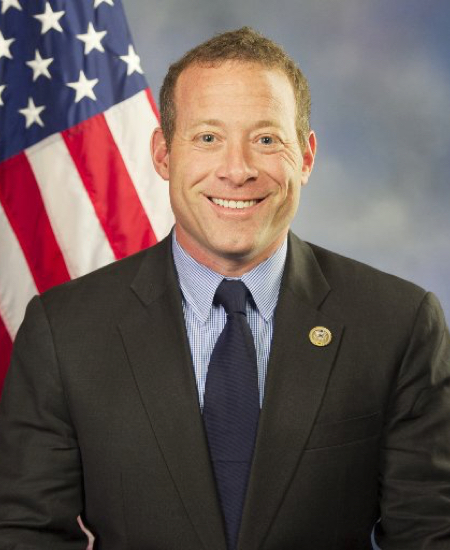
Rep. Josh Gottheimer
Sponsored bills
Maddy summaryThis resolution (HRES 1272) calls on the Biden Administration to seek symbolic censure of Iran at the International Atomic Energy Agency (IAEA) for violating nuclear nonproliferation agreements and to refer Iran's case to the United Nations Security Council. It urges diplomatic action to prevent Iran from acquiring nuclear weapons, citing Iran's enrichment of uranium to 60% purity, obstruction of IAEA inspections, and development of advanced centrifuges. The resolution does not create new law but formally requests specific international diplomatic steps from the U.S. government.
Maddy summaryHRES 1215 is a non-binding resolution calling on elected officials, civil society leaders, and educators to promote public awareness of Jewish American contributions. It urges these groups to condemn antisemitism, educate communities about Jewish Americans' historical and cultural impacts (including in science, civil rights, and arts), and support safety measures for Jewish communities. The resolution cites a 140% rise in antisemitic incidents in 2023 as context for its call to action. It does not create new laws or funding but seeks to elevate recognition of Jewish American heritage through education and public engagement. The resolution is directed at officials and leaders to foster broader understanding, not at specific policy changes.
Maddy summaryThis bill, the GOSAFE Act, prohibits the sale, manufacture, transfer, and possession of gas-operated semi-automatic firearms and large capacity ammunition feeding devices (those holding more than 10 rounds). It defines "gas-operated" firearms as those using gas from fired cartridges to cycle the action, and requires the Attorney General to maintain a list of prohibited firearms. Manufacturers must seek approval for new semi-automatic firearms before selling them to civilians, and the bill creates a fund to support buy-back programs for prohibited firearms and devices. Violations could result in fines up to $5,000 or 12 months in jail, with harsher penalties for those who commit other federal crimes while in possession of prohibited firearms.
Maddy summaryThis resolution condemns the 1994 bombing of Argentina’s AMIA Jewish Community Center in Buenos Aires, which killed 85 people and injured 300, and calls for accountability for the attack. It urges international cooperation to hold Iranian officials and Hezbollah operatives responsible, referencing Argentina’s recent court ruling that identified Iran as responsible for the bombing. The resolution supports efforts to pursue justice through INTERPOL and stands in solidarity with Argentina’s Jewish community - the largest in Latin America - honoring victims and their families who have waited 30 years for accountability. As a symbolic gesture, it does not create new laws but emphasizes U.S. support for Argentina’s legal process.
Maddy summaryHRES 1260 is a non-binding resolution expressing the U.S. House of Representatives' support for designating May 2024 as "Progressive Supranuclear Palsy Awareness Month." It recognizes progressive supranuclear palsy (PSP) as a rare neurodegenerative disease affecting approximately 30,000 Americans, with no known cure and symptoms including cognitive decline, balance issues, and speech difficulties. The resolution specifically supports raising public awareness, encourages research for better treatments and a cure, and commends efforts by patients, families, and organizations working to improve PSP care. As a symbolic gesture, it does not create new laws or allocate funding but aims to increase visibility for this under-recognized condition.
Maddy summaryThis bill amends Title 18, U.S. Code, to increase sentencing for certain crimes against children. It specifically adds that if the victim is under 18 and the charge involves a sexual offense, the minimum sentence becomes 14 years (or more). The law directly affects individuals convicted of sexual offenses committed against minors under 18. The key change automatically triggers a longer mandatory sentence for these specific cases without requiring additional court findings.
Maddy summaryHR 8585 establishes a National Auto Theft Bureau within the Department of Justice to combat vehicle theft. The Bureau will create a national information hub for law enforcement to share real-time data on auto thefts, provide training and resources to police, private industry, and the public, and run a pilot program for state/local agencies. It authorizes $10 million for fiscal year 2025 to fund this pilot program. The bill directly affects federal, state, and local law enforcement agencies, auto industry stakeholders, and the public by improving information sharing and prevention efforts.
Maddy summaryThe SIREN Reauthorization Act (HR 4646) reauthorizes a federal program supporting rural emergency medical services (EMS) from 2024 through 2028. It directly affects rural EMS providers and personnel by requiring training on mental health and substance use disorders in emergency settings and allowing the acquisition of FDA-approved drugs for overdose treatment. Key provisions include updating the program's funding period, mandating new training standards for EMS staff, and expanding equipment access to include overdose-reversal medications. The bill amends Section 330J of the Public Health Service Act to implement these changes.
Maddy summaryThe Alzheimer’s Accountability and Investment Act (HR 620) requires the National Institutes of Health (NIH) Director to annually submit a budget estimate for Alzheimer’s-related initiatives - including personnel needs - directly to the President for review and then to Congress. This budget must be prepared after public comment and submitted without changes by the Secretary of Health and Human Services or the Advisory Council. The bill directly affects the NIH’s budget reporting process for Alzheimer’s research and programs, mandating transparency in how funds are allocated. It does not change funding levels but establishes a specific annual reporting mechanism to improve accountability.