

Maddy summaryHRES 1323 is a House resolution rejecting a United Nations report that listed the Israel Defense Forces (IDF) as failing to protect children in conflict. It condemns the UN for what the resolution describes as "longstanding bias against Israel" and reaffirms U.S. support for Israel's right to defend itself. The resolution does not alter any laws or policies but expresses congressional opposition to the UN's decision. This procedural resolution has no binding effect and focuses solely on symbolic congressional stance.
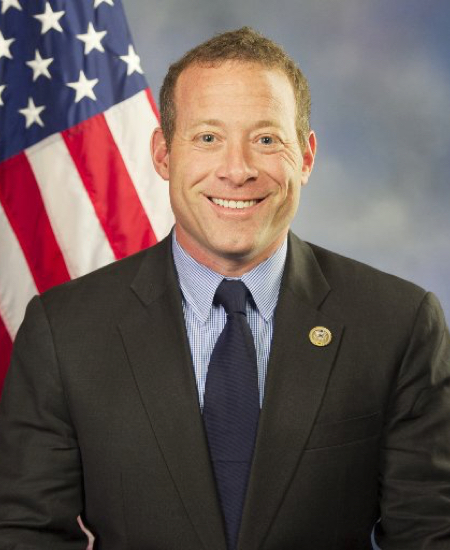
Rep. Josh Gottheimer
Sponsored bills
Maddy summaryThis bill authorizes the award of a single Congressional Gold Medal to Jens Stoltenberg, former Secretary General of NATO, recognizing his leadership of the Alliance. The medal, to be struck by the U.S. Mint, commemorates his role in strengthening NATO's defense capabilities, promoting burden sharing among members, overseeing NATO expansion (including Finland and Sweden), and coordinating support for Ukraine after Russia's 2022 invasion. It does not create new policy or funding but formally honors Stoltenberg's service through a ceremonial medal. The bill specifies the medal's design, allows for bronze duplicates to be sold to cover costs, and directs proceeds to the U.S. Mint's fund.
Maddy summaryHR 9005, the Teacher, Principal, and Leader Residency Access Act, amends the Higher Education Act to allow Federal Work-Study funds to support paid residency programs for aspiring teachers, principals, and school leaders. The bill enables schools to use these funds for compensation during residency training and travel, prioritizing students eligible for Federal Pell Grants. It defines a "residency program" as a structured, year-long apprenticeship where participants work alongside mentor educators while completing coursework in teaching or leadership skills, culminating in full state certification. This directly affects school districts facing teacher shortages, especially in high-need subjects and schools serving low-income or minority students, by expanding access to a proven model that increases educator retention. The policy change focuses on funding mechanisms rather than outcomes, making residency participation financially feasible for participants and institutions.
Maddy summaryThe Revitalizing Downtowns and Main Streets Act creates a 20% tax credit for converting non-residential buildings into affordable housing. To qualify, buildings must be at least 20 years old and nonresidential, with conversion costs exceeding 50% of the building's adjusted basis or $100,000. The converted housing must be rent-restricted for 30 years for residents earning 80% or less of area median income (60% in certain designated areas), with a $12 billion national credit limit. Special provisions apply for economically distressed areas and rural historic preservation projects, primarily affecting developers who convert vacant commercial buildings in downtown or main street areas into affordable housing.
Maddy summaryHR 9011, the Ukraine Democracy Defense Lend-Lease Act of 2024, extends the U.S. government's authority to provide military equipment to Ukraine and Eastern European countries affected by Russia's invasion through fiscal year 2026 (previously ending in 2023). It requires the Secretary of Defense to submit a report within 90 days of using this authority, detailing the specific defense equipment provided and outlining a strategy for recovering and returning that equipment. The bill directly affects Ukraine's government and allied nations in Eastern Europe by enabling continued access to U.S. military aid. Key provisions include the extended funding period and mandatory transparency measures to track aid usage and future recovery.
Maddy summaryThe Rohingya GAP Act establishes a U.S. Special Coordinator for Rohingya Atrocities Prevention and Response to coordinate U.S. government efforts on Rohingya issues. It authorizes $10 million annually for atrocity investigations and $8 million for a Burma-focused conflict observatory to document human rights violations. The bill directs U.S. agencies to support Rohingya refugees' protection, education, and livelihoods in Bangladesh while promoting durable solutions including safe return to Myanmar with full citizenship rights when conditions allow. It requires annual reporting on U.S. efforts to address atrocity risks, protect Rohingya, and advance accountability for crimes against them. The legislation aims to address root causes of violence against Rohingya through empowerment, inclusion in decision-making, and support for transitional justice mechanisms.
Maddy summaryThis bill directs the Secretary of State to quickly recover any unspent U.S. federal funds previously allocated to the United Nations Relief and Works Agency for Palestine Refugees (UNRWA). It directly affects UNRWA, the UN agency providing aid to Palestinian refugees, by requiring the withdrawal of funds not yet used as of the bill's enactment date. The key provision mandates the U.S. government to take necessary steps to reclaim these unexpended funds, without altering existing aid programs or future funding decisions. The bill is procedural, focusing solely on recovering unused funds rather than changing aid policies.
Maddy summaryHR 7914, the Accountability for Terrorist Perpetrators of October 7th Act, imposes U.S. sanctions on the Popular Resistance Committees (PRC) and associated individuals or groups, including blocking property transactions and denying visas to members. The bill requires the President to enforce these sanctions 90 days after enactment, with exceptions for United Nations operations and national security activities, and allows temporary 180-day waivers for national security reasons. It also mandates a 90-day report to Congress on whether the PRC and the group "Lion's Den" meet criteria for designation as terrorist organizations under existing laws. Ongoing reports every two years will track new entities linked to the PRC.
Maddy summaryHR 8992, the Stop Fentanyl at the Border Act, allocates $5.8 billion in federal funding to enhance border security efforts focused on intercepting fentanyl and other illegal drugs. The bill provides $3.4 billion for U.S. Customs and Border Protection (CBP) staffing, including hiring bonuses, mental health support, and processing coordinators, and $1.09 billion for advanced scanning technology and drug interdiction capabilities at land borders. Additional funds target disrupting fentanyl trafficking networks ($223 million for ICE), outbound firearm/currency inspections ($285 million), and law enforcement coordination (DEA, DOJ, U.S. Marshals). These provisions directly affect CBP officers, ICE agents, and border ports of entry by expanding personnel, technology, and interdiction strategies. The bill requires annual reports to Congress on the effectiveness of new staffing, scanning systems, and outbound inspection programs.
Maddy summaryHR 8988, the "Get Foreign Money Out of U.S. Elections Act," expands federal law to prohibit foreign-controlled businesses from influencing U.S. elections. It bans contributions or spending by any for-profit business entity where foreign nationals own 50% or more of voting shares, or where foreign entities collectively own 5% or more (or exert control over election activities). Businesses must certify compliance before making election-related spending, including contributions to political committees, and recipients cannot reuse uncertified funds for further election activities. This bill directly affects foreign-owned corporations, partnerships, and similar entities seeking to participate in U.S. elections.