

Maddy summaryHCONRES 118 is a symbolic congressional resolution recognizing the wage disparity faced by Black women in the U.S. It specifically highlights that Black women earn 69 cents for every dollar earned by White, non-Hispanic men, as noted in Census Bureau data. The resolution marks July 9, 2024, as Black Women’s Equal Pay Day to symbolize how long into 2024 Black women must work to earn what White men earned in 2023. It does not create new laws or policies but formally acknowledges this disparity and reaffirms congressional support for equal pay for equal work.
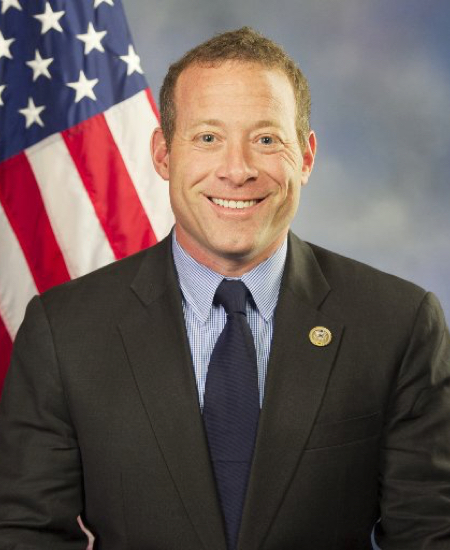
Rep. Josh Gottheimer
Sponsored bills
Maddy summaryHR 8974 establishes a voluntary certification program recognizing employers in industries with high human trafficking risk for providing employee training to identify and respond to suspected trafficking. Employers must apply annually with details about their training, and the Homeland Security Secretary awards a one-year certificate to eligible businesses. The program prohibits false displays of the certificate and requires annual reports to Congress on participation, fees, and program costs. It directly affects private-sector employers in designated high-risk industries, not public agencies or all businesses.
Maddy summaryThis bill (HR 2365, Public Law 118-66) directs the U.S. Department of Health and Human Services (HHS) to establish the National Parkinson’s Project. It requires HHS to create and update a coordinated national plan for preventing, diagnosing, treating, and researching Parkinson’s disease and related disorders (including multiple system atrophy and progressive supranuclear palsy), while coordinating federal research and care efforts across agencies like the NIH, CDC, and VA. The law mandates annual progress assessments, an advisory council with patient advocates and diverse experts, and annual reports to Congress on federal Parkinson’s programs and recommendations for improvement. It affects federal agencies managing Parkinson’s-related programs and aims to improve care coordination and research efficiency for patients and caregivers, with the law sunsetting in 2035.
Maddy summaryHRES 1329 is a resolution formally acknowledging and apologizing for the U.S. government's historical discrimination against lesbian, gay, bisexual, and transgender (LGBT) individuals who served in the military, Foreign Service, and Federal civil service. It condemns past policies - including the 1949 Department of Defense decree banning "homosexual personnel" and the "Don't Ask, Don't Tell" policy (1993-2011) - that led to the discharge or termination of thousands of LGBT service members and employees. The resolution offers a formal apology on behalf of the United States to affected individuals and their families, reaffirming the government's commitment to equal treatment without authorizing legal claims or providing benefits. This is a symbolic act of acknowledgment, not a policy change or financial remedy.
Maddy summaryHRES 1332 is a symbolic resolution recognizing June as LGBTQIA+ Pride Month. It encourages the celebration of Pride Month to honor the historical struggles and achievements of LGBTQIA+ people in the United States, while acknowledging the ongoing challenges they face. This resolution does not create new laws or policies, but serves as a formal recognition of LGBTQIA+ rights as human rights and highlights their integral role in American history. The resolution was introduced by multiple members of Congress and passed by the House of Representatives.
Maddy summaryHR 8898, the Lower Grocery Prices Act, requires the Government Accountability Office (GAO) to study how grocery prices for U.S. consumers have changed over the past 20 years, including related economic data. The GAO must report its findings and recommendations to specific congressional committees within 180 days of the bill's enactment. This bill does not directly lower prices but mandates a review to identify potential policy options. The study will focus on the Consumer Price Index for food at home and aim to inform future legislative action.
Maddy summaryThis bill establishes a grant program to cover medical costs for retired Federal working dogs. Eligible nonprofits (501(c)(3) organizations with at least two years of experience assisting retired law enforcement and military dogs) can apply for grants to help pay for veterinary care. The program, funded at $1 million annually from 2025 through 2029, targets dogs that have received a retirement letter from their agency and are in their handler's care. It directly affects retired working dogs and the nonprofits providing their medical assistance.
Maddy summaryHRES 1327 is a symbolic congressional resolution condemning Azerbaijan for actions it claims constitute ethnic cleansing against Armenians in Nagorno-Karabakh. It specifically calls for the U.S. government to impose targeted sanctions on Azerbaijani officials, halt military aid to Azerbaijan under Section 907 of the FREEDOM Support Act, provide humanitarian aid to Armenian refugees, and strengthen U.S.-Armenia security cooperation. The resolution affirms displaced Armenians' right to return to Nagorno-Karabakh with security protections. It directly affects Azerbaijan's government officials, Armenian refugees in Armenia, and U.S. foreign policy implementation. As a non-binding resolution, it does not create new law but urges specific policy actions.
Maddy summaryThis resolution condemns Uganda's Anti-Homosexuality Act, which criminalizes consensual same-sex relationships with penalties including life imprisonment and the death penalty for certain acts. It directly affects LGBTQI+ Ugandans, who face increased violence, evictions, job loss, and barriers to healthcare due to the law's enforcement. The resolution calls on Uganda to repeal the law and supports maintaining U.S. sanctions like visa restrictions for officials involved in human rights abuses and reduced aid. It reflects U.S. government opposition to the law, which has been linked to severe human rights violations against marginalized communities.
Maddy summaryThe SAFES Act creates a federal tax credit for individuals who purchase gun safes, allowing them to deduct 90% of the cost, up to $500 per person or $1,000 for joint returns. For purchases made before 2030, any qualifying gun safe qualifies; after 2029, only safes meeting standards set by the Secretary of Health and Human Services (HHS) will be eligible, based on an HHS report required within five years of enactment. The bill prohibits requiring taxpayers to disclose firearm ownership details to claim the credit. This policy directly affects individual firearm owners seeking to reduce tax liability through safe storage purchases.