

Maddy summaryThis bill creates a federal grant program to help law enforcement agencies recruit officers from underrepresented communities. It authorizes $50 million annually (2025-2029) for states and local agencies to fund recruitment campaigns and "Pathways to Policing" programs. These programs provide financial support during training for candidates facing education barriers, with no prior law enforcement experience, who are members of underrepresented groups or have nontraditional backgrounds. Grants prioritize agencies targeting underrepresented communities and officers who will serve or live near the communities they protect.
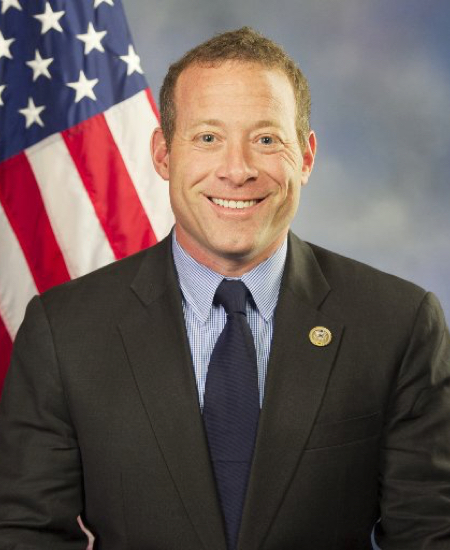
Rep. Josh Gottheimer
Sponsored bills
Maddy summaryThe American Energy Worker Opportunity Act of 2024 creates a new Office of American Energy Workers within the Treasury Department to support workers displaced by coal mine or fossil fuel plant closures. It provides eligible workers (those with 12+ months of near-full-time employment at a closing facility) with 60 months of wage replacement payments (adjusted for inflation), health insurance premium assistance, retirement savings contributions, and educational benefits for them and their children. The bill requires facility operators to notify the Treasury 90 days before closure and prioritizes hiring these workers for new clean energy projects funded by federal grants. This law directly affects workers in coal and fossil fuel industries facing permanent layoffs, offering concrete financial and career transition support.
Maddy summaryHR 9570, the Smaller Class Sizes for Students and Educators Act of 2024, authorizes $2 billion annually to fund grants for local school districts serving high-poverty elementary schools. The bill requires districts to reduce kindergarten through third-grade class sizes to no more than 18 students per class at "targeted schools" (those with the highest percentage of students eligible for free/reduced lunch) using grant funds. Key provisions include using at least 97% of funds for hiring teachers, expanding classroom space (capped at 15%), and providing teacher training, while mandating annual reports on class size progress and impacts on student outcomes and teacher working conditions. This directly affects public elementary schools in high-poverty areas and aims to implement evidence-based class size reduction plans through competitive grants.
Maddy summaryThe CREATE AI Act of 2023 establishes a National Artificial Intelligence Research Resource (NAIRR) to improve access to AI research tools, computational resources, data, and educational materials for researchers and students across the United States. The NAIRR will provide computational resources, curated datasets, educational tools, and access to AI testbeds, with special emphasis on supporting groups historically underrepresented in STEM fields. Governed by a Steering Subcommittee chaired by the Director of the Office of Science and Technology Policy and managed by a Program Management Office within the National Science Foundation, the NAIRR includes specific requirements for ethical AI development, privacy protections, and security measures. The resource will be accessible to researchers at U.S. institutions of higher education, nonprofits, government agencies, and certain businesses, with priority given to projects addressing privacy, ethics, civil rights, and AI safety.
Maddy summaryHRES 1432 designates September 10, 2024, as "National Firearm Suicide Prevention Day" to raise public awareness about firearm suicides and promote safe storage practices. The resolution encourages healthcare professionals to discuss safe firearm storage with patients and supports the day's goals of reducing firearm suicides through education. It directly affects the general public and healthcare providers by highlighting evidence that safe storage lowers suicide risk, referencing statistics like 54.6% of U.S. suicides in 2022 involving firearms. The bill is symbolic, with no new legal requirements, and aligns with existing awareness efforts like Firearm Suicide Prevention Day.
Maddy summaryHRES 1436 is a symbolic resolution (not a law) introduced in the U.S. House of Representatives. It recognizes suicide as a preventable public health crisis by citing statistics from the CDC, VA, and SAMHSA showing rising suicide rates across age groups, including veterans and adolescents. The resolution formally supports designating September as "National Suicide Prevention Month" and September 10, 2024, as "World Suicide Prevention Day." It does not create new policies, allocate funding, or directly affect any individuals - its purpose is solely to express congressional support for suicide prevention awareness and efforts.
Maddy summaryThe BIOSECURE Act prohibits U.S. federal agencies from contracting for or using biotechnology equipment and services from designated "biotechnology companies of concern," such as BGI, MGI, Complete Genomics, WuXi AppTec, and WuXi Biologics, and bans federal funds for these purposes. It requires the Office of Management and Budget to create and update a list of these companies based on national security risks, with implementation phased in over 60-180 days after regulations are issued. Exceptions include intelligence activities, overseas health care for U.S. personnel, and publicly available multiomic data, while limited waivers for national security or overseas health care are permitted with congressional notification. The law does not require new funding and mandates annual reviews of the designated companies.
Maddy summaryThis bill imposes U.S. sanctions on foreign individuals or entities that build, maintain, or repair tunnels or bridges connecting Russia to Crimea. It requires blocking their U.S. assets and banning visas for those involved, with exceptions for humanitarian aid, national security activities, and international obligations. The bill targets infrastructure supporting Russia’s control over Crimea, which the U.S. considers illegally occupied Ukrainian territory following Russia’s 2014 annexation and 2022 invasion of Ukraine.
Maddy summaryHR 7159, the Pacific Partnership Act, mandates the U.S. government to develop a comprehensive strategy for engagement with Pacific Island nations. It requires the President, by January 1, 2026, and every four years thereafter, to submit a detailed strategy to Congress outlining U.S. diplomatic, defense, and economic goals in the region, including assessments of threats like natural disasters, illegal fishing, and foreign military activity. The strategy must detail plans to address these threats, coordinate with Pacific Island governments and regional organizations like the Pacific Islands Forum, and outline required resources and staffing. This bill directly affects U.S. foreign policy operations and shapes how the federal government engages with Pacific Island nations on shared security, economic, and environmental priorities.
Maddy summaryThe Stand with Ukraine Act of 2024 establishes a framework for sustained U.S. security assistance to Ukraine in response to Russia's invasion. It endorses a 10-year bilateral security agreement and directs the U.S. government to provide military equipment, training, and security assistance to strengthen Ukraine's defense capabilities against Russian aggression. Key provisions include treating Ukraine as a major non-NATO ally for defense transfers, fast-tracking military sales through the Foreign Military Sales program, and creating mechanisms to prioritize defense article transfers. The bill also includes specific support for Ukraine's recovery, reconstruction, and demining efforts following the conflict. This legislation directly affects U.S. foreign policy implementation, military assistance programs, and Ukraine's ability to build a credible defense against Russian threats.