

Maddy summaryThe SECURES Act of 2024 requires the U.S. Department of Transportation to propose new federal safety standards for seat belts on all new school buses within 180 days of the bill's enactment. It directs the Secretary to consider evidence showing lap/shoulder belts provide the highest passenger protection, including the National Transportation Safety Board's findings and the National Highway Traffic Safety Administration's prior stance. The rulemaking must also evaluate existing state requirements and innovative seat belt detection or reminder technologies. This bill directly affects manufacturers of new school buses and federal safety regulations, aiming to establish uniform seat belt standards for all new school buses nationwide.
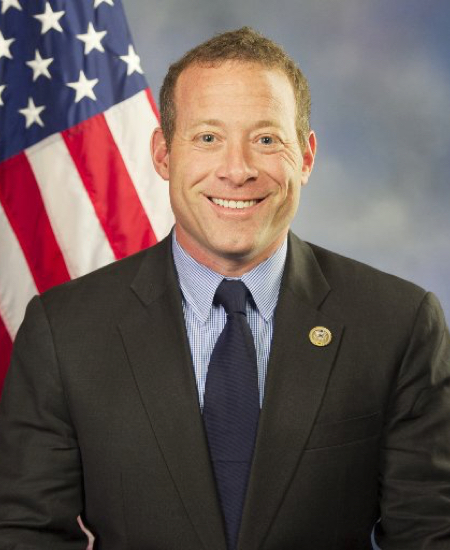
Rep. Josh Gottheimer
Sponsored bills
Maddy summaryHR 9471, "Miranda's Law," creates a national system requiring states to automatically notify employers when school bus drivers (with commercial licenses) face license issues like suspensions, moving violations, or accidents. It directly affects school districts, schools, and private transportation companies that employ school bus drivers, mandating their participation in this notification service. The law requires the Transportation Secretary to establish the system within one year, ensuring employers receive immediate alerts about driver license changes instead of needing annual background checks. Schools and contracted transportation providers are both considered employers under this law, and drivers must also receive copies of these notifications.
Maddy summaryHR 9480, the Empowering Law Enforcement to Combat Financial Fraud Act, allows state, local, and Tribal law enforcement agencies to use specific federal grant funds (from Justice Department and Homeland Security programs) to investigate senior financial fraud (targeting elderly/disabled victims), pig butchering scams (crypto investment frauds), and general financial fraud. The bill directs funds toward hiring specialized staff, training on blockchain tools and transnational fraud, purchasing investigative software, and improving data collection. Agencies must report annually to grant providers on fund usage and fraud statistics, with federal agencies then reporting to Congress on these efforts. This policy change expands the allowable use of existing grants to specifically address these fraud types through enhanced investigative capabilities.
Maddy summaryHRES 1422 is a resolution recognizing the 60th anniversary of the Wilderness Act (enacted in 1964), which established the National Wilderness Preservation System. The resolution commends advocates for the Act, acknowledges wilderness areas' role in protecting over 112 million acres of public lands, and highlights their benefits for recreation, clean water, wildlife habitat, and climate resilience. It specifically emphasizes the importance of including Tribal governments in wilderness designation and management. As a commemorative resolution, it does not create new laws or directly affect any group.
Maddy summaryThe School Hunger Elimination Act of 2024 automatically certifies children for free or reduced-price school meals if they are already receiving Medicaid benefits (with household income at or below 133% of the federal poverty line for free meals) or Supplemental Security Income (SSI). It requires states to establish data-sharing agreements with Medicaid agencies by the 2025 school year, eliminating the need for families to submit separate applications for meal eligibility. This change directly affects children in low-income households already enrolled in Medicaid or SSI, streamlining access to school meals without additional paperwork.
Maddy summaryThe SOIL Act (HR 8448) establishes a pilot program to create a pre-approval process for direct farm ownership loans under existing law, aiming to streamline applications and provide greater certainty for borrowers. It allows the Farm Service Agency to set eligibility requirements for these loans while maintaining current borrowing rules. The program runs until September 30, 2029, and requires annual reports to Congress on its implementation and results. This directly affects farmers seeking to purchase land through USDA-owned farm ownership loans.
Hostage Private Debt Tax Freedom Act This bill excludes from gross income, for income tax purposes, income resulting from the discharge of indebtedness of individuals wrongfully detained abroad.
Maddy summaryHR 7585, the Enhanced Cybersecurity for SNAP Act of 2024, requires states to transition all SNAP (food stamp) EBT cards to chip-enabled technology by 2029, phasing out magnetic stripes. It mandates states to provide mobile-friendly digital interfaces for managing EBT accounts, including real-time transaction alerts, fraud reporting tools, and virtual card numbers for online purchases. The bill prohibits states from using outdated password requirements inconsistent with federal cybersecurity standards and ensures no replacement fees for cards lost, stolen, or damaged due to fraud or expiration. States will receive reimbursement for costs related to upgrading cards and payment terminals, directly affecting 40 million SNAP recipients and state agencies managing the program.
Maddy summaryHR 7015, the CAREERS Act, expands federal funding for workforce training programs to better serve rural communities. It modifies eligibility to include career and technical education schools and requires training programs to align with specific rural industry sectors like broadband, healthcare, agriculture, manufacturing, and water services. The bill mandates grantees to report on employment outcomes for participants and addresses rural workforce challenges such as worker displacement and youth migration. This directly affects rural workforce development boards, training providers, and workers in designated rural industries seeking job skills and career pathways.
Maddy summaryHR 9415 requires all Department of Veterans Affairs (VA) domiciliary facilities and state-run veteran homes providing housing to appoint a resident advocate. The advocate must serve as a direct liaison between veterans and facility staff, receive and address veterans' complaints, and escalate unresolved issues to facility directors, the VA Inspector General, or state officials. This applies to both VA facilities and state homes seeking federal payment for veteran care. The bill creates a formal mechanism for veterans to report concerns without relying solely on facility management.