

Maddy summaryHR 6319 (the 911 SAVES Act of 2023) requires the Office of Management and Budget to reclassify public safety telecommunicators as "Protective Service Occupations" within 30 days of enactment. This change corrects their current misclassification in the federal Standard Occupational Classification (SOC) system, which is used for statistical data on jobs. The bill directly affects how these professionals - critical in emergency calls involving missing children, active threats, and officer safety - are officially categorized in government workforce data. It does not create new benefits or funding but aims to better recognize their lifesaving role through accurate federal job classification.
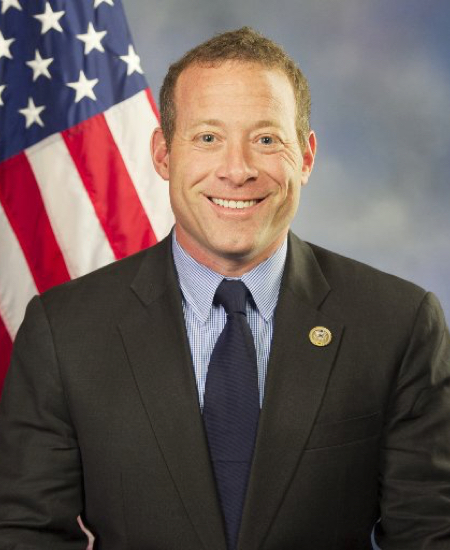
Rep. Josh Gottheimer
Sponsored bills
Maddy summaryThe Artsakh Revenue Recovery Act of 2024 would establish a U.S. fund to compensate Armenians displaced from Artsakh (Nagorno-Karabakh) after Azerbaijan's military assault in September 2023. It requires the U.S. government to seize Azerbaijani sovereign assets held in the United States if Azerbaijan fails to compensate displaced Armenians for lost revenue from businesses, property, and employment. The bill creates a claims process through which displaced Armenians can submit claims for compensation for revenue lost since September 2023, with the fund paying claims if Azerbaijan does not compensate within 90 days. The Artsakh Revenue Recovery Fund would operate for up to one year after a peace agreement between Azerbaijan and Armenia is signed or until all claims are paid.
Maddy summaryThis bill expands online privacy protections under the Children's Online Privacy Protection Act to cover teens aged 12-17, in addition to children under 13. It requires website and app operators to obtain verifiable consent from parents for children and from teens themselves before collecting personal information. The bill restricts operators from using collected data for individual-specific advertising to children or teens and mandates clear notices about data practices. Operators must provide users with the right to access, delete, and correct personal information they've collected. These requirements apply to websites, online services, and mobile applications that collect information from children or teens or have actual knowledge a user is a child or teen.
Maddy summaryThe Kids Online Safety Act (HR 7891) would require major online platforms (with high revenue or user numbers) to implement safety features for children and teens, including default protective settings, parental controls, and age verification. It would mandate platforms to report annually on risks to minors and their safety measures, and prohibit advertising harmful products (like tobacco, alcohol, or gambling) to minors. The bill directly affects social media platforms, online video games, and video streaming services that are used by minors, with the goal of preventing mental health harms, compulsive usage, and cyberbullying.
Maddy summaryThe Veterans Accessibility Advisory Committee Act of 2024 establishes a new advisory committee within the Department of Veterans Affairs (VA) to improve accessibility for veterans and others with disabilities. The committee, composed of 15 voting members including veterans with disabilities, accessibility experts, VA staff, and veterans service organization representatives, will advise the VA Secretary on making services, facilities, information, and technology more accessible. It must meet at least twice yearly, assess accessibility barriers through reviews of complaints and facility assessments, and submit biennial reports to the VA Secretary and Congress detailing progress, unmet needs, and recommendations. These reports will guide the VA in complying with accessibility laws like the Americans with Disabilities Act and Section 508 of the Rehabilitation Act. The committee will operate for 10 years from the bill’s enactment.
Maddy summaryHR 4424, the Vietnam Veterans Liver Fluke Cancer Study Act, directs the Department of Veterans Affairs to study the rate of cholangiocarcinoma (a type of bile duct cancer) among veterans who served in the Vietnam theater during the Vietnam era. The bill requires the VA, working with the CDC, to analyze existing cancer registry data to compare cancer rates between these veterans and the general U.S. population, breaking down results by age, gender, race, ethnicity, and location. The VA must report its findings and recommendations to Congress within one year of completing the study, with ongoing periodic updates. This study aims to identify patterns and inform potential future actions for affected veterans, without changing current benefits or eligibility.
Maddy summaryThe Fairness for Servicemembers and their Families Act of 2024 requires the Department of Veterans Affairs to review the automatic maximum coverage amount for Servicemembers’ Group Life Insurance (SGLI) and Veterans’ Group Life Insurance (VGLI) every three years, starting January 1, 2024. The review compares the current coverage amount to a new inflation-adjusted figure calculated as $400,000 multiplied by the cumulative increase in the Consumer Price Index (CPI) since 2005. The results of each review must be submitted to Congress. This provision directly affects active-duty service members and veterans enrolled in SGLI or VGLI by establishing a process to potentially increase their automatic coverage to keep pace with inflation.
Maddy summaryThe JUDGES Act of 2024 authorizes new federal district court judgeships across multiple states to address rising case backlogs in the federal judiciary. It specifies new permanent judgeships for districts including California (multiple districts), Florida, Texas, Delaware, Indiana, Iowa, New Jersey, and New York, with implementation phased through 2035, and creates temporary judgeships for Oklahoma districts with specific vacancy rules. The bill authorizes funding for these positions and requires reports on judicial caseloads and detention space needs, while mandating public access to the Judicial Conference's judgeship recommendations. The bill directly affects federal district courts in the specified locations by increasing judicial staffing to handle growing case volumes.
Maddy summaryHR 9601, the SEAT Act of 2024, requires online restaurant reservation platforms (like OpenTable or Yelp) to have a written agreement with each restaurant before listing or selling reservations. It directly affects restaurants and third-party reservation services by mandating these agreements and banning clauses that force restaurants to cover the platform's mistakes. The bill treats violations as deceptive practices under the FTC Act, giving the Federal Trade Commission authority to enforce it. It applies broadly to all food venues, including bars, food trucks, airport kiosks, and stadium concessions, starting 180 days after enactment.
Maddy summaryHRES 1448 is a non-binding House resolution stating that the House believes every person has the right to emergency health care, including abortion care, during medical emergencies. It specifically addresses concerns that abortion restrictions force medical providers to choose between treating patients in life-threatening situations or risking criminal charges. The resolution highlights that such restrictions disproportionately harm Black, Indigenous, people of color, immigrants, low-income individuals, and LGBTQI+ patients. It does not change existing laws but expresses congressional support for ensuring access to emergency care without legal barriers. The resolution was introduced by multiple House members and referred to the Energy and Commerce Committee.