

Maddy summaryHR 7851, the Bridge Protection Act, requires protective barriers for certain federal bridge projects. It applies to the repair or construction of "covered bridges" (defined as bridges over navigable water valued at over $50 million). The bill mandates that projects receiving federal funds must include protective features rated to withstand the largest vessels regularly passing under the bridge. This requirement is a condition for federal funding under Title 23, United States Code.
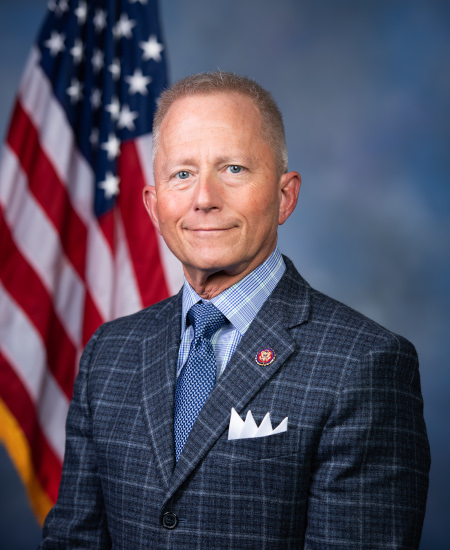
Rep. Jefferson Van Drew
Sponsored bills
Maddy summaryHR 7814, the Dental Loan Repayment Assistance Act of 2024, changes tax rules to exclude certain loan repayments from taxable income for dental school faculty. It directly affects dental faculty members at schools participating in the federal Dental Faculty Development and Loan Repayment Program (under Section 748(a)(2) of the Public Health Service Act). The key provision amends tax law so that repayments received through this specific program are not counted as taxable income. The bill also requires a GAO report to assess how many dental faculty remain teaching in clinics at participating schools after receiving the funding.
Protect American Widows Act of 2024 or the PAW Act of 2024 This bill redefines surviving spouse for purposes of the applicable filing status of such individuals. It expands from two to five years amount of time a spouse must survive a deceased spouse in order to qualify for joint filing status as a married taxpayer.
Child Tax Credit Integrity Act This bill requires an individual taxpayer to provide social security account numbers to claim the child tax credit. The social security number must be that of the taxpayer and the taxpayer's spouse (for joint returns) and the child named on the tax return.
Maddy summaryHR 7770, the Rosie the Riveter Commemorative Coin Act, authorizes the U.S. Mint to produce and sell three commemorative coins honoring women who worked on the U.S. home front during World War II. It specifies $5 gold coins (max 50,000), $1 silver coins (max 400,000), and half-dollar coins (max 750,000), all to be issued between January 1, 2025, and December 31, 2025. Each coin sale includes a surcharge ($35 for gold, $10 for silver, $5 for half-dollar), with all surcharge funds directed to the Rosie the Riveter Trust for maintaining the Rosie the Riveter WWII Home Front National Historical Park and educational programs. The coins will feature designs reflecting the legacy of diverse women workers and must meet specific weight, diameter, and composition standards.
Maddy summaryThis bill establishes a new process for investigating whistleblower retaliation claims within the FBI. It designates the Inspector General of the Department of Justice to receive and investigate allegations of retaliation against FBI employees who disclose information protected under whistleblower laws. The bill sets specific timelines for investigations, requires the Inspector General to notify complainants of investigation status, and allows for corrective actions like reinstatement, back pay, and other remedies if retaliation is found. It also creates procedures for disciplinary action against FBI employees who engage in retaliation and requires annual reports to Congress detailing investigation outcomes. The bill directly affects FBI employees who make protected disclosures and those who retaliate against them.
Maddy summaryHR 7725 would block federal funding for graduate medical schools that require students or staff to adopt specific statements about race, gender, or identity (like claiming systemic racism or collective guilt), use race-based distinctions in admissions or programs, maintain DEI offices, or mandate "diversity statements" for admission. It directly affects graduate medical schools at colleges/universities receiving federal financial aid, including student loans. The bill exempts medical education about race-related health needs, demographic data collection for reporting, and religious institutions from adhering to policies conflicting with their beliefs. Schools violating these rules would lose eligibility for federal funds, though they could still comply with anti-discrimination laws and provide general academic instruction.
Maddy summaryThis bill amends an existing provision of the Omnibus Crime Control Act to explicitly authorize federal grant funds to cover the purchase of fentanyl testing kits and opioid reversal agents. It directly affects state and local law enforcement and public health agencies that receive federal grants under this program. The key change allows current grant funding to be used for these specific harm reduction tools without requiring new legislation or appropriations.
Maddy summaryHR 7704, the "Think DIFFERENTLY About Ending Learning Loss Act," directs the U.S. Secretary of Education to study how pandemic-era education policies affected students with Individualized Education Programs (IEPs) in public K-12 schools. The study must analyze academic performance, functional progress, and access to special education services from 2018-2024, using metrics like standardized test results, IEP service hours, and progress reports. It requires a final report to Congress within 30 days of study completion, focusing on comparing pre-pandemic, pandemic, and post-pandemic conditions for these students. The bill does not enact new policies or allocate funds, only mandating data collection and reporting.
Maddy summaryHR 7669, the Right to Try IVF Act of 2024, prevents federal funding from being withheld from states that restrict IVF access for individuals with documented medical infertility. The bill specifically prohibits the use of federal funds from the State Maternal and Child Health Services Block Grant program (Title V of the Social Security Act) for any state that bans licensed physicians from performing IVF on patients with a physician-diagnosed medical hardship in conceiving a child. It directly affects states receiving these federal funds by requiring them to allow IVF for medically necessary cases or risk losing the funding. The key mechanism is linking federal financial support to state policies regarding IVF access for infertility treatment. The bill does not directly change IVF access for individuals but uses federal funding leverage to influence state regulations.