

Maddy summaryThis bill, the NO VOTE for Non-Citizens Act of 2023, aims to prevent non-citizens from voting in federal elections by requiring states to maintain separate voter registration lists for non-citizens if they are permitted to vote in state or local elections, and reducing federal election administration funding to such states by 30%. It clarifies that non-citizens cannot be on federal voter registration lists, mandates federal agencies to provide voter status information to state election officials, and adds penalties for non-citizens who vote in federal elections, including fines and potential imprisonment. The bill directly affects states that allow non-citizen voting in state or local elections, federal election administrators, and non-citizen residents. It amends existing laws including the National Voter Registration Act of 1993 and the Help America Vote Act of 2002.
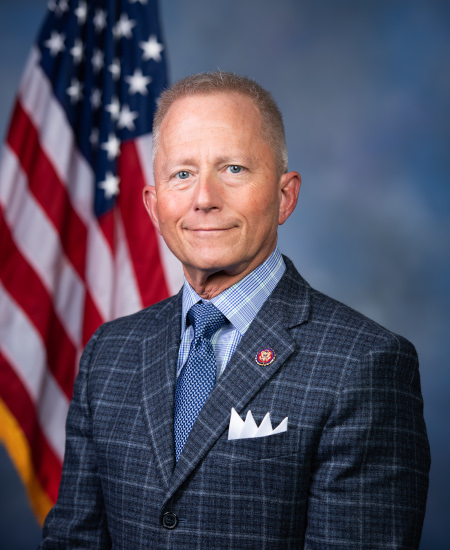
Rep. Jefferson Van Drew
Sponsored bills
Maddy summaryHR 524 amends the Coastal Barrier Resources Act to exempt certain shoreline borrow sites used for coastal storm risk management projects from the Act's restrictions. It directly affects projects that have utilized a specific borrow site for more than 15 years, allowing continued use of that site without triggering the Act's limitations. The key provision creates a permanent exemption for sites meeting the 15-year usage threshold, removing barriers to ongoing storm risk management activities. This change applies only to existing sites with a documented 15+ year history, not new borrow sites.
Francis Scott Key Bridge Disaster Taxpayer Reimbursement Resolution This resolution expresses the sense of the House of Representatives that the federal government should recoup monies from the responsible parties for all damages resulting from the allision of the cargo shipping vessel Dali with the Francis Scott Key Bridge on March 26, 2024.
Maddy summaryHRES 1139 is a non-binding House resolution that formally acknowledges April 17, 2024, as the 500th anniversary of Giovanni da Verrazzano’s 1524 discovery of New York Bay. It recognizes Verrazzano’s role as the first European to map the East Coast of North America, which contributed to the later establishment of New York City and its development as a major economic hub. The resolution highlights historical connections, including Verrazzano’s influence on New York Bay’s exploration and existing commemorations like the Verrazzano-Narrows Bridge. It does not create new laws, allocate funds, or affect any specific group or policy. This is purely a ceremonial acknowledgment by the U.S. House of Representatives.
Maddy summaryThis bill bans airlines from transporting non-citizens using three specific documents: the CBP One mobile app, DHS Form I-385 (Notice to Report), and DHS Form I-862 (Notice to Appear). It also prohibits the Department of Homeland Security from accepting these documents as valid ID for domestic air travel. The law directly affects airlines that might facilitate travel for individuals relying on these documents and travelers using them for flight boarding. Key provisions explicitly list the banned documents in federal law, removing them as acceptable identification for air travel under U.S. Code.
Maddy summaryHR 7959, the SHIELD Act, adds trespass convictions to grounds for denying immigration entry or ordering deportation. It directly affects immigrants convicted of trespass under any state, local, tribal, or federal law, regardless of whether the trespass is classified as a misdemeanor or felony. The bill amends existing immigration law to make anyone convicted of trespass (or who admits to acts constituting trespass) inadmissible upon entry or deportable after entry. These provisions apply based on the jurisdiction where the trespass occurred, without considering the offense's classification under local law.
Maddy summaryHR 7921, the Countering Antisemitism Act, establishes a National Coordinator to Counter Antisemitism within the Executive Office of the President and creates an Interagency Task Force to coordinate federal efforts against antisemitism across multiple agencies. The bill requires federal agencies to report on implementing the U.S. National Strategy to Counter Antisemitism, mandates annual threat assessments of antisemitic violent extremism from the FBI, DHS, and National Counterterrorism Center, and addresses antisemitic discrimination in higher education through a designated Office for Civil Rights Designee. It also includes provisions for a study on Holocaust education by the U.S. Holocaust Memorial Museum, a study on online antisemitism with recommendations for Congress, and amendments to the Nonprofit Security Grant Program to require public reporting on grant applications and awards.
Maddy summaryThis bill protects licensed amateur radio operators' ability to install antennas for emergency communications by preventing homeowners' associations and private land use restrictions from blocking such installations. It requires communities to allow antennas that don’t impair emergency use, with exceptions only for safety, structural requirements, or minimal visual impact (e.g., screened enclosures). Small antennas (under 1 meter diameter), flagpoles (under 43 feet), and wire/vertical antennas don’t require prior approval, and communities must approve applications within 45 days. The law directly affects over 770,000 licensed amateur operators who rely on these antennas for life-saving emergency communications during disasters.
Maddy summaryHRES 1116 is a non-binding House resolution expressing that the federal government should seek reimbursement from Synergy Marine Group and Maersk Line Limited for taxpayer costs related to the March 26, 2024, collapse of the Francis Scott Key Bridge. The bridge collapsed when the cargo ship Dali lost power and struck a support pylon, causing infrastructure damage, supply chain disruption, and a financial burden on taxpayers. The resolution states the responsible companies - Synergy (which chartered the vessel) and Maersk (a charterer) - should bear the costs, not taxpayers, and urges monitoring of legal actions. It does not create new law or mandate recoupment, but formally states the House’s position on corporate accountability.
Maddy summaryHR 7873, the Firearm Due Process Protection Act, directly affects individuals denied firearm purchases through the National Instant Criminal Background Check System (NICS). The bill requires courts to hold hearings on challenges to NICS denials within 30 days and shifts the burden to the government to prove eligibility by "clear and convincing evidence." It also mandates annual FBI reports to Congress detailing the number of challenges processed, reversals of denials, and processing times. These provisions aim to expedite due process for people seeking to correct inaccurate NICS records affecting their firearm rights.