

Maddy summaryHRES 697 is a non-binding resolution expressing the U.S. House of Representatives' concerns about China's "Made in China 2025" (MIC2025) industrial plan and associated actions. The resolution cites alleged Chinese practices - including state-backed intellectual property theft, forced labor, unfair subsidies, and cyber espionage - as undermining U.S. competitiveness in key technology sectors like semiconductors, AI, and clean energy. It directly affects U.S. businesses, researchers, and government entities operating in these MIC2025 priority areas, urging them to strengthen security measures against foreign interference. The resolution calls for coordinated U.S. public-private efforts to protect innovation but does not impose new legal requirements.
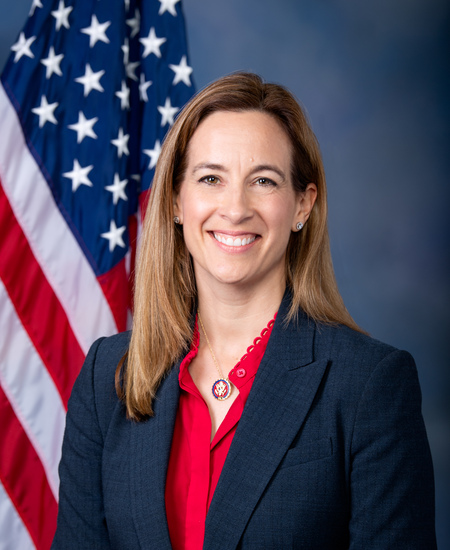
Rep. Mikie Sherrill
Sponsored bills
Maddy summaryThe Humane Cosmetics Act of 2023 bans cosmetic animal testing in the United States, prohibiting companies from conducting or contracting such testing after its enactment (effective 1 year later). It also bans selling or transporting cosmetics developed using animal testing conducted after that date within U.S. interstate commerce. The law directly affects cosmetic manufacturers, retailers, and suppliers operating in the U.S. market, requiring them to use non-animal testing methods for safety evaluations. Exceptions exist for foreign regulatory requirements or when no alternative testing methods are available for specific ingredients.
Maddy summaryHJRES 89 requires the President to obtain Senate approval (with a two-thirds vote) or new congressional legislation to suspend, terminate, or withdraw from the North Atlantic Treaty (NATO). It prohibits using federal funds for such actions until Congress passes a two-thirds resolution or enacts a law authorizing withdrawal. The bill mandates 180-day written notification to relevant congressional committees (Foreign Affairs and Foreign Relations) before any withdrawal action and authorizes Congress to sue to block unilateral executive moves. This directly affects the executive branch's ability to act unilaterally on NATO membership, reinforcing congressional oversight of treaty obligations.
Maddy summaryThe No Tax Breaks for Union Busting Act would deny tax deductions for employers who attempt to influence employees' decisions about union activities, including unfair labor practices like firing workers for organizing or using captive audience meetings. It targets expenses related to union-busting tactics, such as consulting fees and other costs used to sway workers' opinions about collective bargaining. Employers would need to report these expenses on tax returns and would no longer be able to deduct them from taxable income. The bill aims to prevent employers from using tax-deductible expenses to influence union elections, aligning with existing rules that deny tax deductions for political spending. It would apply to expenses incurred in taxable years beginning 240 days after enactment.
Maddy summaryHR 5433, the Child Care Stabilization Act, provides $16 billion annually from 2024 to 2028 to stabilize the child care sector through grants administered by the Health and Human Services Secretary. It directly affects licensed child care providers by offering stable funding to cover operating costs, while supporting higher wages for early educators without raising family fees. Key provisions include expanding access to high-quality, affordable care - especially for infants/toddlers, rural communities, and children with disabilities - and addressing shortages in underserved areas. The funding builds on existing American Rescue Plan resources, aiming to strengthen the child care workforce and increase available options for working families.
Maddy summaryHR 5428, the No Tax Breaks for Union Busting (NTBUB) Act, prevents employers from deducting certain expenses related to influencing workers' decisions about union representation. It targets spending on tactics like anti-union meetings, workplace surveillance, or consultants during organizing campaigns, making these costs non-deductible for tax purposes. Employers must report such expenses on their tax returns, including details about the activities and amounts spent. The bill aims to remove tax incentives for employer interference in union elections, aligning with federal labor law protections for workers' collective bargaining rights.
Maddy summaryThis bill designates the Peter J. McGuire Memorial and Gravesite in Pennsauken, New Jersey, as the "Peter J. McGuire Memorial National Commemorative Site." It formally recognizes the site's historical significance as the resting place of Peter J. McGuire, a foundational labor leader who co-founded the American Federation of Labor and proposed Labor Day. The designation does not make the site part of the National Park System but allows for cooperative educational programs. The memorial, already listed on both New Jersey and National Registers of Historic Places since 2018-2019, honors McGuire’s role in labor history.
Maddy summaryHR 5244, the Fusion Energy Act, creates a new regulatory framework specifically for fusion energy machines - defined as particle accelerators that fuse atomic nuclei for commercial or industrial use. It amends the Atomic Energy Act to include fusion machines under existing byproduct material rules and establishes a "technology-inclusive" licensing process for their development. The bill requires the Nuclear Regulatory Commission (NRC) to report within one year on risk-based licensing frameworks for mass-produced fusion machines, potentially modeling them after FAA aircraft certification. This legislation directly affects fusion technology developers and the NRC, streamlining future regulatory pathways without providing new funding.
Maddy summaryHR 4277, the Saving America’s Pollinators Act of 2023, would immediately cancel all registrations for neonicotinoid pesticides (including imidacloprid and clothianidin) and ban their sale, use, and future registration. This directly affects farmers and crop producers who currently use these pesticides on over 150 million acres of crops like corn and soybeans, where seed coatings are widely applied. The bill also ends exemptions for seed-treated pesticides and requires the Environmental Protection Agency to revoke tolerances for pesticide residues in food within six months. Additionally, it mandates the U.S. Fish and Wildlife Service’s newly established Center for Pollinator Conservation to monitor native bee populations and coordinate federal actions to reverse pollinator declines.
Maddy summaryThe Homeless Children and Youth Act of 2023 amends the McKinney-Vento Homeless Assistance Act to better support homeless children and youth. It extends the timeframe for determining homelessness from 14 to 30 days, creates a new definition for "child or youth defined as homeless under any other Federal program" (including those covered by Head Start, Child Care Development Block Grant, and other programs), and requires that all individuals identified as homeless under any provision of the Act be eligible for services without additional verification. The bill mandates public reporting of detailed homeless data through the Homeless Management Information System (HMIS), including demographic information about homeless individuals by age, disability, and length of homelessness. It also requires that all homeless populations proposed to be served receive equal priority without discrimination based on subpopulation.