

Maddy summaryThe WIC for Kids Act expands eligibility for the Special Supplemental Nutrition Program for Women, Infants, and Children (WIC) by adding new qualifying pathways. It allows children to qualify if they live in households where someone receives Head Start, Indian reservation food assistance, or Puerto Rico/Northern Mariana Islands nutrition block grants, and streamlines documentation by permitting states to use existing records. The bill extends certification periods for children from one to two years and automatically enrolls infants born to current WIC participants. This directly affects low-income families with children who qualify for related assistance programs but previously faced barriers to WIC access.
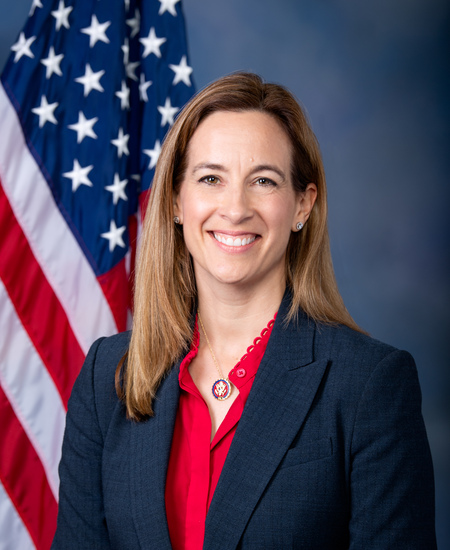
Rep. Mikie Sherrill
Sponsored bills
Maddy summaryThis bill requires federal financial regulators (like the Fed and Consumer Bureau) to create guidance for banks within 180 days of enactment. The guidance directs banks to help consumers and businesses affected by government shutdowns - including furloughed federal workers, DC employees without pay, and contractors with reduced income - by adjusting loan terms, preventing payment hardships, and stopping negative credit reporting during temporary financial difficulties. Banks must also immediately notify regulators, consumers, and businesses if a shutdown begins. After a shutdown ends, regulators must report to Congress on the guidance's effectiveness and update it within 180 days if needed.
Maddy summaryThe EQIP Improvement Act of 2023 modifies payment rules for the Environmental Quality Incentives Program (EQIP), which helps farmers and ranchers adopt conservation practices. It establishes tiered payment limits: 75% of costs for most practices, 40% for specific infrastructure like irrigation systems or waste facilities, and 100% coverage for income lost by producers. The bill also reduces a payment cap from $450,000 to $150,000 per producer and requires annual reports to Congress detailing program spending by practice type, state, and farm size. These changes directly affect agricultural producers participating in EQIP by altering their financial support for conservation efforts.
Maddy summaryThis bill amends the Higher Education Act to require all U.S. colleges and universities receiving federal financial aid to create detailed anti-harassment policies covering physical, online, and institution-sponsored settings. It mandates policies prohibiting harassment based on race, sex (including sexual orientation and gender identity), disability, religion, and other protected characteristics, including harassment via institutional email, computers, or electronic messaging. The bill also establishes a $50 million annual grant program to fund colleges developing prevention programs, victim support services, and training for students and staff on recognizing and addressing harassment. These policies and grants must comply with existing civil rights laws like Title IX but add specific requirements for reporting and prevention.
Maddy summaryHRES 718 is a symbolic resolution supporting the designation of September 23, 2023, as "Bruce Springsteen Day" to honor the musician's contributions. It does not create new laws or affect any individuals or groups, as it is a non-binding expression of congressional support. The resolution highlights Springsteen's career, his connection to New Jersey (where he was born), and his impact on American music and culture. It specifically recognizes his birthday as the designated day and his work addressing themes like working-class life and national unity. This is a ceremonial gesture with no legal or policy consequences.
Maddy summaryHR 5569, the Child Care Nutrition Enhancement Act of 2023, increases funding for child care nutrition programs. It adds a 10-cent per meal reimbursement for providers participating in the Child and Adult Care Food Program (CACFP), applying to all meals and supplements served. This change directly affects child care centers, family day care homes, and group day care homes that receive CACFP funding. The additional reimbursement is calculated alongside existing payment rates and applies to all meals served after the bill's enactment. The bill modifies specific sections of the Richard B. Russell National School Lunch Act to implement this funding increase.
Maddy summaryHR 5566, the *Supreme Court Tenure Establishment and Retirement Modernization Act of 2023*, establishes an 18-year term limit for all Supreme Court justices. It requires the President to nominate one new justice every two years (during first and third years after presidential elections), with Senate confirmation within 90 days, and prohibits lifetime appointments. Current justices are automatically retired in order of service length as new justices are appointed, while retired justices may temporarily fill vacancies through a randomized process. The bill directly affects all sitting and future Supreme Court justices by restructuring appointments and retirement timelines.
Maddy summaryThe Better CARE for Animals Act of 2023 amends the Animal Welfare Act to strengthen enforcement of animal welfare standards. It gives the Attorney General authority to bring civil cases for violations, including seeking penalties up to $10,000 per day per violation and injunctions to remove or relocate animals. The bill also requires the Secretary of Agriculture and Attorney General to coordinate through a new Memorandum of Understanding, focusing on repeat violators. These changes directly affect dealers, exhibitors, and enforcement agencies by expanding civil enforcement tools and clarifying jurisdiction over rule violations.
Maddy summaryThis bill amends the Food and Nutrition Act to expand SNAP eligibility and simplify medical expense deductions. It raises the age limit for income exclusions from 17 to 21, directly helping young adults aged 18-21 who previously lost benefits at 17. The bill replaces "excess" medical deductions with a standardized amount based on Social Security Act premium rates, removing the previous requirement to prove elderly or disabled status for medical deductions. States may set higher standard deductions if they meet cost neutrality rules, but the baseline deduction is now fixed annually. These changes streamline eligibility and reduce administrative barriers for SNAP recipients.
Maddy summaryThe John R. Lewis Voting Rights Advancement Act of 2023 would strengthen the Voting Rights Act of 1965 by updating the criteria for which states and localities must obtain federal preclearance before changing voting practices. It would establish new standards for proving vote dilution and vote denial by requiring courts to consider historical discrimination, racial polarization in voting, and whether voting practices disproportionately burden minority voters. The bill would also require states and localities to provide public notice of voting changes and share demographic data about polling locations. These changes would primarily affect jurisdictions with a history of voting rights violations, aiming to prevent discriminatory voting practices before they take effect.