

Maddy summaryThe Increasing Access to Mental Health in Schools Act creates a federal grant program to increase mental health staff in low-income schools. It provides funding for partnerships between low-income schools (where at least 20% of students are from families below the poverty line) and graduate programs in school counseling, psychology, and social work. Grant funds can cover training costs, salary support for new mental health providers, recruitment of underrepresented students, and student loan repayment for mental health staff working in qualifying schools. The bill sets target ratios for staff-to-student ratios (like 1 counselor per 250 students) and requires annual reporting on program outcomes. The program is authorized for $200 million annually to address mental health staffing shortages in schools serving high-poverty communities.
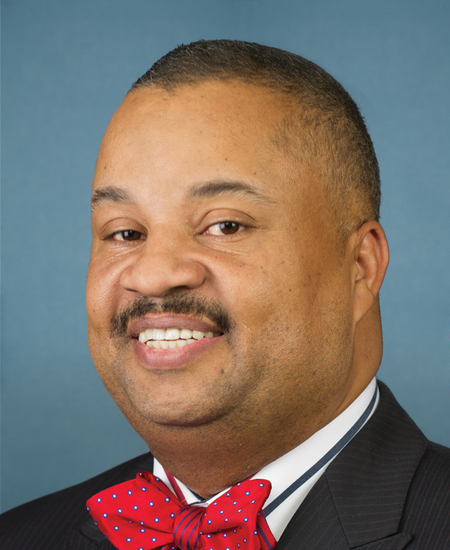
Rep. Donald M. Payne, Jr.
Sponsored bills
Maddy summaryHRES 1032 is a symbolic resolution designating the week of February 26-March 1, 2024, as "Public Schools Week" in the U.S. House of Representatives. It expresses congressional support for public education, highlighting its role in preparing students and communities. The resolution has no legal effect or funding provisions - it solely serves as a formal expression of backing for public schools. It directly affects no individuals or entities but aims to raise awareness about public education. This is a non-binding gesture, not a policy change.
Maddy summaryHR 533, the "Promoting a Resolution to the Tibet-China Dispute Act," establishes U.S. policy recognizing Tibetans' right to self-determination under international law and rejects China's historical claims about Tibet. It directs the State Department to counter Chinese disinformation about Tibet’s history and status, including claims that Tibet has been part of China "since ancient times," and amends the 2002 Tibetan Policy Act to require specific disinformation countermeasures. The bill defines "Tibet" to include the Tibet Autonomous Region and Tibetan areas in Qinghai, Sichuan, Gansu, and Yunnan provinces. These provisions aim to guide U.S. diplomatic efforts toward resolving the Tibet-China dispute through dialogue and factual representation.
Maddy summaryThis symbolic resolution (HRES 1026) recognizes Black History Month and honors the 94 African-American recipients of the Congressional Medal of Honor for their military bravery, heroism, and valor. It does not create new laws or policies but formally acknowledges their contributions, referencing historical context like Sergeant William Harvey Carney’s 1863 actions and the 1993 study revealing racial discrimination in Medal of Honor awards during WWII. The resolution specifically calls for the House to recognize Black History Month and honor these 94 service members. It is a non-binding expression of support with no concrete policy changes.
Climate and Health Protection Act This bill provides statutory authority for the Climate and Health Program within the Centers for Disease Control and Prevention.
Maddy summaryThis bill prevents states from banning or discouraging the use of specific financial industry codes (merchant category codes) that identify firearm and ammunition merchants. It directly affects financial institutions and payment processors that use these standardized codes for transaction tracking. The law requires states to allow the use of these codes, and the Attorney General can enforce this through civil lawsuits. The bill does not change gun laws or affect gun owners; it only addresses financial coding standards.
Maddy summaryHRES 1006 is a non-binding House resolution recognizing the birthday of reggae legend Bob Marley. It honors his legacy as a global cultural icon and advocate for peace, citing his musical achievements like "One Love" and "Redemption Song," as well as posthumous honors including Rock and Roll Hall of Fame induction and a Grammy Lifetime Achievement Award. The resolution highlights his role as a Jamaican-born artist who used music to promote unity and human rights, including a UN Peace Medal for ending social unrest in Jamaica.
Maddy summaryHRES 1002 is a symbolic House resolution recognizing the cultural and historical significance of Lunar New Year (celebrated as the Year of the Dragon in 2024). It acknowledges the holiday's 4,000-year history in China, its celebration across Asia (including Seollal and Tết), and its significance to Asian Americans and others in the U.S. The resolution expresses respect for those observing the holiday and wishes them a happy new year, but it does not create new laws, policies, or funding. As a ceremonial resolution, it has no direct effect on legislation or constituents.
Maddy summaryThis bill authorizes $1.5 billion annually from 2024 to 2028 for the HOME Investment Partnership Program, which funds affordable housing initiatives by state and local governments. It also allocates an additional $500 million annually for the same period specifically to build or rehabilitate childcare facilities within housing projects supported by the program. The funding directly supports local housing authorities in developing and maintaining affordable housing with integrated childcare services.
Maddy summaryHR 7261, the Reimagining Inclusive Arts Education Act, creates a federal grant program to improve arts education access for children with disabilities in K-12 schools. The bill authorizes $15 million over five years (2025-2029) to fund competitive grants for eligible entities like school districts, state agencies, or partnerships with colleges/nonprofits. Grant recipients must use funds to adapt arts curricula, provide professional development for arts educators, and incorporate creative arts therapies (like music or dance) to increase inclusion and accessibility for students with disabilities. Priority is given to schools receiving Title I funding, and grants last up to three years with possible renewal based on program success.