

Maddy summaryHR 7795, the ProTECT Act of 2024, bans trophy hunting and importing trophies of threatened wildlife species in the U.S. and prohibits issuing permits for such activities. It amends the Endangered Species Act to extend existing protections - previously only covering endangered species - to threatened species, making it unlawful to take or import trophies (including parts or derivatives) of these species. The bill defines "trophy" broadly to cover whole animals, parts, or processed items obtained under hunting authorization, aiming to prevent legal trade from masking illegal wildlife trafficking.
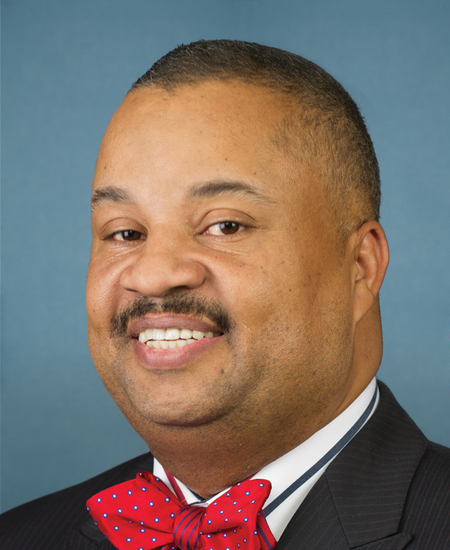
Rep. Donald M. Payne, Jr.
Sponsored bills
Maddy summaryHR 7714, the Colorectal Cancer Early Detection Act, authorizes $200 million annually (2025-2029) for competitive CDC grants to states to improve colorectal cancer awareness and early detection specifically for individuals under age 45. The bill directs states to target high-risk young people (including those with family history, inflammatory bowel disease, genetic syndromes, or symptoms like rectal bleeding) and underserved communities (American Indian/Alaska Native, African American, rural populations, and those with type 2 diabetes). Grantees must implement activities like risk-factor education, clinician training on early detection, patient navigation support, and developing decision tools for early screening before age 45. The program requires states to report on grant usage and outcomes after five years.
Maddy summaryHRES 1101 is a non-binding resolution expressing the House of Representatives' support for collaborating with the Congressional Black Caucus to develop a "Black Wealth Agenda." It commits the House to outlining legislative priorities focused on closing the racial wealth gap through key areas like expanding Black entrepreneurship, reforming housing policies, building workforce development programs, and updating the federal minimum wage. The resolution emphasizes addressing systemic barriers in homeownership, education access, employment discrimination, and tax policy to advance economic equity for Black communities. It does not create new laws but directs the House to coordinate with the CBC on policy solutions targeting wealth-building opportunities.
Maddy summaryHRES 1096 is a non-binding resolution expressing support for the House of Representatives to collaborate with the Congressional Black Caucus in developing the "Black Wealth Agenda." It identifies key areas requiring policy action, including closing the racial wealth gap through improvements in homeownership access, education equity, fair employment practices, affordable housing, and tax reform. The resolution outlines priorities such as expanding support for Black entrepreneurship, addressing systemic housing discrimination, raising the federal minimum wage, and investing in historically Black colleges. It does not create new laws or mandate specific actions but commits the House to coordinating legislative efforts focused on these economic equity goals. The resolution was introduced by multiple representatives and referred to relevant committees for review.
Maddy summaryHR 7753, the "Protecting Communities from Helicopter Noise Act," requires the Federal Aviation Administration (FAA) to study helicopter noise impacts near the Statue of Liberty National Monument. The study will analyze noise volume, health and environmental effects, compliance with existing agreements, and potential solutions like flight path changes or altitude limits within a 15-mile radius of the monument. It directly affects communities living in residential and recreational areas near the monument and the FAA, which must complete the study and submit a report to Congress within 180 days of the bill's enactment. The bill does not impose new regulations but mandates a data-driven assessment to inform future decisions on helicopter operations.
Maddy summaryThis bill requires the Government Accountability Office (GAO) to produce a report within 180 days of enactment on boat fires near U.S. shorelines (up to 3 nautical miles from shore). The report must examine how federal and local agencies collaborate to prevent fires, analyze fire frequency, and recommend improvements for fire response and training. It directly affects the GAO, which must deliver these findings to relevant congressional committees. The bill creates no new laws but mandates a review to inform future safety policies.
Maddy summaryThis concurrent resolution (HCONRES 97) recognizes the gender wage gap, noting that women working full-time earn 84 cents for every dollar earned by men. It highlights racial disparities (e.g., Latinas earn 57 cents, Black women 69 cents) and the economic impact of the gap, including $965 billion in annual lost wages for women. As a symbolic resolution, it does not create new laws or policies but formally acknowledges the issue and reaffirms Congress’s commitment to addressing wage inequality.
Maddy summaryHRES 1047 is a symbolic resolution recognizing obesity as a disease and urging Congress to address it, passed by the House on March 4, 2024, for World Obesity Day. It does not create new laws or allocate funds but formally acknowledges obesity’s health impacts (including links to diabetes, heart disease, and higher medical costs) and disparities affecting Black, rural, and low-income communities. The resolution supports treating obesity as a disease to reduce related health risks and encourages evidence-based prevention and treatment strategies. As a non-binding resolution, it has no direct policy impact but serves as a statement of congressional awareness.
Maddy summaryHR 7503, the Health Equity for People with Disabilities Act, amends Section 330 of the Public Health Service Act to require health centers and programs serving underserved communities to explicitly include people with disabilities and provide accessible healthcare services. The bill inserts "including people with disabilities" in multiple sections and adds requirements for communication devices or services to meet accessibility needs. These changes apply to community health centers, migrant health centers, and other programs funded under Section 330, which serve medically underserved populations. The law clarifies that existing funding mechanisms remain unchanged but ensures people with disabilities are included in program eligibility and access to care.
Maddy summaryThis resolution (HRES 1050) designates March 2024 as National Colorectal Cancer Awareness Month. It symbolically supports existing public awareness efforts around colorectal cancer prevention, screening, and early detection, without creating new requirements or funding. The resolution encourages the public to observe the month with educational activities, aligning with ongoing annual campaigns. It directly affects public awareness efforts but has no binding policy impact.