

Maddy summaryHRES 997 is a symbolic resolution expressing the House of Representatives' recognition of Bob Marley's cultural and social impact. It honors Marley's legacy as a reggae artist who promoted peace, unity, and social justice through music like "One Love" and "Redemption Song," while highlighting his role in advancing Jamaican culture globally. The resolution does not create legal obligations or affect any specific group - it serves solely as a ceremonial tribute to Marley's influence on music, human experiences, and his advocacy for ending oppression.
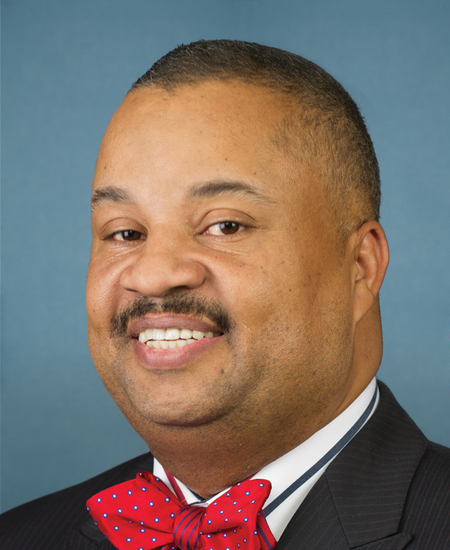
Rep. Donald M. Payne, Jr.
Sponsored bills
Maddy summaryThis bill requires the Secretary of Agriculture to approve or deny applications from retail food stores to accept SNAP benefits online within 180 days of receiving them. It directly affects retailers seeking to sell groceries online using SNAP benefits, ensuring timely decisions on their applications. If the deadline is missed, the Secretary must notify Congress with an explanation. The bill does not change SNAP eligibility or benefit amounts, only the processing timeline for online retailer applications.
Maddy summaryThe Stronger Communities through Better Transit Act establishes a new federal grant program to improve public transportation service. It provides funding to urban areas, states, and Indian tribes to cover up to 50% of public transit operating costs (up to 80% in persistent poverty areas and 100% for Indian tribes), with requirements to report on service frequency, access to jobs, and conduct community surveys. The program mandates that a majority of funds must benefit underserved communities and areas of persistent poverty, defined as census tracts with high poverty rates or minority populations. Recipients must maintain their transit funding levels and report on improvements in access to essential services. The bill authorizes $20 billion annually for fiscal years 2024-2027.
Maddy summary# Summary of "Protecting Communities from Plastics Act" (Title II) This comprehensive legislation addresses the environmental, health, and environmental justice impacts of plastics production and use. Key provisions include: ## Environmental Justice Protections - Requires environmental justice assessments for permits of "covered facilities" (plastics manufacturing facilities) - Mandates consultation with "fenceline communities" (communities near facilities) including: * Prompt notification in multiple languages * Public hearings with translation services * Community benefit agreements - Establishes a 45-day waiting period before approving permits after public hearings ## Regulatory Requirements - Amends Clean Air Act to establish new source performance standards for plastics facilities - Requires continuous monitoring of air emissions (benzene, nitrogen oxides, etc.) - Amends Clean Water Act to prohibit discharge of plastic pellets in wastewater - Requires financial assurance for facility closure and emergency response - Prohibits new facility permits within 5 miles of community buildings (schools, hospitals, etc.) ## Research and Monitoring - Requires study of microplastics in food (including fish, meat, fruits, vegetables) - Mandates research on microplastics in human bodies (urine, breastmilk, stool) - Establishes a pilot program to test technologies for microplastic removal - Requires inventory of plastics manufacturing and distribution ## Additional Provisions - Temporary permitting moratorium on new plastics facilities (during "temporary pause period") - Requires listing of discarded polyvinyl chloride as hazardous waste - Limits National Recycling Strategy to exclude chemical recycling technologies - Creates grants to reduce single-use plastics in agricultural packaging - Requires biodegradable alternatives to plastic weed barriers The legislation aims to address the disproportionate environmental and health impacts of plastics production on vulnerable communities while establishing comprehensive regulatory frameworks for plastics manufacturing and disposal.
Maddy summaryThe Supporting Urban and Innovative Farming Act of 2023 establishes a new USDA office to provide technical assistance for urban and innovative agricultural operations, including rooftop farms, hydroponics, and community gardens. It authorizes competitive grants with mandatory annual funding starting at $15 million in 2024 (rising to $50 million by 2028) to support projects improving fresh food access in underserved areas, prioritizing microgrants for individual urban farmers and initiatives serving disadvantaged communities. The bill requires the USDA to collect and report data on urban farming locations, demographics, and production methods like vertical farming and aquaponics. These provisions directly affect urban farmers, community organizations, and local governments working to expand food production in cities.
Maddy summaryHR 3650, the Opportunities in Organic Act of 2023, amends the Farm Security and Rural Investment Act of 2002 to create a new "Opportunities in Organic" program. It provides federal reimbursement for organic certification costs (up to $1,500 per producer, with higher amounts possible for socially disadvantaged farmers or in high-cost regions) and establishes new funding for nonprofits to support farmers transitioning to organic practices. The bill directly affects socially disadvantaged farmers, small/mid-sized farms, and eligible nonprofit organizations by covering transition costs like soil testing, equipment, land access barriers, and technical assistance. Key provisions include $50 million annually for fiscal years 2024-2025, increasing to $100 million by 2027, with specific requirements for reporting on program outcomes and participant demographics.
Maddy summaryHRES 962 is a ceremonial resolution honoring Reverend Dr. Martin Luther King, Jr.'s legacy, specifically celebrating his 95th birthday on January 15, 2024. It symbolically affirms his teachings by condemning hate, discrimination, and prejudice against Black Americans, Indigenous people, Jewish, Asian-American/Pacific Islander, Muslim, Hispanic/Latino communities, and LGBTQ+ individuals. The resolution does not create new laws or affect any policies - it solely expresses the House's support for Dr. King's values of diversity, tolerance, and equality through non-binding statements. As a symbolic gesture, it has no legal effect or direct impact on any group or individual.
Maddy summaryHRES 963 is a symbolic resolution honoring Korean American Day, which commemorates the January 13, 1903 arrival of the first large wave of Korean immigrants to the U.S. It recognizes Korean Americans' contributions to U.S. society, including their economic, cultural, and military impacts, and marks the 121st anniversary of this historic migration. The resolution urges all Americans to observe Korean American Day to appreciate these contributions. As a commemorative measure, it does not create new policies or affect specific groups beyond this ceremonial recognition.
Maddy summaryThe Affordable Connectivity Program Extension Act of 2024 allocates $7 billion in funding for the Affordable Connectivity Program (ACP) during fiscal year 2024. The ACP provides subsidies to low-income households to help cover the cost of internet service and connected devices like laptops or tablets. This funding ensures the program can continue supporting eligible households throughout the year, with the money remaining available until fully spent. The bill extends existing program funding without changing eligibility criteria or service requirements.
Maddy summaryHR 6830, the "Books Save Lives Act," requires covered schools (elementary/secondary schools receiving federal funds) and public libraries receiving federal assistance to maintain staffed libraries with diverse book collections. These collections must include books written by, illustrated by, or about individuals from underrepresented communities - defined as racial/ethnic minorities, LGBTQ+ individuals, religious minorities, or people with disabilities. The bill states that excluding such "covered books" could be used as evidence of discrimination under civil rights laws like the Civil Rights Act of 1964. It also mandates a report on the impact of book-banning campaigns on these communities within 180 days of enactment.