

Maddy summaryThe Brittany Clardy Missing and Murdered Black Women and Girls Act establishes a new Office within the Department of Justice to address the disproportionate rates of missing and murdered Black women and girls in the U.S. The Office will collect and analyze data on these cases - including case resolution times, Amber Alert usage, and trafficking links - and create a public dashboard for tracking. It also creates a grant program for community organizations to provide culturally appropriate prevention services, law enforcement training, and victim support. The Office must submit biennial reports to Congress with findings and recommendations to improve the criminal justice response to these cases. This bill directly affects Black women and girls facing violence, law enforcement agencies, and community organizations providing related services.
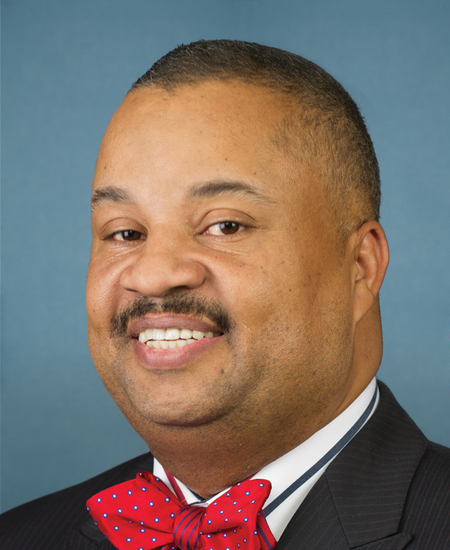
Rep. Donald M. Payne, Jr.
Sponsored bills
Maddy summaryHR 6416, the "Russian War Crimes in Ukraine Tax Act," imposes a 100% tax on interest and dividends earned from frozen Russian and Belarusian sovereign assets held abroad. This tax revenue is directed into a new Ukraine Reconstruction Trust Fund, which must be used for Ukraine's reconstruction, humanitarian aid, economic development, and transparent governance. The bill requires U.S. financial institutions to withhold this tax from qualifying income and overrides international treaty obligations to ensure implementation. It also mandates annual reports on fund usage to Congress, specifying that all revenues from the tax must support Ukraine's recovery efforts as defined in the legislation.
Maddy summaryHR 6654, the Farewell to Foam Act of 2023, bans the sale and distribution of expanded polystyrene foam food containers, packaging peanuts ("loose fill"), and coolers starting January 1, 2026. It directly affects food service providers (like restaurants and schools), manufacturers, distributors, and retailers who sell these foam products. The bill prohibits selling these items, with enforcement starting with a written warning for first violations, followed by escalating civil penalties ($250 for a second violation, up to $1,000 for fourth+ violations), while exempting small businesses with low annual revenue from repeated penalties within a 7-day period.
Maddy summaryThis bill amends the Equal Credit Opportunity Act to require lenders to collect and report data on loans to LGBTQI-owned businesses. It specifically adds "LGBTQI-owned" to existing categories for data collection, includes sexual orientation, gender identity, and intersex status as protected characteristics in lending data, and defines an "LGBTQI-owned business" as one where over 50% of ownership/control and net profit/loss accrues to self-identifying LGBTQI individuals. The policy change directly affects financial institutions that report lending data to the government, mandating they track and disclose these new categories. This provides concrete data on lending practices for LGBTQI business owners, who face documented barriers in accessing credit.
Maddy summaryHR 6592, the Fight Book Bans Act, provides federal grants to reimburse public school districts for legal costs when they choose to keep instructional or library materials after parental objections. It directly affects school districts (covered local educational agencies) that select materials for students and handle challenges to their removal. The bill authorizes up to $100,000 per case in grants to cover attorney fees and court costs, provided the district didn’t remove the materials and wasn’t reimbursed by the state. Funding of $15 million is authorized for fiscal years 2024-2028. The grants are strictly for legal challenges to decisions not to remove materials, not for the content of the materials themselves.
Maddy summaryHRES 793 is a resolution passed by the U.S. House of Representatives calling on Hamas to immediately release all 199 hostages taken during Hamas' October 7, 2023 attack on Israel. The resolution condemns Hamas for the attack, the taking of hostages, and threats against hostages, while stating that holding hostages violates international humanitarian law under the Geneva Conventions. It demands the immediate release of all hostages and expresses sympathy for victims and their families. As a symbolic resolution, it does not create legal obligations but formally expresses the House's position.
Maddy summaryHRES 881 is a symbolic House resolution commemorating the 50th anniversary of the Endangered Species Act of 1973. It honors the Act's role in preventing the extinction of species like the bald eagle and humpback whale, citing its success in protecting 99% of listed species. The resolution does not create new legal requirements or affect any specific group, as it serves solely as a ceremonial recognition of the Act's conservation achievements.
Maddy summaryHCONRES 75 is a non-binding resolution expressing Congress's support for issuing a new commemorative postage stamp honoring the Buffalo Soldiers. It directly affects the U.S. Postal Service by urging the Citizens’ Stamp Advisory Committee to recommend such a stamp to the Postmaster General. The resolution highlights the historical significance of the Buffalo Soldiers - African American soldiers who served in all-Black regiments from 1866 to 1948 - and references a previous 1994 stamp that was discontinued. It does not create a new law but formally requests the Postal Service consider this commemoration.
This concurrent resolution recognizes the difficult challenges Black veterans faced when returning home after serving in the Armed Forces, their heroic military sacrifices, and their patriotism in fighting for equal rights and for the dignity of a people and a nation. The concurrent resolution also recognizes the need for the Department of Veterans Affairs to continue to work to eliminate any health and benefit disparities for minority veterans.
Maddy summaryHRES 780 is a non-binding resolution expressing the U.S. House of Representatives' support for World Sight Day. It highlights the global need for accessible, affordable, and inclusive eye care by citing statistics on vision loss impacts, including over 1 billion people worldwide lacking access to services. The resolution encourages prioritizing eye health and recognizes how vision impairment affects employment, education, and economic productivity. It does not create new policies or allocate funding, serving solely as a symbolic statement of support.