

Maddy summaryThis bill, the Senior Hunger Prevention Act of 2023, aims to improve access to nutrition assistance for older adults and people with disabilities through several key changes to the Supplemental Nutrition Assistance Program (SNAP) and related programs. It extends SNAP certification periods to 36 months, establishes a standard medical expense deduction for elderly/disabled participants, and creates streamlined application processes (Elderly Simplified Application Program and Combined Application Program) to reduce administrative burdens for eligible households. The bill also establishes a pilot program to improve enrollment among older adults, kinship families, and people with disabilities, and adds provisions for food delivery services for SNAP participants who are elderly or disabled and unable to shop. Additionally, it increases funding for the Seniors Farmers' Market Nutrition Program and creates infrastructure funding for farmers' markets to improve access to fresh food in underserved communities.
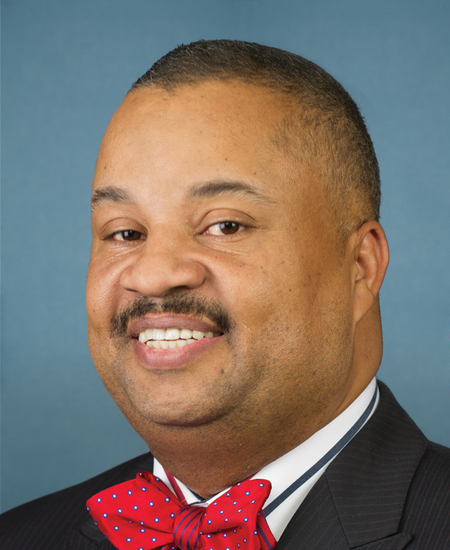
Rep. Donald M. Payne, Jr.
Sponsored bills
Maddy summaryThe Stay Cool Act provides federal funding for heat-related initiatives to protect vulnerable populations during extreme heat events. It creates grants for community cooling centers, public water features, and urban green spaces in overburdened communities (areas with high percentages of low-income households, minority residents, or limited English proficiency). The bill also includes provisions for public housing cooling systems, payroll credits for cooling centers, and studies on heat-related health impacts. It directly affects seniors, low-income residents, and communities disproportionately impacted by extreme heat. The act aims to improve access to cooling resources and develop long-term resilience against heat emergencies.
Maddy summaryHJRES 76 proposes renaming the Robert E. Lee Memorial in Arlington National Cemetery to the "Arlington House National Historic Site." This procedural bill would replace all official references to the memorial with the new name and repeal two prior resolutions (1955 and 1972) that established the memorial. The change affects how the site is identified in federal laws, documents, and records but does not alter its management or historical significance. The bill focuses solely on the official designation, not on policy changes or historical interpretation.
Maddy summaryThis bill establishes the John Lewis Civil Rights Fellowship Program within the Fulbright exchange system to honor civil rights leader John Lewis and advance U.S. foreign policy through global civil rights education. It creates a new fellowship for U.S. early- to mid-career professionals, selecting at least 25 annually for 10-month programs to conduct research or intern with approved organizations in countries participating in Fulbright exchanges. Fellows must complete a work plan, attend an orientation in Washington, DC, and present findings at an annual summit, with the State Department covering costs for travel, lodging, and expenses. The program requires annual reports on participant demographics and program effectiveness, and expires seven years after enactment.
Maddy summaryThe Equality Act (HR 15) would amend federal civil rights laws to explicitly prohibit discrimination based on sexual orientation and gender identity in public accommodations, housing, employment, credit, and jury service. It amends the Civil Rights Act of 1964 to include sexual orientation and gender identity as protected characteristics under existing sex discrimination provisions. The bill would require businesses, housing providers, employers, and government entities to provide equal access and services without regard to a person's sexual orientation or gender identity. It includes specific definitions for gender identity and sexual orientation to clarify protections across all covered areas. The law would apply to all entities covered by the Civil Rights Act of 1964, including those receiving federal funding.
Men's Health Awareness and Improvement Act This bill establishes the Office of Men's Health within the Department of Health and Human Services (HHS) and requires other activities to improve men's health in the United States. The office must support and promote men's health programs and initiatives, including by working with relevant federal agencies (e.g., the Department of Defense and the Department of Veterans Affairs) and consulting with other HHS offices and agencies on activities related to men's health. HHS must issue associated guidance and recommendations on improving men's health outcomes that include short-term and long-term objectives for disease prevention, health promotion, and other areas of concern. The bill also requires studies and reports on men's health topics. The Office of the Assistant Secretary for Health must study men's use of health screenings and services, and the Government Accountability Office must report on the effectiveness of federal outreach related to men's health initiatives.
Maddy summaryHR 4121, the Right to Contraception Act, establishes a federal statutory right for individuals to access contraceptives and contraception services without government restriction or coercion, directly affecting all people seeking reproductive care and health care providers. The bill prohibits state or federal laws that limit access to contraceptives (defined broadly to include devices, drugs, and fertility methods), prevent individuals from obtaining or using them, or allow providers to refuse services based on personal beliefs. It preempts conflicting state laws, requires any restrictions to be justified by "clear and convincing evidence" of advancing access with no less restrictive alternative, and allows private lawsuits to challenge violations. The Act applies nationwide to all health care providers and individuals, protecting access regardless of factors like race, income, or location.
Maddy summaryThis bill gives the FDA authority to request access to concentrated animal feeding operations (CAFOs) for microbial sampling during foodborne illness outbreaks. CAFOs must provide reasonable access for sampling plants, animals, water, or environmental samples to investigate outbreaks or address public health needs. The law does not impose new food safety requirements on CAFOs beyond this sampling during specific investigations and explicitly maintains existing USDA oversight for meat, poultry, and egg products. It also requires FDA to share collected data with USDA and state health agencies to support outbreak response efforts.
Maddy summaryHR 4024, the Clean Shipping Act of 2023, requires commercial vessels over 400 gross tons to gradually reduce the carbon intensity of their fuel. Starting in 2027, vessels must cut fuel carbon intensity by 20% compared to a 2024 baseline, increasing to 100% (zero emissions) by 2040. The bill mandates annual reporting of fuel carbon intensity and emissions for covered voyages (commercial trips between US ports or to foreign ports) and allows fleet averaging under common ownership. Vessels operating fewer than 30 days annually are exempt, and standards may be adjusted if technological or economic feasibility is challenged.
Maddy summaryThis symbolic resolution (HRES 517) expresses congressional support for the existing tradition of observing the third Sunday in June as "Father's Day," which has been recognized since 1972. It acknowledges fathers' roles in families and society, citing statistics about fatherhood in the U.S. The resolution specifically urges support for policies like universal paid family leave, affordable childcare, and a permanent child tax credit - though these are framed as recommendations, not new laws. It does not create new legal requirements or change the Father's Day designation itself.