This resolution expresses the sense of the House of Representatives that (1) lesbian, gay, bisexual, transgender, queer, intersex, and asexual (LGBTQIA+) rights are human rights and protected by the U.S. Constitution; (2) LGBTQIA+ Pride Month should be celebrated; and (3) all Americans should be treated equally regardless of sexual orientation, sex characteristics, or gender identity.
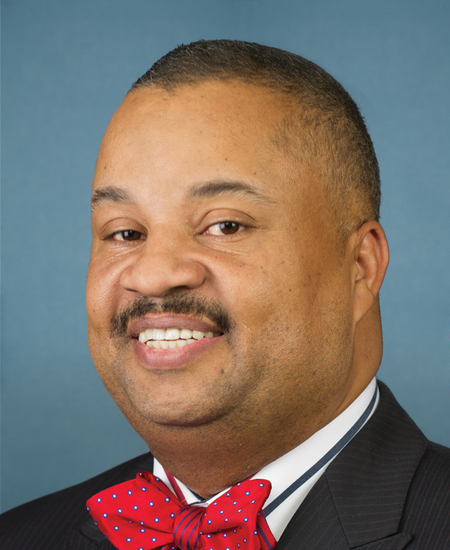
Rep. Donald M. Payne, Jr.
Sponsored bills
Maddy summaryHRES 561 is a non-binding House resolution opposing state laws that criminalize access to essential health care. It specifically condemns using criminal penalties against people for pregnancy outcomes (such as miscarriages), seeking abortion or contraception, or receiving gender-affirming care, and disapproves of punishing health care providers or supporters for facilitating such care. The resolution affirms that patients deserve access to reproductive and gender-affirming health services without fear of prosecution or discrimination. It emphasizes that criminalizing these health care decisions violates patient rights and ethical provider obligations, without creating new legal requirements.
Maddy summary# Summary of National Flood Insurance Program Reform Bill This comprehensive legislation proposes significant reforms to the National Flood Insurance Program (NFIP) with a focus on policyholder protections, program transparency, and program solvency. ## Key Provisions: ### Policyholder Protections (Sections 401-416) - **Enhanced Appeals Process**: Creates an Independent Office for Policyholder Appeals with a 90-day deadline for final decisions - **Foundation Damage Presumption**: Establishes a rebuttable presumption that foundation/structural damage was caused by flood, not earth movement - **Mold Remediation Guidance**: Requires FEMA to provide policyholders with guidance on mold prevention after floods - **Transparency in Claims**: Mandates disclosure of all claim documents to policyholders upon request - **Training Requirements**: Requires continuing education for insurance agents every 2 years - **Prohibition on Report Manipulation**: Prevents alteration of engineer reports before providing them to policyholders - **Agent Advisory Council**: Establishes a council with diverse representation to advise FEMA on policyholder experience ### Solvency Measures (Sections 301-306) - **Interest Forbearance**: Forbids interest on NFIP debt for 5 years - **Write Your Own Company Compensation Cap**: Limits reimbursement to 22.46% of premiums - **Third-Party Cost Transparency**: Requires public disclosure of vendor costs - **Mitigation Assistance**: Requires policyholders to accept mitigation offers or face 25% premium increases ### Flood Risk Disclosure (Section 416) - Requires property flood hazard disclosure before property transfer, including flood risk information and insurance cost estimates - Sets a deadline of October 1, 2024 for adoption of disclosure requirements ### Additional Key Provisions - **Appeals Process**: Creates formal appeals for map changes and levee protection assessments - **Levee Protection**: Requires proper assessment of levee systems and mandates flood insurance purchase only in unprotected areas - **Premium Calculator**: Requires public tool to estimate flood insurance rates and show impact of mitigation - **Grace Period**: Allows policyholders to renew within 90 days of lapse at the original renewal rate This legislation aims to balance program solvency with improved consumer protections, increased transparency, and better risk management for flood insurance policyholders.

Maddy summaryHRES 551 is a non-binding House resolution (not a bill) introduced in June 2023 that calls for action to address U.S. child poverty. It recommends making permanent the expanded Child Tax Credit (which lifted nearly 3 million children out of poverty in 2021), establishing a federal council to coordinate child-focused policies, and increasing federal investment in children’s programs like early education and nutrition assistance. The resolution highlights that child poverty rebounded sharply after the 2021 tax credit expansion expired, affecting over 4 million children, and emphasizes the need for equitable access to benefits for immigrant families, children in Puerto Rico, and children with disabilities. It does not create new laws but urges Congress and federal agencies to prioritize these policy changes.
Maddy summaryHouse Resolution 522 is a symbolic resolution recognizing that active father involvement during pregnancy, birth, and postpartum care improves health outcomes for both mothers and babies. It cites research showing fathers' engagement correlates with better prenatal care access, reduced maternal mental health risks, lower smoking/drinking during pregnancy, healthier birth weights, and improved child development. The resolution calls for addressing systemic barriers - such as workplace policies, cultural stigma, and healthcare access inequities - to support fathers as partners in maternal and infant health. It does not create new laws but formally acknowledges the role of fathers in reducing maternal mortality, infant health risks, and racial disparities in care.
Maddy summaryHR 4272, the Stop Fentanyl Now Act of 2023, directly affects schools, public health systems, and law enforcement by expanding prevention and response efforts to the fentanyl crisis. The bill requires schools to train staff on carrying and administering naloxone (an opioid overdose reversal drug) and provides grants to states for school-based programs, treatment access, and harm reduction tools like fentanyl test strips. It also increases law enforcement resources to disrupt fentanyl trafficking, including targeting online sales, and removes legal barriers for possessing fentanyl test strips. These provisions aim to reduce overdose deaths by improving education, treatment access, and prevention strategies in communities most impacted by fentanyl-laced pills.
Maddy summaryHR 4241, the Horse Transportation Safety Act of 2023, prohibits transporting horses between states or territories in multi-level motor vehicles (like certain livestock trailers with stacked levels). This directly affects commercial horse transporters moving animals across state lines. The bill adds a civil penalty of $100-$500 per horse per violation for knowingly violating this rule, with separate penalties for each horse transported. It amends the Horse Protection Act to address safety concerns related to transporting horses in vehicles not designed for such travel.
Maddy summaryHR 3698, the Feed Hungry Veterans Act of 2023, amends the Food and Nutrition Act of 2008 to expand eligibility for SNAP (Supplemental Nutrition Assistance Program) benefits to more veterans. It adds four new categories of veterans who can qualify: those with a "catastrophically disabled" status under military disability law, veterans under 65 receiving a pension under specific veteran benefits law, and those meeting existing high-disability rating thresholds. This change directly affects veterans who previously did not meet the program’s eligibility criteria but now qualify under these expanded definitions. The bill takes effect on October 1, 2023, making these eligibility changes operational for SNAP enrollment.
Maddy summaryHR 3519, the Hot Foods Act of 2023, amends the Food and Nutrition Act of 2008 to allow Supplemental Nutrition Assistance Program (SNAP) benefits to be used for hot foods or hot food products ready for immediate consumption at participating retailers. This change directly affects SNAP recipients who purchase such hot foods and retailers that sell them. The key provision removes the previous exclusion of hot foods from SNAP eligibility, while adding a limit that no more than 50% of a retailer's total gross sales from SNAP can come from hot foods. The bill clarifies that hot foods can be purchased for home or immediate consumption, aligning SNAP rules with current retail practices for prepared foods.
Maddy summaryThe SAFE Act of 2023 extends a 2018 law that prohibits slaughtering animals for human consumption to include horses, donkeys, and other equine animals, such as ponies. It amends Section 12515 of the Agriculture Improvement Act of 2018 by updating the language to replace "dog or cat" with "dog, cat, or equine" in both the section title and the main prohibition. This change directly affects the livestock industry and slaughter facilities by banning the processing of equines for food. The bill modifies existing law without adding new enforcement mechanisms, closing a gap in animal protection.