

Visit America Act This bill implements measures to support the U.S. travel and tourism industry and to address the declining percentage of international visitors to the United States. Specifically, the bill requires the Department of Commerce to develop a 10-year travel and tourism strategy with annual goals for the number of international visitors to the United States and for tourism commerce. The bill also establishes the role of Assistant Secretary of Commerce for Travel and Tourism, whose responsibilities shall include setting an annual goal for the number of international visitors to the United States and facilitating international business travel to the United States. Further, the assistant secretary must develop and implement a COVID-19 pandemic recovery strategy to assist the recovery of the U.S. travel and tourism industry. The bill also provides statutory authority for the United States Travel and Tourism Advisory Board, which shall aid the assistant secretary in developing and implementing the COVID-19 pandemic recovery strategy.
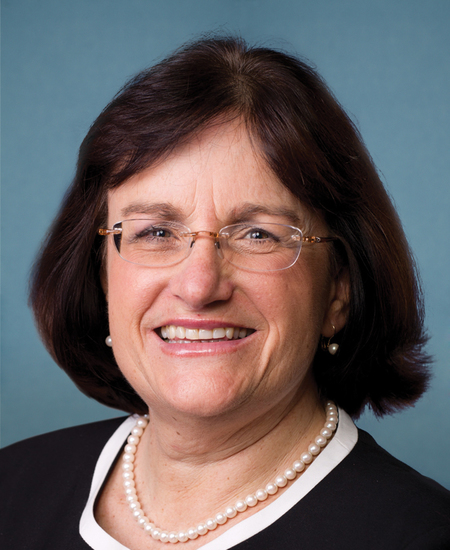
Rep. Ann M. Kuster
Sponsored bills
This bill designates the facility of the United States Postal Service located at 3900 Crown Road Southwest in Atlanta, Georgia, as the John R. Lewis Post Office Building.
Home Heating Oil Price Reduction Act This bill increases the cap on the number of barrels of petroleum distillate that may be stored in the Northeast Home Heating Oil Reserve from 2 million to 4 million. It also restricts sales or exports from that reserve to (1) China, Iran, North Korea, Russia, and any other country subject to U.S. sanctions; and (2) entities owned, controlled, or affiliated with any of those countries.
Reduce and Eliminate Mental Health Outpatient Veteran Copays Act or the REMOVE Copays Act This bill prohibits the Department of Veterans Affairs from imposing or collecting any co-payment for a veteran's first three mental health outpatient care visits in a calendar year. However, such prohibition must not apply with respect to the imposition or collection of copayments for medications.
Maximizing Outcomes through Better Investments in Lifesaving Equipment for (MOBILE) Health Care Act This bill allows a health center that currently receives funding through a Health Resources & Services Administration Health Center Program grant to use a New Access Point grant to set up a mobile unit regardless of whether the health center also establishes a permanent health care delivery site. New Access Point grants help health centers establish new delivery sites to provide comprehensive primary care to medically underserved populations. Under current law, health centers may only use the grants to set up a mobile unit if they also establish a permanent site.
Buy Low and Sell High Act This bill revises requirements concerning the Strategic Petroleum Reserve (SPR), establishes an Economic Petroleum Reserve, creates a national network of Strategic Refined Petroleum Product Reserves, increases the size of the Northeast Home Heating Oil Reserve, limits the sale and exportation of petroleum products, and sets forth provisions to reduce the demand for petroleum fuel and increase fuel supply. Specifically, the bill directs the Department of Energy (DOE) to establish within the SPR an Economic Petroleum Reserve of up to 350 million barrels of crude oil. DOE may acquire crude oil from domestic producers at low prices and then sell the oil when the prices are high as specified by the bill. DOE must also establish a national network of Strategic Refined Petroleum Product Reserves to store up to 250 million barrels of gasoline and diesel fuel, which may be sold when there is a severe fuel supply interruption within the district in which the reserve is located. In addition, the bill increases the cap on the amount of barrels of petroleum distillate that may be stored in the Northeast Home Heating Oil Reserve from two million to four million. It also establishes limits on the sale and exportation of petroleum products from such reserves. For example, the bill prohibits the sale or export of fuel from the reserves to (1) China, North Korea, Russia, or Iran; (2) any other country under U.S. sanctions; or (3) any entity owned, controlled, or influenced by one of those countries or the Chinese Communist Party. However, DOE may issue a waiver of the prohibition if it is in the national security interests of the United States to allow such a sale or export. Finally, the bill establishes requirements and incentives to reduce fuel demand and increase fuel supply, including by (1) providing financial assistance for projects to electrify the transportation sector, (2) setting requirements concerning the minimum percentage of federal vehicles that must be zero-emission vehicles, and (3) directing DOE to establish a program to increase the amount of crude oil refined in oil refineries in certain countries in the Western Hemisphere.
Invest to Protect Act of 2022 This bill directs the Office of Community Oriented Policing Services within the Department of Justice to award grants to local and tribal governments that employ fewer than 125 law enforcement officers. Grant funds may be used for various activities, including to provide de-escalation training and improve recruitment and retention.
This resolution expresses support for the six protected classes of prescription drugs under the Medicare prescription drug benefit: antidepressants, antipsychotics, anticonvulsants, immunosuppressants, antiretrovirals, and antineoplastics.
Maddy summaryHRES 1386 is a non-binding resolution designating the week of September 26-30, 2022, as "National Clean Energy Week." It expresses the House’s support for this designation and encourages individuals, organizations, and governments to promote clean energy solutions. The resolution highlights clean energy’s economic benefits (like supporting 7.8 million jobs in 2021) and urges investment in affordable, low-emission energy technologies. It does not create new laws, funding, or obligations - it is purely symbolic recognition of the clean energy sector’s role in the U.S. economy.
Protecting Kids from Fentanyl Act This bill allows states and local educational agencies to use unexpended COVID-19 elementary and secondary school emergency relief funds for additional purposes. In particular, these funds may be used for (1) purchasing naloxone or other opioid antagonists; (2) providing training to school nurses, teachers, school administrators, and school resource officers on how to administer naloxone or other opioid antagonists; and (3) providing fentanyl awareness classes or materials to students.