

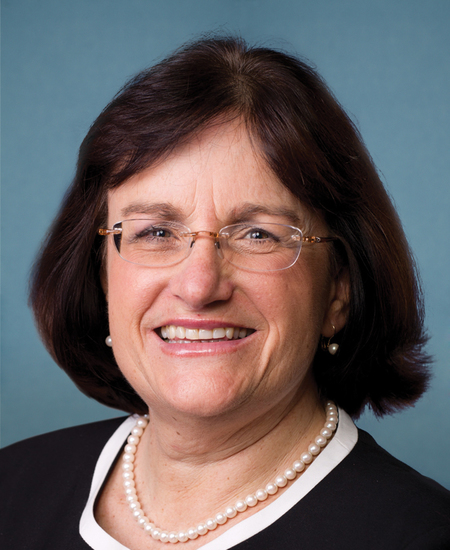
Photo of Ann M. Kuster
D United States House · District 2 · New Hampshire

Rep. Ann M. Kuster

Compare
Total votes
2,168
all sessions
Attendance
97%
74 missed
Lower than 83% of chamber peers
With party
98%
of cast votes
Higher than 82% of chamber peers
Bipartisan score
1%
crosses aisle rarely
Lower than 83% of chamber peers
Sponsored
1,353
bills & resolutions
Higher than 87% of chamber peers
Committees
0
assignments
1,353 bills and resolutions

Sponsored bills

Total
1,353
Primary
58
Co-sponsor
1,295
This page
1,353
matching current filters
Co-sponsor HR 1685
In committee · United States House · Co-sponsor
E-BIKE Act

Maddy summaryThe E-BIKE Act establishes a 30% tax credit for individuals purchasing qualified electric bicycles, with a maximum credit of $1,500 per bicycle (30% of the $5,000 cost limit). To qualify, bicycles must meet specific safety standards including speed limits (20 mph for classes 1-2, 28 mph for class 3), pedal assistance requirements, and safety certifications like UL 2849. The credit phases out for higher-income taxpayers, beginning at $150,000 modified adjusted gross income for single filers, $225,000 for heads of household, and $300,000 for joint filers. The bill also includes a provision allowing retailers to claim the credit directly when selling qualifying bicycles, reducing the upfront cost for consumers.

In committee Dec 17, 2024 1 co-sponsor
Co-sponsor HR 1638
In committee · United States House · Co-sponsor
Improving Access to Mental Health Act of 2023

Maddy summaryThis bill increases Medicare reimbursement for clinical social workers from 75% to 85% of the payment rate for psychologists under Part B. It also removes an exclusion that previously prevented skilled nursing facilities from billing Medicare for social worker services provided to residents. The bill expands covered services to include specific mental health assessments and interventions identified by HCPCS codes (like 96156, 96158-96161, etc.) for Medicare beneficiaries. These changes take effect for services provided on or after January 1, 2024, directly affecting Medicare patients and clinical social workers.

In committee Dec 17, 2024 1 co-sponsor
Co-sponsor HR 1634
In committee · United States House · Co-sponsor
HELLPP Act

Maddy summaryThe HELLPP Act (HR 1634) amends Medicaid to recognize doctors of podiatric medicine (podiatrists) as physicians, enabling them to be reimbursed for services under Medicaid starting January 1, 2024. It also clarifies Medicare’s documentation requirements for therapeutic shoes for people with diabetes, mandating specific written certifications from a managing physician and a podiatrist to confirm medical necessity. These changes directly affect patients with foot conditions, especially those with diabetes, by improving access to podiatrist-provided care and coverage for therapeutic shoes. The bill includes a separate provision strengthening Medicaid program integrity through continuous levies on provider payments, but this does not alter patient coverage. All key provisions take effect on January 1, 2024.

In committee Dec 17, 2024 1 co-sponsor
Co-sponsor HR 1610
In committee · United States House · Co-sponsor
Chiropractic Medicare Coverage Modernization Act of 2023

Maddy summaryHR 1610 would modernize Medicare coverage for chiropractic care by removing the current restriction that limited beneficiaries to one chiropractic service per visit. It expands coverage to include all services provided by licensed chiropractors within their state-authorized scope, aligning Medicare with VA, military, and private insurance practices. The bill requires chiropractors to complete a Secretary-approved educational webinar to cover non-spinal services, while still allowing payment for spinal manipulation treatments without this requirement. This directly affects Medicare beneficiaries seeking chiropractic care and chiropractors seeking Medicare reimbursement for their services.

In committee Dec 17, 2024 1 co-sponsor
Co-sponsor HR 1488
In committee · United States House · Co-sponsor
Affordable Insulin Now Act

Maddy summaryThe Affordable Insulin Now Act (HR 1488) requires health insurance plans and issuers to cover specific insulin products with cost-sharing capped at $35 per 30-day supply or 25% of the negotiated price, whichever is lower, starting in 2024. It directly affects people with diabetes who rely on insulin by limiting out-of-pocket costs for covered products. The bill mandates coverage of all insulin types (rapid-acting, long-acting, etc.) and dosage forms (vials, pumps, etc.) as selected by the plan. This applies to both group and individual health insurance plans under the Public Health Service Act, Internal Revenue Code, and ERISA, with cost-sharing counting toward annual deductibles.

In committee Dec 17, 2024 1 co-sponsor
Co-sponsor HR 1526
In committee · United States House · Co-sponsor
Reducing Hereditary Cancer Act

Maddy summaryThis bill expands Medicare coverage for hereditary cancer prevention and management. It requires Medicare to cover genetic testing for individuals with a personal or family history of hereditary cancer mutations, as defined by evidence-based guidelines from organizations like the National Comprehensive Cancer Network. The bill also mandates coverage for risk-reducing surgeries (like mastectomies or oophorectomies) when medically appropriate, and increases the frequency of recommended cancer screenings (such as mammograms, colonoscopies, and breast MRI) to at least annually for those with confirmed hereditary cancer gene mutations. These changes apply to Medicare beneficiaries with specific hereditary cancer risk factors, effective upon the bill's enactment.

In committee Dec 17, 2024 1 co-sponsor
Co-sponsor HR 1458
In committee · United States House · Co-sponsor
Access to Prescription Digital Therapeutics Act of 2023

Maddy summaryThis bill requires Medicare and Medicaid to cover prescription digital therapeutics - software-based treatments for medical conditions like diabetes or mental health disorders - starting January 1, 2024. It mandates Medicare to establish payment rates for manufacturers within one year and create specific billing codes within two years, with temporary codes used until permanent codes are set. Manufacturers must report annual data on pricing, usage, and discounts to Medicare, facing penalties of up to $10,000 per day for incomplete or false reports. The bill directly affects Medicare/Medicaid beneficiaries, digital therapeutic companies, and the healthcare billing system by integrating these treatments into federal coverage.

In committee Dec 17, 2024 1 co-sponsor
Co-sponsor HR 1406
In committee · United States House · Co-sponsor
Sustainable Cardiopulmonary Rehabilitation Services in the Home Act

Maddy summaryThis bill makes permanent Medicare coverage for cardiac and pulmonary rehabilitation services delivered via telehealth in patients' homes, which were temporarily allowed during the pandemic. It removes geographic restrictions that previously required in-person visits or limited services to specific locations like clinics. The change directly affects Medicare beneficiaries needing heart or lung rehabilitation and healthcare providers offering these programs. It ensures home-based telehealth visits for cardiac, intensive cardiac, and pulmonary rehabilitation receive the same coverage as in-clinic services under Medicare.

In committee Dec 17, 2024 1 co-sponsor
Co-sponsor HR 1377
Passed · United States House · Co-sponsor
Promoting United States Wireless Leadership Act of 2023

Maddy summaryHR 1377, the Promoting United States Wireless Leadership Act of 2023, directs the Assistant Secretary of Commerce to enhance U.S. participation in global wireless standards bodies (like 3GPP and IEEE) for 5G and future networks. It requires equitably encouraging U.S. companies and stakeholders - excluding those deemed "not trusted" due to national security risks - to participate in these bodies. The bill mandates a 60-day briefing to Congress on implementation strategy and defines key terms, including "not trusted" (based on existing security determinations). This act focuses on facilitating U.S. industry involvement in setting wireless standards, directly affecting companies seeking to contribute to global 5G/6G network specifications.

Passed Dec 17, 2024 1 co-sponsor
Co-sponsor HR 11
In committee · United States House · Co-sponsor
Freedom to Vote Act

Maddy summary# Summary of Proposed Election Reform Legislation This document outlines a comprehensive federal election reform bill with multiple titles addressing various aspects of voting rights, election administration, and election integrity. ## Key Provisions: ### 1. Democracy Restoration (Title I) - Restores voting rights to citizens with felony convictions who are not serving a felony sentence in a correctional institution - Requires states to notify individuals of restored voting rights upon release from prison, completion of probation, or sentencing - Prohibits states from conditioning voting rights on payment of fines or fees - Requires states to provide notification of voting rights to citizens with criminal convictions ### 2. Voter Identification Requirements (Title II) - Establishes a broad definition of acceptable identification documents (including utility bills, bank statements, student IDs, etc.) - Requires states to provide free identification to voters who lack one - Authorizes $5 million annually for 5 years to cover costs of providing identification - Sets procedures for provisional voting when identification is not presented ### 3. Voter List Maintenance (Title III) - Prohibits "voter caging" (using undeliverable mail to challenge voter registration) - Bans use of unverified match lists to remove voters from registration lists - Sets strict conditions for removing voters from registration lists - Requires states to provide notice to voters removed from registration lists ### 4. Election Integrity Measures (Title V) - Prohibits hindering or interfering with voter registration (Section 2001) - Restricts removal of local election administrators (Section 3001) - Prohibits harassment of election workers (Section 3101) - Bans deceptive practices in elections (Section 3201), including false statements about voting locations, eligibility, or endorsements ### 5. Additional Provisions - Requires states to provide notice of voting rights restoration to citizens - Establishes private rights of action for violations of the law - Sets criminal penalties for violations (up to $100,000 fines and 5 years imprisonment) - Includes provisions for federal funding to be contingent on compliance with voting rights restoration This legislation represents a significant overhaul of voting rights and election administration procedures across the United States, with a focus on expanding voting access, protecting voter rights, and ensuring fair election administration.

In committee Dec 17, 2024 1 co-sponsor
Showing 61 to 70 of 1,353 bills
Previous 1 … 6 7 8 … 136 Next