

Maddy summaryHR 2510 makes the federal adoption credit for children with special needs refundable, meaning families who adopt such children can receive a cash refund even if they don't owe federal income tax. The bill directly affects adoptive parents who claim the credit for children with special needs, allowing them to get the full credit amount as a refund rather than just reducing their tax bill. Key provisions define "special needs adoption expenses" as qualified costs for these adoptions and adjust tax code language to treat this portion as a refundable credit. The changes apply to taxable years beginning after December 31, 2023.
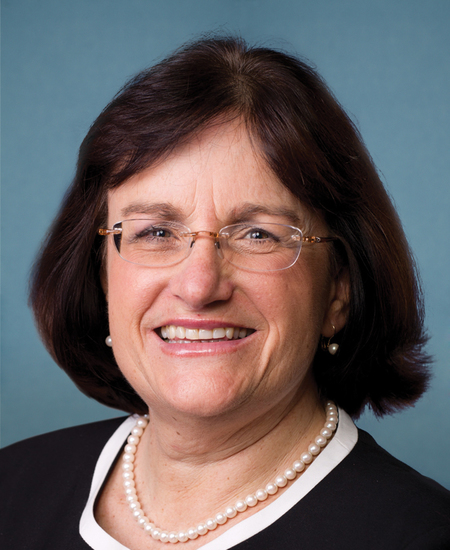
Rep. Ann M. Kuster
Sponsored bills
Biologics Competition Act of 2023 This bill requires the Food and Drug Administration (FDA) to evaluate (1) the differences between the requirements that apply to interchangeable biologics and the requirements that apply to therapeutically equivalent ratings for generic drugs, and (2) the effects of these differences on the approval of interchangeable biologics. The FDA must update the Purple Book with changes that better align the ways these requirements are communicated while still maintaining each distinct approval pathway. The Purple Book is an FDA publication that lists approved biological products, including biosimilars and interchangeable biologics. Interchangeable biologics are biologics that may be substituted for the original product without consulting the prescriber, similar to how generic drugs may be substituted for brand-name drugs based on therapeutic equivalence.
Supporting Our First Responders Act This bill establishes a competitive grant program to support medical transport and emergency medical services (EMS). The Department of Health and Human Services (HHS) must award the grants to EMS organizations (including for-profit organizations) or state, tribal, territorial, or local governments. Grant-funded activities include (1) providing salaries and stipends for EMS workers; (2) purchasing vehicles, personal protective equipment, and other resources; and (3) establishing community paramedicine or mobile integrated health care initiatives. HHS must also report to Congress about health insurance reimbursement for medical transport and EMS and the feasibility of establishing a federal EMS office.
Maddy summaryHR 1712, the Rural Health Innovation Act of 2023, creates two new federal grant programs to expand healthcare access in rural areas. The Rural Health Center Innovation Awards program provides grants (up to $750,000 initially) to Federally Qualified Health Centers, rural clinics, or entities establishing them, enabling them to operate walk-in urgent care centers with triage services and essential equipment like labs and x-ray machines. The Rural Health Department Enhancement program awards annual grants (up to $500,000 per year) to local public health departments in rural areas to enhance emergency services, primary care, and transport coordination. Both programs fund equipment, staffing, and outreach over five years, with $25 million authorized annually for fiscal years 2024-2028.
Maddy summaryThis bill amends the Affordable Care Act to allow individuals to enroll in standalone dental plans through health insurance Exchanges without needing to also have a separate health insurance plan. It directly affects consumers seeking dental coverage who may not qualify for or prefer not to enroll in a comprehensive health plan. The key provision removes a federal restriction that previously prevented enrollment in these dental plans solely based on lack of separate health insurance. This change makes it easier for people to access dental insurance options through the same marketplaces used for health coverage.
Maddy summaryHR 2403, the Enhanced Background Checks Act of 2023, modifies federal firearm background check procedures to address delays. It requires firearm licensees to wait at least 10 business days after a prospective buyer submits a petition verifying they are not prohibited from owning firearms before completing a sale, if the background check system hasn't cleared the transaction. The bill also mandates the Attorney General to create an electronic petition form, provide timely responses to petitions, and track delays. Additionally, it requires multiple reports analyzing implementation, transaction delays, denial reasons by state, and potential impacts on domestic violence victim safety, with the first report due within 150 days of enactment.
Maddy summaryThe International Human Rights Defense Act of 2023 creates a permanent Special Envoy at the State Department to coordinate U.S. efforts against discrimination and violence targeting LGBTQI+ people globally. The bill requires the development of an annual global strategy to address criminalization, discrimination, and violence based on sexual orientation, gender identity, or sex characteristics. It also mandates that U.S. country reports on human rights practices include detailed information about laws and practices affecting LGBTQI+ communities. The legislation authorizes U.S. foreign assistance programs to support LGBTQI+ rights through health services, legal protections, and community capacity building. This bill aims to strengthen U.S. diplomatic engagement on LGBTQI+ rights as part of broader human rights policy.
Maddy summaryThis bill requires the Veterans Affairs Secretary to expand or modify an existing national cemetery (under National Cemetery Administration control) before Arlington National Cemetery reaches capacity, ensuring it provides full military honors using the same standards and eligibility criteria that applied to Arlington as of March 31, 2023. It directly affects veterans and their families seeking burial with full military honors at national cemeteries nationwide. The bill also mandates a joint report within one year to Congress on expanding cemetery capacity and assessing whether interment criteria should recognize exceptional service, including impacts on women, non-combat veterans, and other groups. The key mechanism is preserving current military honors standards at alternative cemeteries to prevent Arlington's capacity limits from disrupting existing burial practices.
Pause for Gun Safety Act This bill establishes a seven-day waiting period for firearm transfers to unlicensed individuals. Specifically, the bill makes it unlawful to transfer a firearm to an unlicensed individual unless seven calendar days have elapsed since the transferee's most recent offer to take possession of the firearm. A violator is subject to criminal penalties—a fine, up to five years in prison, or both. The seven-day waiting period does not apply to certain firearm transfers, such as a temporary transfer for use exclusively at a shooting range.
No Crime Left Behind Act This bill extends federal restrictions on the receipt, possession, shipment, and transportation of firearms and ammunition to a new category of persons: persons who completed, during the previous three years, a sentence imposed under law for a misdemeanor in which a firearm was used, possessed, or carried.