

Maddy summaryHR 3962 establishes an Advisory Council to support victims of gun violence, directly affecting individuals impacted by gun violence (including survivors, witnesses, and relatives of victims) and the professionals who assist them. The council, composed of federal agency heads, victims, and victim assistance professionals, will assess needs, review existing programs, and compile accessible resources covering medical, financial, mental health, legal, and housing support. It must publish a public report within 180 days of enactment detailing best practices and gaps, with a follow-up report after two years. The council’s work will be shared online and distributed to congressional offices, state agencies, schools, and local prosecutors, with no new federal funding authorized for implementation.
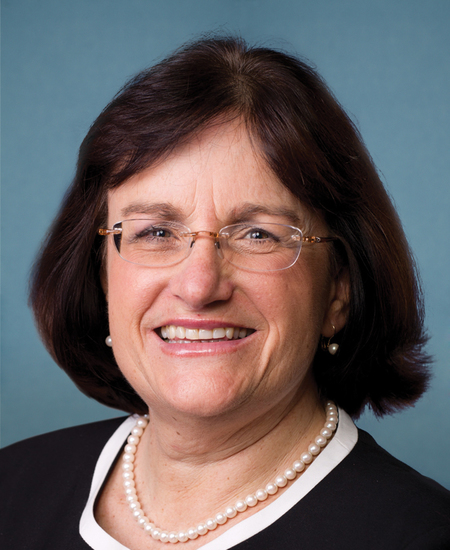
Rep. Ann M. Kuster
Sponsored bills
Maddy summaryHR 4021, the Fair and Open Skies Act, amends U.S. aviation law to require that the Department of Transportation consider labor standards when reviewing international air transport agreements. Specifically, it adds "preventing the undermining of labor standards" as a mandatory factor in the public interest test for approving such agreements under 49 U.S.C. § 40101. This change directly affects international airlines seeking to operate flights to or from the U.S. and the DOT, which must now evaluate whether proposed agreements could weaken U.S. labor protections. The bill updates existing provisions by replacing outdated language about "agreements with the United States Government" and explicitly including labor standards in the evaluation criteria.
Woman on the Twenty Act of 2023 This bill bars the printing of any $20 note after December 31, 2026, which does not prominently feature a portrait of Harriet Tubman on the front face of the note. The Department of the Treasury shall release to the public the preliminary design of the $20 note prominently featuring a portrait of Harriet Tubman no later than December 31, 2024.
Maddy summaryHRES 476 designates June 6, 2023, as National Naloxone Awareness Day to highlight naloxone's role in reversing opioid overdoses. The resolution recognizes that naloxone saves lives by reversing opioid effects during emergencies and encourages public education about its use and access barriers. It urges federal, state, local governments, and organizations to collaborate on increasing naloxone distribution and reducing stigma around substance use disorder. This non-binding resolution does not create new laws but supports existing efforts to combat the opioid crisis through awareness and education.
Maddy summaryThis bill prohibits federal agencies from using government funds to purchase or operate drones (unmanned aircraft systems) made by "covered foreign entities," primarily targeting entities linked to foreign governments, especially those tied to China as defined in the bill. It directly affects federal agencies and contractors receiving federal funding for drone acquisitions or operations. Key provisions include specific exemptions for national security research, counterterrorism, or cybersecurity needs, and a waiver process requiring approval from Homeland Security or Defense. The law aims to reduce reliance on potentially risky foreign drone technology by restricting federal funding for such systems.
Maddy summaryHR 3910, titled "Dillon’s Law," amends federal public health grants to prioritize states that permit trained individuals to carry and administer epinephrine during severe allergic reactions (anaphylaxis). States receiving these grants must certify they have civil liability protection laws shielding trained individuals who provide emergency aid. The bill defines "trained individual" as someone with approved medical training in epinephrine use and clarifies it does not alter existing liability protections under other laws. This policy change directly affects state governments seeking federal public health funding by linking grant eligibility to specific state-level regulations on emergency epinephrine access.
This bill requires the Food and Drug Administration (FDA) to inform generic drug applicants, upon request or during review, whether the drug is qualitatively and quantitatively the same as the listed brand-name drug (and if not, the reasons why). The FDA must also update or publish guidance on how it makes such determinations.
Maddy summaryHR 3850, the Pride In Mental Health Act of 2023, establishes a federal grant program to improve mental health and substance abuse services for LGBTQ+ youth (including nonbinary, intersex, and Two Spirit individuals). The bill directs the Health and Human Services Secretary to fund eligible organizations to provide trauma-informed care, cultural competency training for caregivers, school bullying prevention guidelines, and family support resources. It explicitly prohibits grant funds from being used for conversion therapy or advertising related to such therapy. The bill also requires data collection on LGBTQ+ youth mental health and a federal survey to measure psychological distress.
Maddy summaryHR 3879, the Supporting Families through Addiction Act of 2023, provides federal grants to nonprofit organizations that support families with members struggling with substance use disorder. The bill authorizes $5 million annually (2024-2028) to fund community-based family support services, including education, stigma reduction, and connecting families to treatment resources. Grants cover up to 85% of costs and require organizations to be led by experts, including families with lived experience. This directly affects families navigating addiction in their households by expanding access to evidence-based support programs and improving provider knowledge about family impacts.
Maddy summaryHR 3860, the Humane Correctional Health Care Act, removes the exclusion that previously prevented incarcerated individuals under 65 from receiving Medicaid or CHIP health care coverage. The bill amends the Social Security Act to allow states to provide Medicaid, CHIP, or pregnancy-related assistance to incarcerated people starting January 1, 2024. It requires the Comptroller General to report annually on health care access, quality, and outcomes for incarcerated people, including post-release enrollment in community health programs. The legislation also states Congress' view that incarceration should not be used to provide health care unavailable in communities, and federal funds should not replace community-based health investments. This is a policy change directly affecting incarcerated individuals' health care eligibility and state program administration.